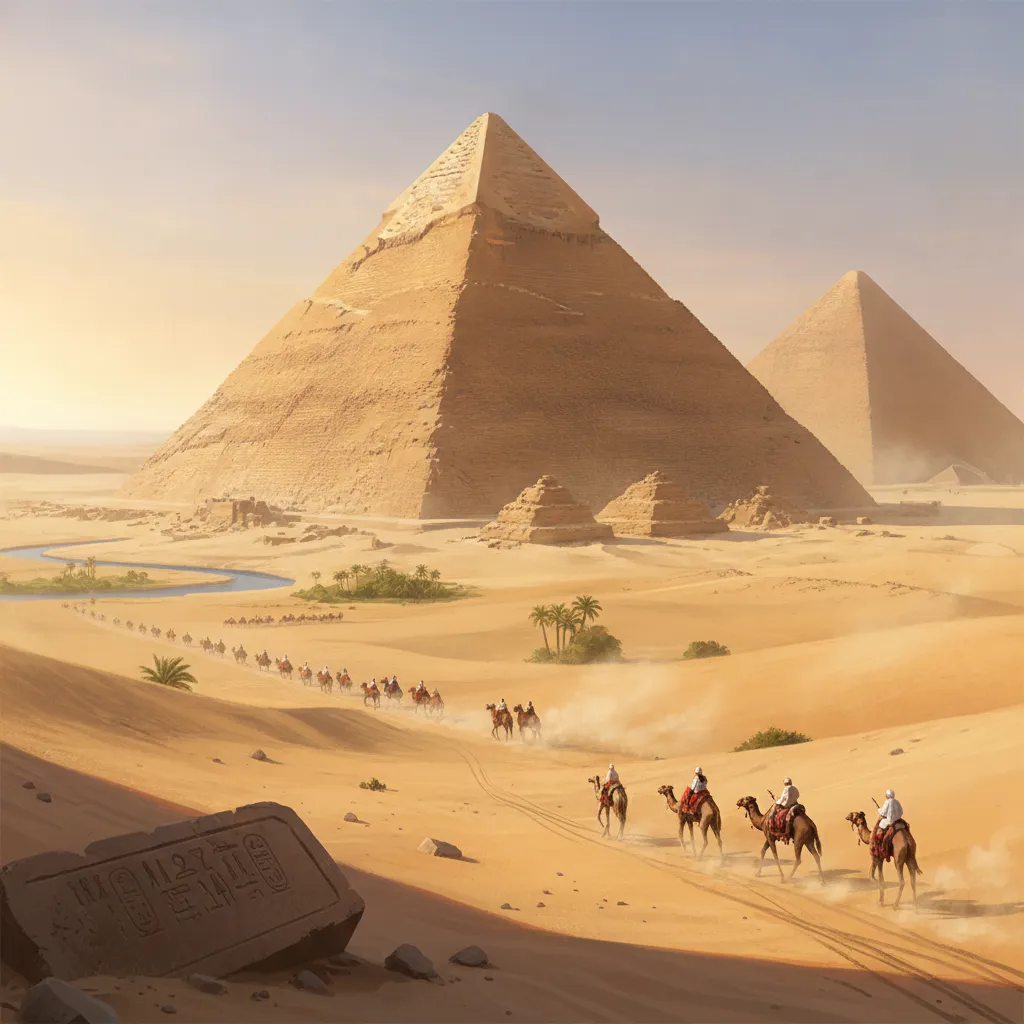
The Pyramids of Giza
The Great Pyramid held the title of tallest man-made structure on Earth for roughly 3,800 years — a record no other building would come close to touching until the 19th century.
Cheat Sheet
- The Pyramids of Giza, located near modern-day Cairo, Egypt, were built as royal tombs for pharaohs during Egypt's Old Kingdom period, roughly 4,500 years ago.
- The Great Pyramid, built for the pharaoh Khufu, is the largest of the three main pyramids and was the tallest man-made structure in the world for approximately 3,800 years.
- The pyramids were constructed using an estimated 2.3 million limestone and granite blocks, with some blocks weighing several tons, moved and placed using methods still debated by researchers today.
- The Great Sphinx, a massive limestone statue with a lion's body and a human head, stands guard near the pyramids and is believed to represent the pharaoh Khafre.
- Contrary to a popular historical myth, mainstream archaeological evidence indicates the pyramids were built primarily by paid laborers and skilled workers, not enslaved people.
- The Pyramids of Giza are the only surviving structure among the ancient Seven Wonders of the World, a list originally compiled by ancient Greek writers.
The 60-Second Version
The Pyramids of Giza, located near modern-day Cairo, Egypt, were built as royal tombs for pharaohs during Egypt's Old Kingdom period, roughly 4,500 years ago. The Great Pyramid, built for the pharaoh Khufu, is the largest of the three main pyramids and was the tallest man-made structure in the world for approximately 3,800 years. The pyramids were constructed using an estimated 2.3 million limestone and granite blocks, with some blocks weighing several tons, moved and placed using methods still debated by researchers today. The Great Sphinx, a massive limestone statue with a lion's body and a human head, stands guard near the pyramids and is believed to represent the pharaoh Khafre. Contrary to a popular historical myth, mainstream archaeological evidence indicates the pyramids were built primarily by paid laborers and skilled workers, not enslaved people. The Pyramids of Giza are the only surviving structure among the ancient Seven Wonders of the World, a list originally compiled by ancient Greek writers.
The Long Version
Royal Tombs of the Old Kingdom
The Pyramids of Giza, located near modern-day Cairo, Egypt, were built as royal tombs for pharaohs during Egypt's Old Kingdom period, roughly 4,500 years ago, reflecting the ancient Egyptian belief that a pharaoh's carefully preserved body and elaborate burial goods were essential for a successful journey into the afterlife, making the pyramids' massive scale a direct expression of the pharaoh's religious and political importance.
An Engineering Feat That Stood for Millennia
The Great Pyramid, built for the pharaoh Khufu, is the largest of the three main pyramids at Giza and was the tallest man-made structure in the world for approximately 3,800 years, a record that stood unbroken until the construction of Lincoln Cathedral in medieval England. The pyramids were constructed using an estimated 2.3 million limestone and granite blocks, with some individual blocks weighing several tons, moved and precisely placed using construction methods that researchers still actively debate and study today, given the remarkable precision achieved without modern machinery.
The Great Sphinx
The Great Sphinx, a massive limestone statue combining a lion's body with a human head, stands guard near the pyramids and is widely believed to represent the pharaoh Khafre, though its exact original purpose and precise dating remain subjects of ongoing scholarly discussion, adding to the broader mystique surrounding the Giza plateau as a whole.
Correcting a Popular Myth, and a Lasting Wonder
Contrary to a popular historical myth long depicted in films and folklore, mainstream archaeological evidence, including nearby worker settlements and burial sites, indicates the pyramids were built primarily by paid laborers and skilled workers organized into structured teams, not enslaved people, challenging a narrative that had persisted in popular culture for generations. Today, the Pyramids of Giza stand as the only surviving structure among the ancient Seven Wonders of the World, a list originally compiled by ancient Greek writers, making Giza a uniquely direct physical link to a wonder list otherwise known only through historical description.
Ad slot (placeholder — set NEXT_PUBLIC_ADSENSE_SLOT_ID once an ad unit is created)
Glossary
- Pharaoh
- The title given to the ruler of ancient Egypt, considered both a political leader and a religious figure.
- Old Kingdom
- A period of ancient Egyptian history, roughly 2700-2200 BCE, during which the Pyramids of Giza and many other major pyramids were constructed.
- The Great Sphinx
- A massive limestone statue near the Pyramids of Giza with a lion's body and a human head, believed to represent the pharaoh Khafre.
- Seven Wonders of the World
- A list of remarkable ancient structures compiled by Greek writers, of which the Pyramids of Giza are the only one still standing today.
- Necropolis
- A large, elaborate cemetery or burial complex, such as the Giza plateau, associated with an ancient city.