Stonehenge
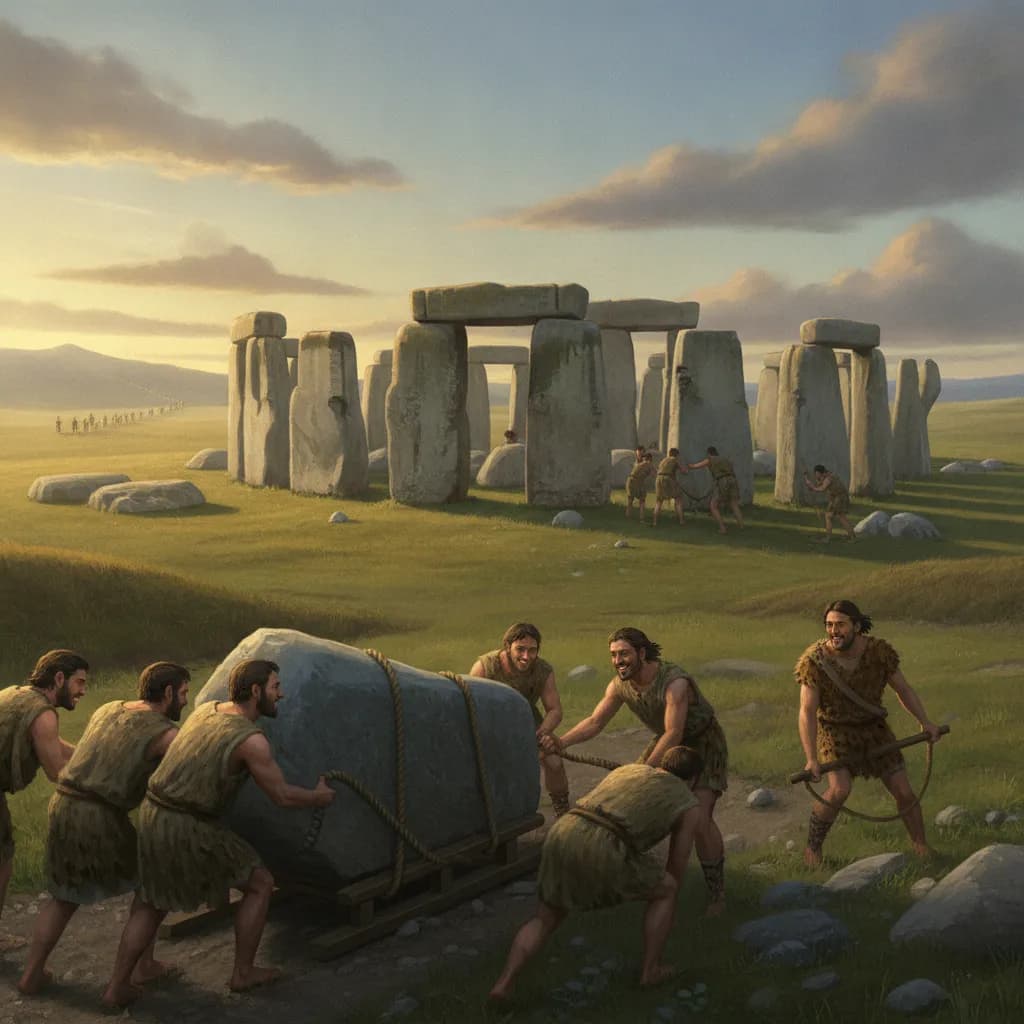
Stonehenge's smaller bluestones were hauled an estimated 150-plus miles from Wales, and no one has settled exactly why.
By Greg Goodwin · Published October 3, 2026 · Updated October 24, 2026
Cheat Sheet
- Built in multiple stages over roughly 1,500 years, with construction beginning around 3000 BCE and the iconic stone circle largely completed by around 2500 BCE.
- The massive sarsen stones (up to about 25 tons each) were sourced from roughly 15-20 miles away, while smaller 'bluestones' traveled an estimated 150+ miles from Wales.
- No contemporary written records explain Stonehenge's purpose, leaving its exact function a subject of ongoing archaeological debate rather than settled fact.
- The monument is precisely aligned with the sunrise on the summer solstice and sunset on the winter solstice, a deliberate astronomical alignment.
- Leading theories about its purpose include a ceremonial/religious site, an ancient burial ground (supported by cremated remains found at the site), and an astronomical calendar.
- Stonehenge has been a UNESCO World Heritage Site since 1986 and remains one of the most visited prehistoric monuments in the world.
The 60-Second Version
Stonehenge was built in multiple distinct stages over roughly 1,500 years, with construction beginning around 3000 BCE and the iconic stone circle most people picture largely completed by around 2500 BCE, meaning the monument itself represents many generations of sustained effort rather than a single building project. The massive sarsen stones forming its outer circle, weighing up to roughly 25 tons each, were sourced from around 15 to 20 miles away, an impressive feat on its own, while the smaller bluestones are believed to have traveled an estimated 150 or more miles from Wales, a genuinely remarkable transportation achievement for a society without wheeled vehicles or metal tools. No contemporary written records survive to explain Stonehenge's actual purpose, leaving its exact function a subject of ongoing archaeological debate rather than settled historical fact, despite the site's enormous fame. What is firmly established is that the monument is precisely aligned with the sunrise on the summer solstice and sunset on the winter solstice, a deliberate astronomical alignment that rules out pure coincidence in its design. Leading theories about its actual purpose include a ceremonial or religious gathering site, an ancient burial ground, supported by cremated human remains discovered at the site, and some form of astronomical calendar used to track the changing seasons. Stonehenge has held UNESCO World Heritage status since 1986 and remains one of the most visited prehistoric monuments anywhere in the world.
The Long Version
Built Across Many Generations
Stonehenge was built in multiple distinct stages over roughly 1,500 years, with construction beginning around 3000 BCE and the iconic stone circle most people picture largely completed by around 2500 BCE, meaning the monument represents many generations of sustained communal effort rather than a single, short-term building project.
Stones Hauled From Remarkable Distances
The massive sarsen stones forming its outer circle, weighing up to roughly 25 tons each, were sourced from around 15 to 20 miles away, an impressive logistical feat on its own, while the smaller bluestones are believed to have traveled an estimated 150 or more miles from Wales, a genuinely remarkable transportation achievement for a Neolithic society without wheeled vehicles or metal tools to assist the effort.
A Purpose Still Debated, Not Settled
No contemporary written records survive to explain Stonehenge's actual purpose, leaving its exact function a subject of ongoing archaeological debate rather than settled historical fact, despite the site's enormous global fame and centuries of scholarly study and speculation.
An Alignment That Can't Be Coincidence
What is firmly established through direct observation and measurement is that the monument is precisely aligned with the sunrise on the summer solstice and sunset on the winter solstice, a deliberate astronomical alignment built into the stones' positioning that rules out pure coincidence in its original design.
Competing Theories, and a Modern Legacy
Leading theories about Stonehenge's actual purpose include a ceremonial or religious gathering site, an ancient burial ground, supported by cremated human remains discovered at the site, and some form of astronomical calendar used to track the changing seasons across the year. Stonehenge has held UNESCO World Heritage status since 1986 and remains one of the most visited prehistoric monuments anywhere in the world.
Why People Care
Stonehenge's combination of staggering prehistoric engineering and a genuinely unresolved purpose keeps it at the center of ongoing archaeological fascination, and understanding both its construction and its competing theories captures why it remains one of the world's most enduring ancient mysteries.
Glossary
- Sarsen stones
- The massive stones forming Stonehenge's outer circle, weighing up to roughly 25 tons each and sourced locally within the region.
- Bluestones
- Smaller stones used at Stonehenge, believed to have been transported over 150 miles from Wales, a remarkable feat for the era.
- Solstice alignment
- Stonehenge's precise orientation toward the sunrise on the summer solstice and sunset on the winter solstice.
- Neolithic period
- The prehistoric era during which Stonehenge's construction began, roughly 3000 BCE, before the widespread use of metal tools.
- UNESCO World Heritage Site
- An international designation recognizing a site's cultural or natural significance; Stonehenge has held this status since 1986.
Go Deeper
More to Explore
- Angkor Wat
A 12th-century temple so grand that it ended up on a national flag, and so well made it outlasted the empire that built it.
- The Taj Mahal
History's most famous love letter was written in marble and took more than twenty years to finish.
- The Colosseum
Under the Colosseum's arena floor, a hidden underground network let gladiators and animals appear out of nowhere mid-show.
- The Pyramids of Giza
The Great Pyramid was the world's tallest man-made structure for about 3,800 years, until a medieval English cathedral topped it.
- Petra
Petra is an ancient city carved straight into rose-colored sandstone cliffs, and its famous Treasury was probably a royal tomb.