Mesoamerican Mythology
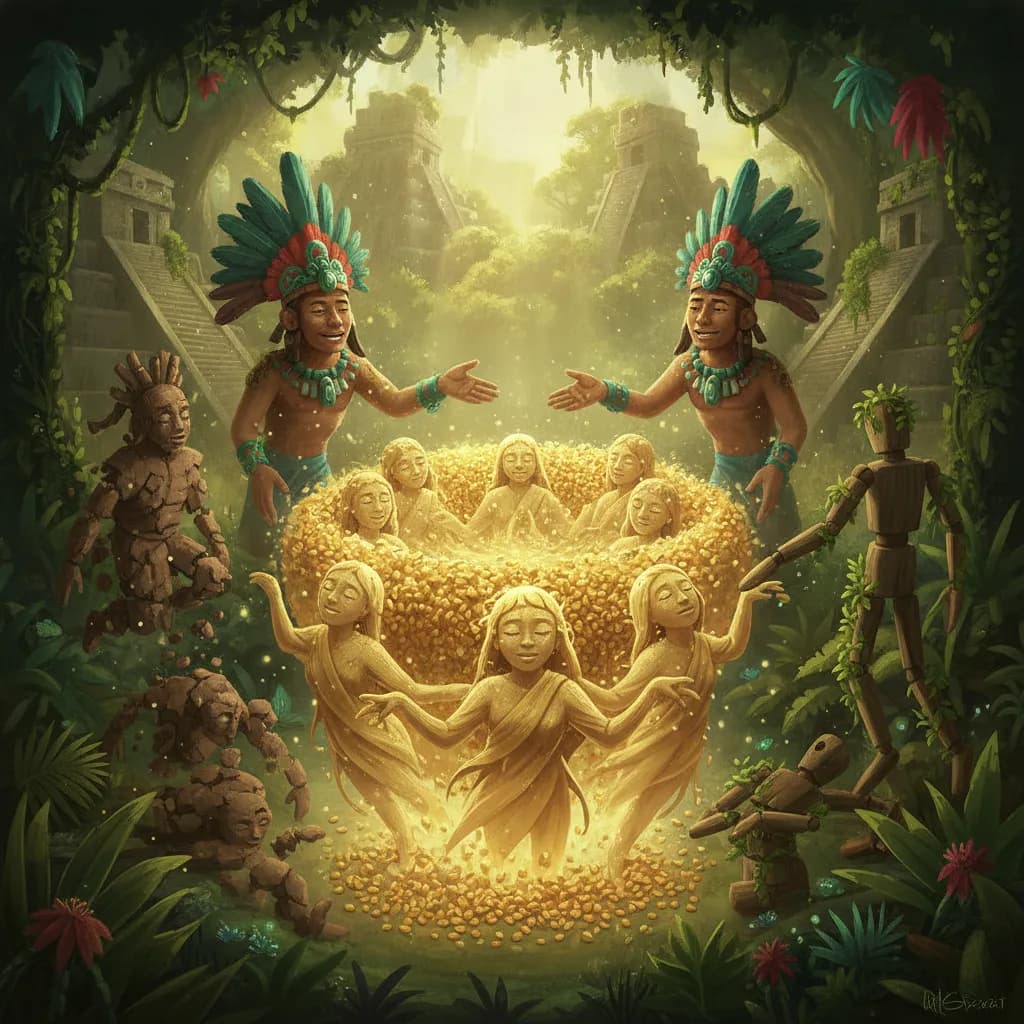
In the Maya Popol Vuh, the gods flopped at making humans from mud and wood before nailing it with corn.
By Greg Goodwin · Published October 3, 2026 · Updated October 24, 2026
Cheat Sheet
- Encompasses the mythological traditions of multiple distinct civilizations, including the Aztec, Maya, and earlier Olmec cultures, rather than one single system.
- Quetzalcoatl, the feathered serpent deity, appears across multiple Mesoamerican cultures, sometimes under different names, reflecting shared regional religious influence.
- The Popol Vuh, a Maya sacred narrative, recounts a creation story in which humans were made from maize after earlier failed material attempts.
- Many Mesoamerican traditions describe the universe as having passed through multiple prior 'ages' or 'suns,' each ending in destruction before the current one began.
- Human sacrifice, particularly within Aztec religious practice, was understood as necessary to sustain the sun and maintain cosmic order, not performed arbitrarily.
- Mesoamerican ballgames carried deep mythological significance, often symbolically reenacting cosmic struggles between light and the underworld.
The 60-Second Version
Mesoamerican mythology isn't a single unified system but rather encompasses the distinct, overlapping religious traditions of multiple civilizations, including the Aztec, Maya, and earlier Olmec cultures, each with its own specific deities and narratives even as shared regional themes run throughout. One of the clearest examples of that shared influence is Quetzalcoatl, the feathered serpent deity who appears across multiple Mesoamerican cultures, sometimes under different regional names, reflecting centuries of religious exchange across the region. The Maya sacred narrative known as the Popol Vuh recounts a particularly memorable creation story in which the gods made several failed attempts to create humanity out of mud and wood before finally succeeding using maize, a detail that reflects just how central corn was to Mesoamerican life and cosmology. Many of these traditions also describe the universe as having passed through multiple prior cosmic ages, each one ending in destruction before the current age began, a framework most famously documented in Aztec cosmology as the "Five Suns." Within Aztec religious practice specifically, human sacrifice was understood not as arbitrary violence but as a cosmologically necessary act believed essential to sustaining the sun and maintaining the broader order of the universe, a belief that also extended into the ritual significance of the Mesoamerican ballgame, which often symbolically reenacted cosmic struggles between light and the underworld.
The Long Version
Multiple Civilizations, Shared Themes
Mesoamerican mythology isn't a single unified system but rather encompasses the distinct, overlapping religious traditions of multiple civilizations, including the Aztec, Maya, and earlier Olmec cultures, each maintaining its own specific deities and narrative traditions even as shared regional themes and symbols run throughout the broader Mesoamerican world.
A Deity Shared Across Cultures
One of the clearest examples of that shared regional influence is Quetzalcoatl, the feathered serpent deity who appears across multiple Mesoamerican cultures, sometimes under different regional names, a recurring figure that reflects centuries of religious exchange and overlapping tradition across the region rather than any single culture's isolated invention.
Humans Made From Corn
The Maya sacred narrative known as the Popol Vuh recounts a particularly memorable creation story in which the gods made several failed attempts to create humanity, first from mud and later from wood, before finally succeeding using maize, a detail that reflects just how central corn was to Mesoamerican agriculture, diet, and cosmology alike.
A Universe of Destroyed Ages
Many of these traditions also describe the universe as having passed through multiple prior cosmic ages, each one ending in catastrophic destruction before the current age began, a framework most famously documented in Aztec cosmology as the "Five Suns," reflecting a worldview in which the present era is understood as fragile and ultimately temporary.
Sacrifice, Order, and the Ballgame
Within Aztec religious practice specifically, human sacrifice was understood not as arbitrary violence but as a cosmologically necessary act believed essential to sustaining the sun and maintaining the broader order of the universe, a belief system that also extended into the ritual significance of the Mesoamerican ballgame, which often symbolically reenacted cosmic struggles between light and the underworld.
Why People Care
Mesoamerican mythology offers a genuinely distinct cosmological worldview from more widely taught Greek, Norse, or Egyptian traditions, and understanding its themes of cyclical destruction, agricultural symbolism, and cosmic maintenance provides essential context for the art, ritual, and worldview of the civilizations that built some of the ancient world's most impressive cities.
Glossary
- Quetzalcoatl
- The feathered serpent deity appearing across multiple Mesoamerican cultures, often associated with wind, learning, and creation.
- Popol Vuh
- A sacred Maya narrative text recounting creation myths, including the story of humans being made from maize.
- The Five Suns
- An Aztec cosmological concept describing the universe as having passed through four previous destroyed ages before the current fifth age.
- Mesoamerican ballgame
- A ritual sport played across Mesoamerican cultures, often carrying symbolic meaning tied to cosmic struggles between light and the underworld.
- Olmec civilization
- An early Mesoamerican civilization whose religious and artistic influence is believed to have shaped later Maya and Aztec mythology.
Go Deeper
- The Metropolitan Museum of Art — Art of the Aztec and Maya
- Popol Vuh (translated by Dennis Tedlock)
More to Explore
- Hindu Mythology
One of Hindu mythology's central epics is so long that it's often described as roughly ten times the combined length of the Iliad and the Odyssey.
- Celtic Mythology
Celtic myths were told aloud for centuries before medieval Christian scribes wrote them down, so what survives carries their fingerprints.
- Norse Mythology
A mythology where even the gods know exactly how and when the world ends — and are powerless to stop it.
- Egyptian Mythology
A belief system so focused on the afterlife that an entire elaborate industry, mummification, existed purely to prepare for it.
- Greek Mythology
A pantheon of gods who were vain, jealous, and constantly meddling in human affairs — basically reality TV with lightning bolts.