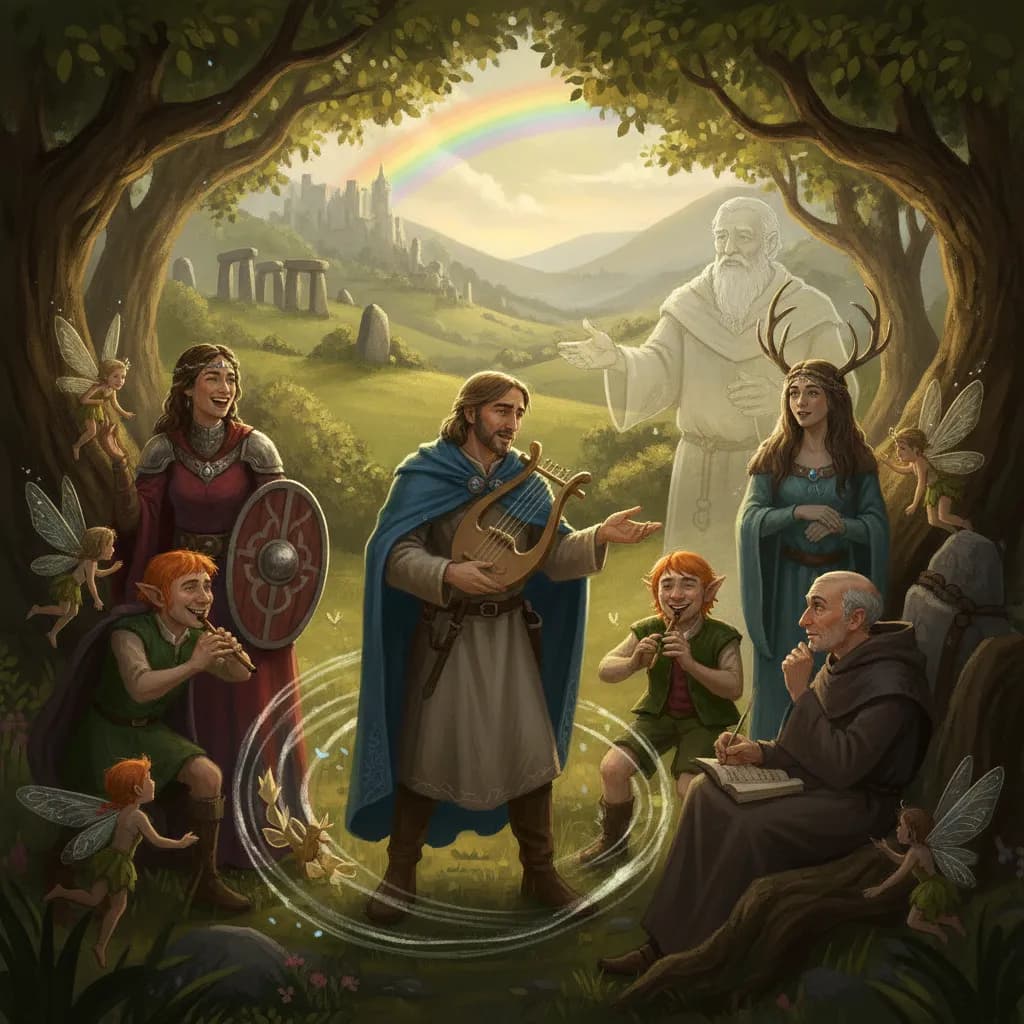
Celtic Mythology
Much of what survives of Celtic mythology today wasn't written down by the Celts who told these stories — it was recorded centuries later, by medieval Christian scribes working from oral tradition.
Cheat Sheet
- Celtic mythology refers to the traditional religious beliefs and legendary stories of the ancient Celtic peoples, spanning regions including Ireland, Scotland, Wales, and parts of continental Europe.
- Much of surviving Celtic mythology was preserved through medieval Irish and Welsh manuscripts, written down centuries after the original oral traditions developed, meaning surviving texts inevitably reflect later Christian scribal influence.
- The Tuatha Dé Danann, a supernatural race of god-like beings in Irish mythology, feature prominently in stories describing Ireland's mythical early history and conflicts with other legendary groups.
- Celtic mythology places significant emphasis on the natural world, including sacred wells, rivers, and trees, reflecting a broader spiritual connection between the Celtic peoples and their natural surroundings.
- The legendary hero Cú Chulainn, a central figure in Irish mythology's Ulster Cycle, is renowned for extraordinary feats of strength and a dramatic battle transformation known as his "warp spasm."
- Celtic mythology's imagery and themes have significantly influenced later fantasy literature, folklore, and popular culture well beyond their original Irish, Scottish, and Welsh cultural contexts.
The 60-Second Version
Celtic mythology refers to the traditional religious beliefs and legendary stories of the ancient Celtic peoples, spanning regions including Ireland, Scotland, Wales, and parts of continental Europe. Much of surviving Celtic mythology was preserved through medieval Irish and Welsh manuscripts, written down centuries after the original oral traditions developed, meaning surviving texts inevitably reflect later Christian scribal influence. The Tuatha Dé Danann, a supernatural race of god-like beings in Irish mythology, feature prominently in stories describing Ireland's mythical early history and conflicts with other legendary groups. Celtic mythology places significant emphasis on the natural world, including sacred wells, rivers, and trees, reflecting a broader spiritual connection between the Celtic peoples and their natural surroundings. The legendary hero Cú Chulainn, a central figure in Irish mythology's Ulster Cycle, is renowned for extraordinary feats of strength and a dramatic battle transformation known as his "warp spasm." Celtic mythology's imagery and themes have significantly influenced later fantasy literature, folklore, and popular culture well beyond their original Irish, Scottish, and Welsh cultural contexts.
The Long Version
Stories Recorded Long After They Were First Told
Much of what survives of Celtic mythology today was preserved through medieval Irish and Welsh manuscripts, written down considerably later, often centuries, after the original oral storytelling traditions developed, meaning surviving written texts inevitably reflect the perspective and influence of the later medieval Christian scribes who recorded them, rather than a purely unaltered original pre-Christian source.
The Tuatha Dé Danann and Ireland's Mythical History
The Tuatha Dé Danann, a supernatural race of god-like beings central to Irish mythology, feature prominently in stories describing Ireland's mythical early history, including significant conflicts with other legendary groups believed to have inhabited or invaded Ireland in earlier mythological ages, forming a foundational part of the broader Irish mythological tradition.
A Deep Spiritual Connection to Nature
Celtic mythology places significant emphasis on the natural world, treating specific wells, rivers, and trees as spiritually sacred sites, reflecting a broader worldview in which the Celtic peoples understood themselves as deeply and spiritually connected to their surrounding natural landscape, rather than viewing nature as merely a separate, purely physical backdrop.
Cú Chulainn's Legendary Feats
Among Celtic mythology's most celebrated legendary figures is Cú Chulainn, a central hero of Irish mythology's Ulster Cycle, renowned for extraordinary feats of strength and skill in battle, including a dramatic and famously vivid battle transformation known as his "warp spasm," in which his body was described as undergoing a terrifying physical distortion during moments of intense combat.
Ad slot (placeholder — set NEXT_PUBLIC_ADSENSE_SLOT_ID once an ad unit is created)
Glossary
- Tuatha Dé Danann
- A supernatural race of god-like beings in Irish mythology, prominent in stories of Ireland's mythical early history.
- Cú Chulainn
- A legendary hero of Irish mythology's Ulster Cycle, known for extraordinary strength and his battle transformation known as the "warp spasm."
- Ulster Cycle
- A major body of medieval Irish legendary stories centered on the kingdom of Ulster and its heroes.
- Oral tradition
- The original method of passing down Celtic mythological stories before they were later written into medieval manuscripts.
- Sacred natural sites
- Wells, rivers, and trees considered spiritually significant within Celtic mythology, reflecting its emphasis on the natural world.
Go Deeper
- Encyclopaedia Britannica — Celtic Religion
- The Celtic Literature Collective