Maximalism (Interior Design)
Where minimalism asks what a room can live without, maximalism asks how much personality it can actually hold.
Cheat Sheet
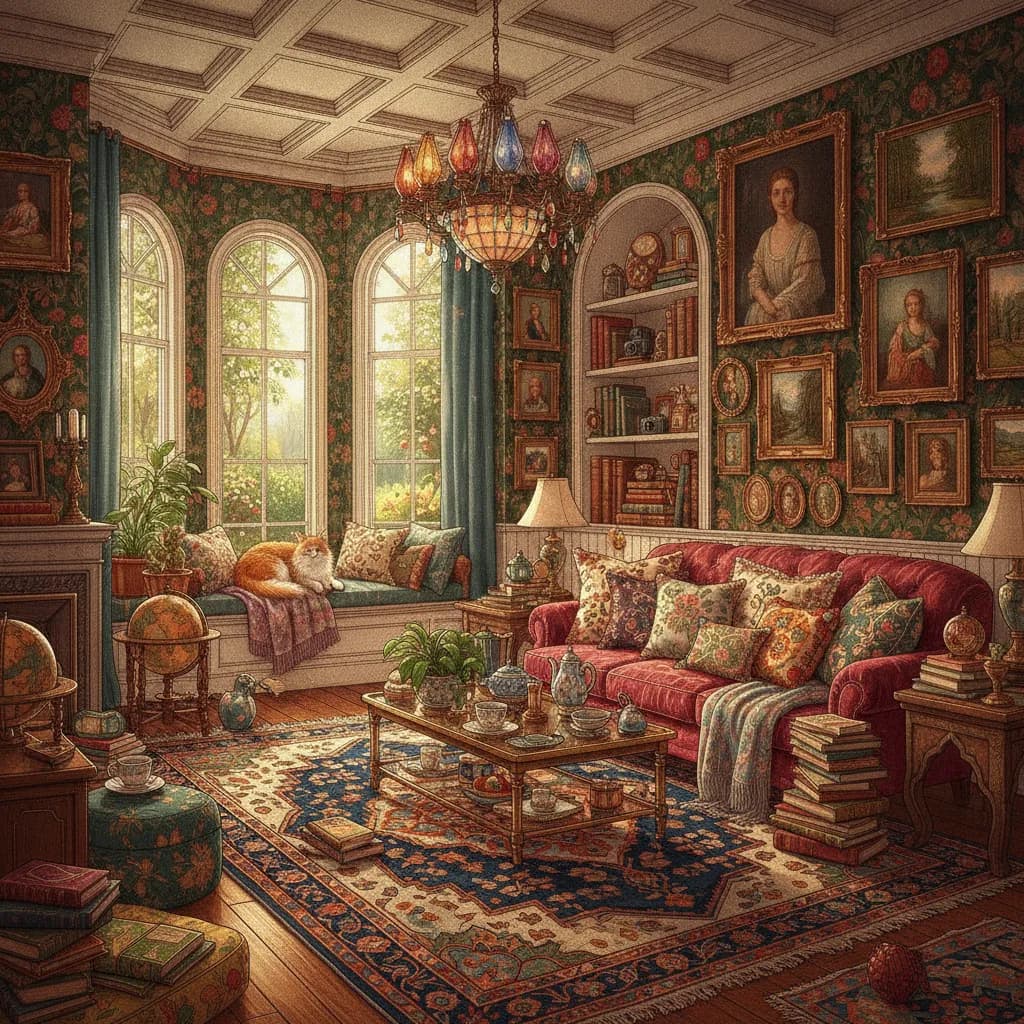
- Maximalism, as an interior design style, embraces bold colors, layered patterns, and abundant decorative objects, standing in deliberate contrast to minimalism's pared-back restraint.
- The style is often summarized by the phrase 'more is more,' treating a densely curated, visually rich space as an intentional design achievement rather than clutter.
- Successful maximalist design generally still requires an underlying sense of cohesion, often achieved through a unifying color palette or recurring pattern theme, to keep the abundance from reading as chaotic.
- Maximalism frequently draws on personal collections, travel souvenirs, and sentimental objects, making spaces feel deeply individual and reflective of their owner's specific history and taste.
- The style saw a notable resurgence in popularity in the 2020s, partly framed as a reaction against the more austere, widely replicated minimalist aesthetic that had dominated interior design trends for years prior.
- Critics of poorly executed maximalism note that without any organizing principle, the style can tip into visual overwhelm rather than the intentional, curated richness it aims for.
The 60-Second Version
Maximalism, as an interior design style, embraces bold colors, layered patterns, and abundant decorative objects, standing in deliberate contrast to minimalism's pared-back restraint. The style is often summarized by the phrase "more is more," treating a densely curated, visually rich space as an intentional design achievement rather than clutter. Successful maximalist design generally still requires an underlying sense of cohesion, often achieved through a unifying color palette or recurring pattern theme, to keep the abundance from reading as chaotic. Maximalism frequently draws on personal collections, travel souvenirs, and sentimental objects, making spaces feel deeply individual and reflective of their owner's specific history and taste. The style saw a notable resurgence in popularity in the 2020s, partly framed as a reaction against the more austere, widely replicated minimalist aesthetic that had dominated interior design trends for years prior. Critics of poorly executed maximalism note that without any organizing principle, the style can tip into visual overwhelm rather than the intentional, curated richness it aims for.
The Long Version
More Is More, By Design
Maximalism, as an interior design style, embraces bold colors, layered patterns, and abundant decorative objects, standing in deliberate, almost oppositional contrast to minimalism's pared-back restraint, treating visual richness itself as the design goal rather than something to be edited down.
An Intentional Philosophy, Not Clutter
The style is often summarized by the phrase "more is more," a philosophy that treats a densely curated, visually rich space as a genuine design achievement in its own right rather than as clutter or a lack of editing, reframing abundance as a deliberate aesthetic choice rather than an oversight.
The Discipline Hiding Inside the Abundance
Despite its visual density, successful maximalist design generally still requires an underlying sense of cohesion, most often achieved through a unifying color palette or a recurring pattern theme that ties the many individual elements together, which is precisely what keeps well-executed maximalism from simply reading as chaotic or overwhelming.
A Deeply Personal Style
Maximalism frequently draws on personal collections, travel souvenirs, and sentimental objects accumulated over years, making maximalist spaces feel deeply individual and directly reflective of their owner's specific history, interests, and taste in a way more restrained design styles often can't replicate.
A Reaction to Years of Minimalism
The style saw a notable resurgence in popularity during the 2020s, a shift partly framed by designers and critics as a direct reaction against the more austere, widely replicated minimalist aesthetic that had dominated interior design trends and social media for years prior, with maximalism offering a more expressive, individualized alternative. Critics of poorly executed maximalism do caution, however, that without any real organizing principle behind it, the style can easily tip into genuine visual overwhelm rather than the intentional, curated richness it's meant to achieve.
Ad slot (placeholder — set NEXT_PUBLIC_ADSENSE_SLOT_ID once an ad unit is created)
Why People Care
Maximalism offers a compelling, personality-forward alternative to years of minimalist dominance in interior design, and understanding the underlying cohesion it actually requires helps distinguish thoughtfully executed maximalism from simple clutter.
Glossary
- Curated abundance
- A maximalist design principle in which a large number of decorative objects and patterns are intentionally arranged rather than simply accumulated.
- Pattern layering
- Combining multiple patterns within a single space, a common maximalist technique requiring careful coordination to avoid visual chaos.
- Unifying palette
- A consistent color scheme used to tie together a visually dense, maximalist space and prevent it from feeling disorganized.
- Eclectic style
- A design approach combining pieces from different eras, cultures, or styles, often closely associated with maximalist interiors.
- Minimalism
- An interior design style favoring restraint and simplicity, commonly discussed as maximalism's philosophical and visual opposite.
Go Deeper
More to Explore
- Biophilic Design
Some hospitals have measured shorter patient recovery times simply from adding more natural light and greenery to the rooms.
- Minimalism
A design philosophy whose central idea, having less, has paradoxically become a reason people buy more — carefully curated "minimalist" furniture doesn't come cheap.
- Feng Shui
A design philosophy old enough to predate most architecture as we know it, still influencing exactly where people put their beds and desks today.
- Color Theory in Design
A single practical guideline, allocating colors roughly 60-30-10 across a room, quietly underlies why so many professionally designed spaces feel instinctively balanced.
- The KonMari Method
Marie Kondo's method doesn't start by asking what to throw away — it asks the opposite question entirely, and that single reframe is why it caught on worldwide.