Upcycling and Repurposing
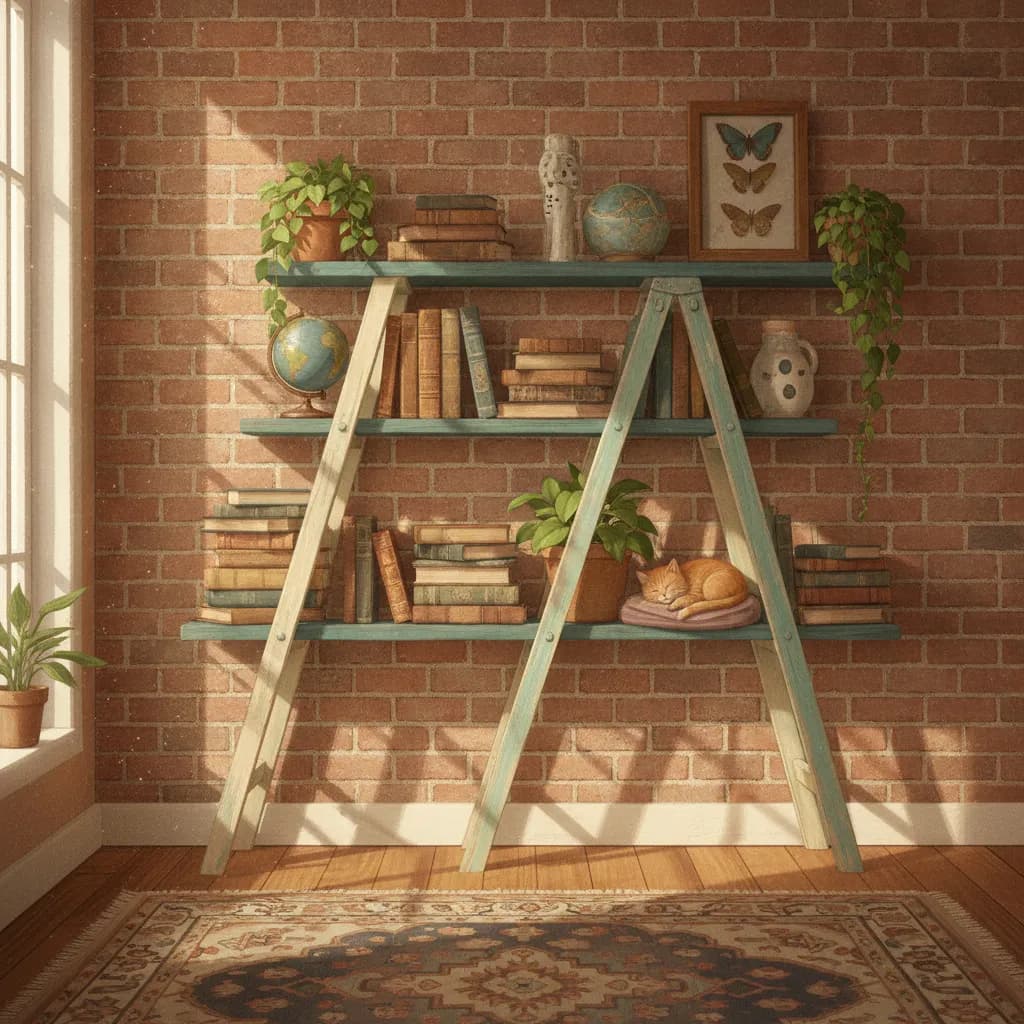
Turning an old ladder into a bookshelf is a craft project that also outranks recycling on the waste hierarchy.
By Greg Goodwin · Published October 3, 2026 · Updated October 24, 2026
Cheat Sheet
- Upcycling transforms waste materials or unwanted products into something of equal or greater value, distinct from recycling, which breaks materials down to raw form first.
- The term 'upcycling' was popularized by the 2002 book 'Cradle to Cradle' by William McDonough and Michael Braungart, though the practice itself long predates the term.
- Recycling typically involves energy-intensive reprocessing; upcycling generally requires less energy since the original material's form is partially preserved.
- Furniture, clothing, and home decor are among the most common categories for consumer-level upcycling projects.
- Some fashion and design brands now build entire product lines around upcycled materials, turning industrial waste or deadstock fabric into marketed, sellable goods.
- Upcycling is generally considered higher on the 'waste hierarchy' than recycling, which itself ranks above disposal, though reducing consumption in the first place ranks higher still.
The 60-Second Version
Upcycling describes transforming waste materials or unwanted products into something of equal or greater value, a meaningfully different process from recycling, which typically breaks materials all the way down to a raw form before rebuilding them into something new. The term itself was popularized by the 2002 book "Cradle to Cradle," though the underlying practice, finding creative new uses for materials rather than discarding them, long predates that specific vocabulary. One practical advantage upcycling often holds over traditional recycling is energy use, since recycling generally requires energy-intensive reprocessing while upcycling preserves more of a material's original form, needing comparatively less energy to transform it into its new use. At the consumer level, furniture, clothing, and home decor remain among the most common categories for upcycling projects, while at the commercial level, some fashion and design brands have built entire product lines specifically around upcycled materials, turning industrial waste or unused deadstock fabric into genuinely marketed, sellable goods. Within the broader "waste hierarchy" framework that ranks environmental strategies by preference, upcycling generally sits above standard recycling, which itself ranks above simple disposal, though reducing consumption in the first place still ranks as the most preferred strategy of all.
The Long Version
Preserving Value Instead of Breaking It Down
Upcycling describes transforming waste materials or unwanted products into something of equal or greater value, a meaningfully different process from recycling, which typically breaks materials all the way down to a raw form, like melted plastic pellets or pulped paper fiber, before rebuilding them into something new.
A Term Coined in 2002, a Practice Much Older
The term "upcycling" itself was popularized by the 2002 book "Cradle to Cradle" by William McDonough and Michael Braungart, though the underlying practice, finding creative new uses for materials rather than discarding them outright, long predates that specific vocabulary, stretching back through generations of practical household reuse.
Why It Often Uses Less Energy
One practical advantage upcycling often holds over traditional recycling is energy use, since recycling generally requires energy-intensive reprocessing to break a material down to its raw form, while upcycling preserves more of a material's original structure, typically needing comparatively less energy to transform it into its new, repurposed use.
From Home Projects to Fashion Lines
At the consumer level, furniture, clothing, and home decor remain among the most common categories for upcycling projects, while at the commercial level, some fashion and design brands have built entire product lines specifically around upcycled materials, turning industrial waste or unused deadstock fabric into genuinely marketed, sellable goods rather than treating it as a niche craft activity.
Where It Ranks on the Waste Hierarchy
Within the broader "waste hierarchy" framework that ranks environmental strategies by preference, upcycling generally sits above standard recycling, which itself ranks above simple disposal, though reducing consumption in the first place still ranks as the most environmentally preferred strategy of all, ahead of any form of reuse or recycling.
Why People Care
Upcycling offers a genuinely practical, often lower-energy alternative to standard recycling, and understanding where it fits within the broader waste hierarchy helps people make more informed choices about which sustainability strategies actually deliver the most meaningful environmental benefit.
Glossary
- Upcycling
- Transforming waste materials or unwanted products into something of equal or greater value, without fully breaking them down first.
- Waste hierarchy
- A framework ranking waste management strategies by environmental preference, generally placing reduction above reuse, reuse above recycling, and recycling above disposal.
- Cradle to Cradle
- A 2002 book by William McDonough and Michael Braungart that popularized the term 'upcycling' and a broader circular design philosophy.
- Deadstock fabric
- Unused or excess fabric from manufacturing, sometimes repurposed by upcycling-focused fashion brands.
- Downcycling
- A form of recycling that converts material into a lower-quality or lower-value product, often contrasted with upcycling's value-preserving goal.
Go Deeper
- Cradle to Cradle, by William McDonough and Michael Braungart
- EPA — Sustainable Materials Management: Waste Hierarchy
More to Explore
- Reducing Food Waste
Roughly a third of all the food grown and produced on Earth for people to eat never actually gets eaten.
- Your Carbon Footprint
The personal "carbon footprint" was popularized by a 2000s BP ad campaign, a detail critics still love to bring up.
- Zero-Waste Living
Literal zero waste is nearly impossible for most households, so practitioners treat it as a direction, not a finish line.
- Water Conservation
Saving water at home helps, but agriculture is the world's biggest freshwater user, so farm efficiency moves the needle even more.
- Home Energy Efficiency
The least glamorous home upgrade, sealing leaks and adding insulation, is among the most cost-effective ways to cut energy use.