Color Theory in Design
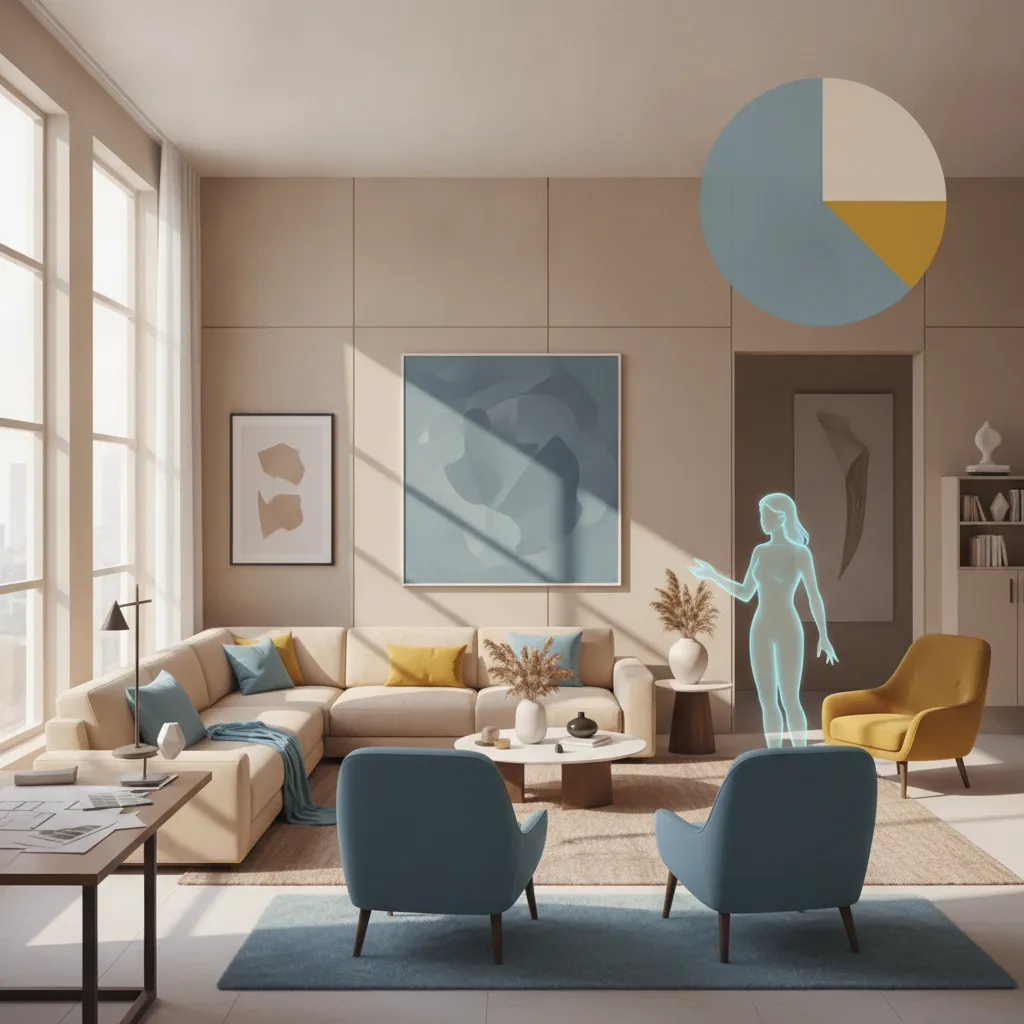
A single practical guideline, allocating colors roughly 60-30-10 across a room, quietly underlies why so many professionally designed spaces feel instinctively balanced.
Cheat Sheet
- Color theory is the study of how colors interact, combine, and affect visual perception, providing a practical framework designers use to make intentional color choices.
- The color wheel, organizing colors by their relationships to one another, forms the foundational tool of color theory, distinguishing primary, secondary, and tertiary colors.
- Complementary colors, positioned opposite each other on the color wheel, create strong visual contrast when paired together, while analogous colors, positioned next to each other, tend to produce a more harmonious, cohesive look.
- Color temperature, the distinction between "warm" colors like red and orange and "cool" colors like blue and green, significantly influences the perceived mood and energy of a space or design.
- The 60-30-10 rule, a common practical guideline in interior design, suggests allocating 60% of a room's color scheme to a dominant color, 30% to a secondary color, and 10% to an accent color.
- Cultural context significantly shapes color perception and meaning, since colors can carry considerably different symbolic associations across different countries and cultures.
The 60-Second Version
Color theory is the study of how colors interact, combine, and affect visual perception, providing a practical framework designers use to make intentional color choices. The color wheel, organizing colors by their relationships to one another, forms the foundational tool of color theory, distinguishing primary, secondary, and tertiary colors. Complementary colors, positioned opposite each other on the color wheel, create strong visual contrast when paired together, while analogous colors, positioned next to each other, tend to produce a more harmonious, cohesive look. Color temperature, the distinction between "warm" colors like red and orange and "cool" colors like blue and green, significantly influences the perceived mood and energy of a space or design. The 60-30-10 rule, a common practical guideline in interior design, suggests allocating 60% of a room's color scheme to a dominant color, 30% to a secondary color, and 10% to an accent color. Cultural context significantly shapes color perception and meaning, since colors can carry considerably different symbolic associations across different countries and cultures.
The Long Version
The Color Wheel's Foundational Structure
The color wheel organizes colors according to their relationships to one another, distinguishing primary colors, which can't be created by mixing other colors, secondary colors, formed by mixing two primary colors, and tertiary colors, formed by mixing a primary and an adjacent secondary color, providing the foundational structure that most other color theory principles build directly on top of.
Contrast vs. Harmony
Complementary colors, positioned directly opposite each other on the color wheel, create strong visual contrast and energy when paired together, making them a popular choice for design elements meant to stand out or draw attention. Analogous colors, positioned next to each other on the wheel, instead tend to produce a considerably more harmonious, cohesive visual effect, often favored in designs aiming for a calmer, more unified feel.
Warm and Cool, and a Practical Ratio for Balance
Color temperature, the broad distinction between "warm" colors like red, orange, and yellow and "cool" colors like blue, green, and purple, significantly influences the perceived mood and energy of a space, with warm colors generally associated with energy and coziness and cool colors generally associated with calm and spaciousness. Many interior designers apply the practical 60-30-10 rule as a starting guideline, allocating roughly 60% of a room's overall color scheme to a dominant color, 30% to a secondary complementary color, and 10% to a smaller accent color for visual interest.
Why the Same Color Doesn't Mean the Same Thing Everywhere
Cultural context significantly shapes how specific colors are perceived and what meaning they carry, since colors can hold considerably different symbolic associations across different countries and cultures, a consideration that matters particularly for designers and brands working across international or multicultural contexts.
Ad slot (placeholder — set NEXT_PUBLIC_ADSENSE_SLOT_ID once an ad unit is created)
Glossary
- Color wheel
- A circular diagram organizing colors by their relationships, forming the foundational tool of color theory.
- Complementary colors
- Colors positioned opposite each other on the color wheel, creating strong visual contrast when paired together.
- Analogous colors
- Colors positioned next to each other on the color wheel, tending to produce a more harmonious, cohesive look.
- Color temperature
- The distinction between "warm" colors like red and orange and "cool" colors like blue and green.
- 60-30-10 rule
- A common interior design guideline allocating 60% of a color scheme to a dominant color, 30% to a secondary color, and 10% to an accent color.
Go Deeper
- The Color Association of the United States
- Pantone Color Institute