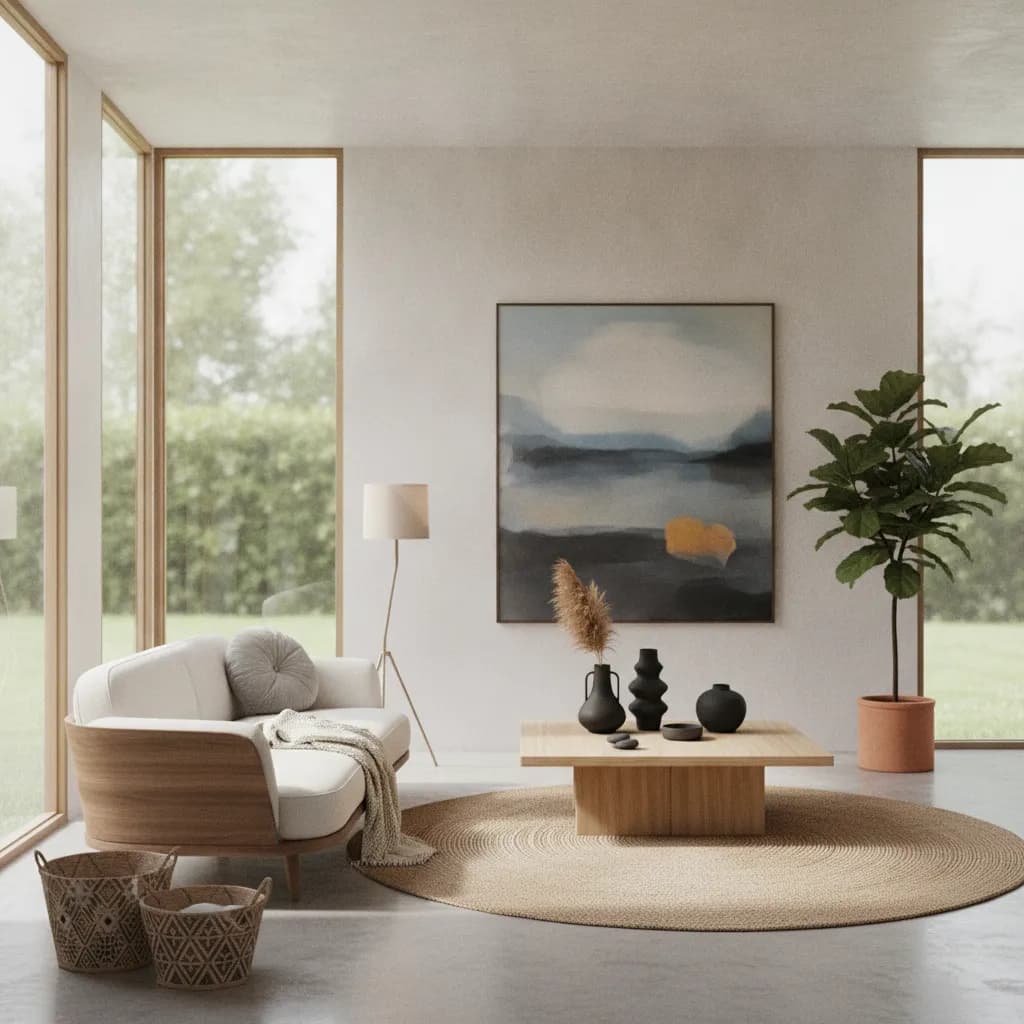
Minimalism
A design philosophy whose central idea, having less, has paradoxically become a reason people buy more — carefully curated "minimalist" furniture doesn't come cheap.
Cheat Sheet
- Minimalism, as an interior design and lifestyle philosophy, emphasizes simplicity, intentionality, and the removal of excess, favoring fewer, more purposeful possessions and design elements.
- In interior design specifically, minimalism is characterized by clean lines, neutral color palettes, uncluttered surfaces, and a deliberate emphasis on functional, high-quality pieces over decorative abundance.
- Minimalism as a broader lifestyle movement extends beyond interior design to encompass intentional consumption habits, reduced material possessions, and a general focus on prioritizing experiences and values over accumulating physical belongings.
- The minimalist design movement draws significant historical influence from mid-20th-century modernist architecture and design, as well as traditional Japanese aesthetic principles emphasizing simplicity and empty space.
- Critics of popular minimalism sometimes note that achieving a genuinely minimalist aesthetic can paradoxically require purchasing new, carefully curated items, running counter to minimalism's own underlying anti-consumption ethos.
- Minimalism's popularity has grown significantly in recent decades, partly as a cultural response to increasing material consumption and a growing interest in decluttering and simplified living.
The 60-Second Version
Minimalism, as an interior design and lifestyle philosophy, emphasizes simplicity, intentionality, and the removal of excess, favoring fewer, more purposeful possessions and design elements. In interior design specifically, minimalism is characterized by clean lines, neutral color palettes, uncluttered surfaces, and a deliberate emphasis on functional, high-quality pieces over decorative abundance. Minimalism as a broader lifestyle movement extends beyond interior design to encompass intentional consumption habits, reduced material possessions, and a general focus on prioritizing experiences and values over accumulating physical belongings. The minimalist design movement draws significant historical influence from mid-20th-century modernist architecture and design, as well as traditional Japanese aesthetic principles emphasizing simplicity and empty space. Critics of popular minimalism sometimes note that achieving a genuinely minimalist aesthetic can paradoxically require purchasing new, carefully curated items, running counter to minimalism's own underlying anti-consumption ethos. Minimalism's popularity has grown significantly in recent decades, partly as a cultural response to increasing material consumption and a growing interest in decluttering and simplified living.
The Long Version
Clean Lines and Purposeful Objects
In interior design specifically, minimalism is characterized by clean lines, neutral color palettes, uncluttered surfaces, and a deliberate emphasis on functional, high-quality pieces over decorative abundance, an aesthetic built around the idea that every object in a space should serve a clear purpose rather than existing purely for decoration.
A Lifestyle Philosophy Beyond Just Design
Minimalism extends well beyond interior design into a broader lifestyle philosophy, encompassing intentional consumption habits, reduced overall material possessions, and a general focus on prioritizing experiences and personal values over accumulating physical belongings, treating the design principle as just one visible expression of a much broader underlying approach to living.
Roots in Modernism and Japanese Aesthetics
The minimalist design movement draws significant historical influence from mid-20th-century modernist architecture and design, which similarly emphasized function and simplicity over ornamentation, as well as traditional Japanese aesthetic principles that have long valued simplicity, empty space, and restraint as sources of beauty in their own right.
The Irony of Buying Your Way Into Minimalism
Critics of popular minimalism sometimes point out a genuine irony: achieving a convincingly minimalist aesthetic often requires purchasing new, carefully curated furniture and decor specifically designed to look sparse and intentional, a process that can run directly counter to minimalism's own underlying anti-consumption philosophy, particularly when practiced more as an aesthetic trend than a genuine lifestyle shift.
Ad slot (placeholder — set NEXT_PUBLIC_ADSENSE_SLOT_ID once an ad unit is created)
Glossary
- Negative space
- Deliberately empty, uncluttered space within a design, a key element of minimalist aesthetics.
- Modernism
- A mid-20th-century architecture and design movement that significantly influenced minimalist design principles.
- Intentional consumption
- A practice of deliberately and selectively acquiring possessions, central to minimalism as a broader lifestyle philosophy.
- Neutral color palette
- A limited range of muted, understated colors commonly used in minimalist interior design.
- Decluttering
- The process of removing excess or unnecessary possessions from a space, closely associated with minimalist lifestyle practices.
Go Deeper
- The Museum of Modern Art — Modernism and Design
- Architectural Digest — Minimalist Design