The Indus Valley Civilization
One of the world's largest and most sophisticated ancient civilizations left behind thousands of inscriptions — and to this day, nobody has been able to read a single one of them.
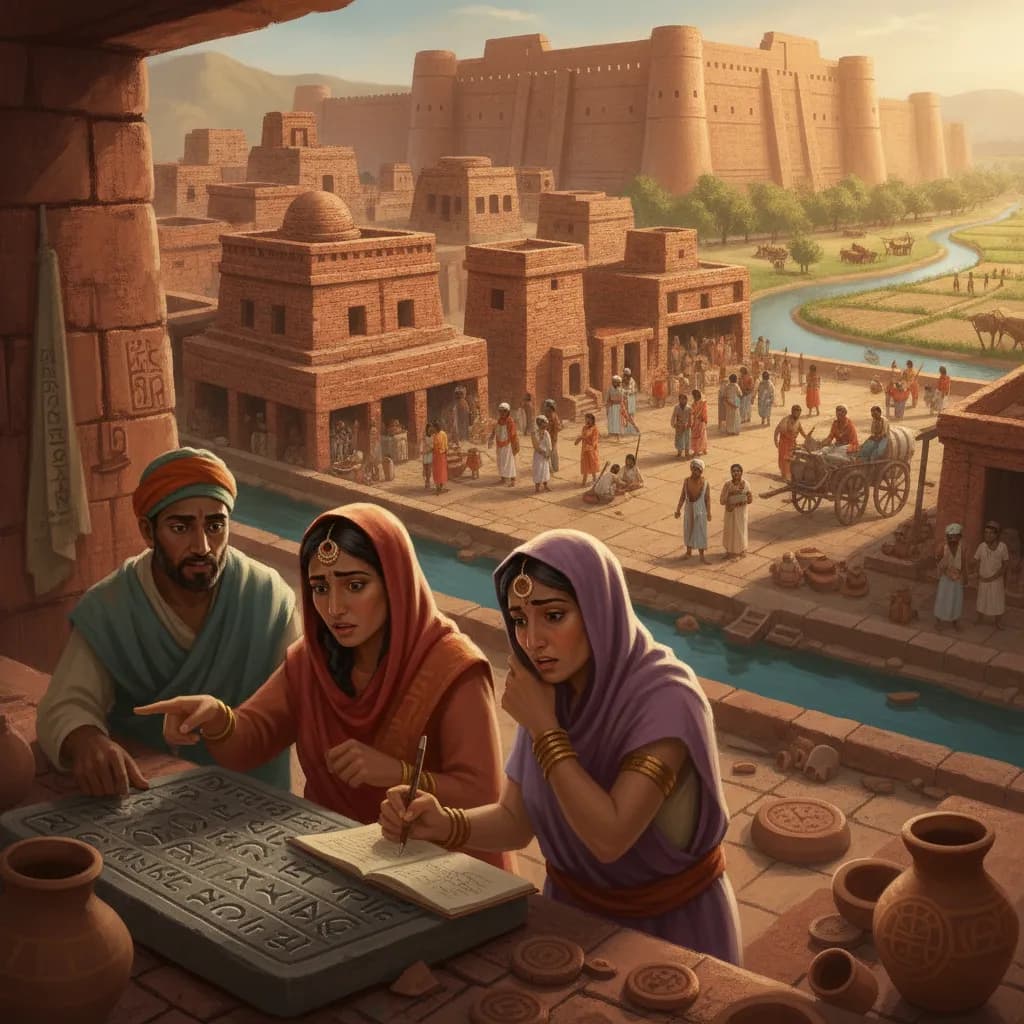
Cheat Sheet
- Flourished roughly 3300-1300 BCE in the region of modern-day Pakistan and northwest India, one of the world's earliest urban civilizations.
- Major cities like Mohenjo-daro and Harappa featured remarkably advanced urban planning, including grid-pattern streets and sophisticated drainage systems.
- The civilization's writing system, known as the Indus script, remains undeciphered to this day despite decades of scholarly attempts.
- Evidence suggests a surprisingly egalitarian material culture — archaeologists have found relatively few grand palaces, monuments, or royal tombs compared to contemporaneous civilizations.
- Trade evidence, including Indus seals found in Mesopotamia, indicates active long-distance commercial contact with civilizations in the Persian Gulf and Mesopotamia.
- The civilization's decline around 1900-1300 BCE remains debated among scholars, with theories including climate change, river shifts, and declining trade.
The 60-Second Version
The Indus Valley Civilization flourished roughly between 3300 and 1300 BCE across what's now Pakistan and northwest India, standing as one of the world's earliest true urban civilizations alongside contemporaries in Mesopotamia and Egypt. Its major cities, including Mohenjo-daro and Harappa, featured remarkably advanced urban planning for their era, with organized grid-pattern streets and sophisticated drainage systems that many later ancient cities wouldn't match for centuries. One of the civilization's most persistent mysteries is its writing system, the Indus script, which remains completely undeciphered to this day despite decades of dedicated scholarly effort, leaving huge gaps in what historians can definitively say about its politics, religion, or daily life. Adding to that mystery, archaeological evidence points toward a surprisingly egalitarian material culture, since researchers have found relatively few grand palaces, monuments, or royal tombs compared to other major civilizations of the same era, complicating assumptions about how centralized or hierarchical its society actually was. Trade evidence, including Indus seals discovered as far away as Mesopotamia, confirms the civilization maintained active long-distance commercial contact well beyond its own borders, and its eventual decline sometime between 1900 and 1300 BCE remains genuinely debated among scholars, with leading theories pointing to climate change, shifting river courses, or declining trade networks.
The Long Version
An Early Urban Civilization
The Indus Valley Civilization flourished roughly between 3300 and 1300 BCE across what's now Pakistan and northwest India, standing as one of the world's earliest true urban civilizations alongside better-known contemporaries in Mesopotamia and ancient Egypt, though it remains considerably less familiar to most people today.
Cities Built With Remarkable Foresight
Its major cities, including Mohenjo-daro and Harappa, featured remarkably advanced urban planning for their era, with organized grid-pattern streets, standardized brick sizes, and sophisticated drainage systems that many later ancient cities elsewhere in the world wouldn't manage to match for centuries afterward.
A Writing System Nobody Can Read
One of the civilization's most persistent mysteries is its writing system, known as the Indus script, which remains completely undeciphered to this day despite decades of dedicated scholarly effort, leaving substantial gaps in what historians can definitively say about its politics, religious beliefs, or the details of everyday life.
A Puzzlingly Egalitarian Society, and an Unresolved Decline
Adding to that mystery, archaeological evidence points toward a surprisingly egalitarian material culture, since researchers have found relatively few grand palaces, monuments, or royal tombs compared to other major civilizations of the same era, complicating assumptions about just how centralized or hierarchical Indus society actually was. Trade evidence, including Indus seals discovered as far away as Mesopotamia, confirms the civilization maintained active long-distance commercial contact well beyond its own borders, and its eventual decline sometime between 1900 and 1300 BCE remains genuinely debated among scholars, with leading theories pointing to climate change, shifting river courses, or declining trade networks as contributing factors.
Ad slot (placeholder — set NEXT_PUBLIC_ADSENSE_SLOT_ID once an ad unit is created)
Why People Care
The Indus Valley Civilization's advanced urban planning and enduring, unsolved mysteries, from its undeciphered script to its unusually egalitarian material culture, make it one of the most fascinating and still-actively-researched ancient civilizations, offering a genuine reminder of how much about the ancient world remains unknown.
Glossary
- Mohenjo-daro
- One of the largest known cities of the Indus Valley Civilization, notable for its advanced urban planning and drainage systems.
- Indus script
- The undeciphered writing system used by the Indus Valley Civilization, found on seals and artifacts but not yet successfully translated.
- Harappa
- A major city of the Indus Valley Civilization, lending its name to the civilization's alternate designation, the 'Harappan civilization.'
- Urban planning (Indus Valley)
- The advanced city-design practices of the Indus Valley Civilization, including grid-pattern streets and standardized brick sizes.
- Indus seals
- Small carved stone artifacts bearing Indus script and imagery, found across a wide trade network including Mesopotamia.
Go Deeper
- UNESCO World Heritage — Archaeological Ruins at Moenjodaro
- The Indus Civilization, by Gregory Possehl
More to Explore
- Ancient China
Farmers digging a well in 1974 accidentally stumbled onto one of the greatest archaeological discoveries of the 20th century: an underground army of thousands of life-sized clay soldiers built to guard a 2,000-year-old emperor's tomb.
- Ancient Greece
Ancient Greece never existed as one country — it was a patchwork of fiercely independent city-states that somehow still managed to invent democracy, philosophy, and the Olympics.
- Mesopotamia
Long before Egypt's pyramids, a civilization nestled between two rivers had already invented writing, cities, and formal law codes — earning it the nickname "the cradle of civilization."
- The Maya
A civilization that invented the concept of zero independently, then built some of the tallest structures in the Americas without metal tools or the wheel.
- Ancient Egypt
A civilization so stable that it lasted longer than the time separating us from Cleopatra separates her from the building of the pyramids.