Ancient China
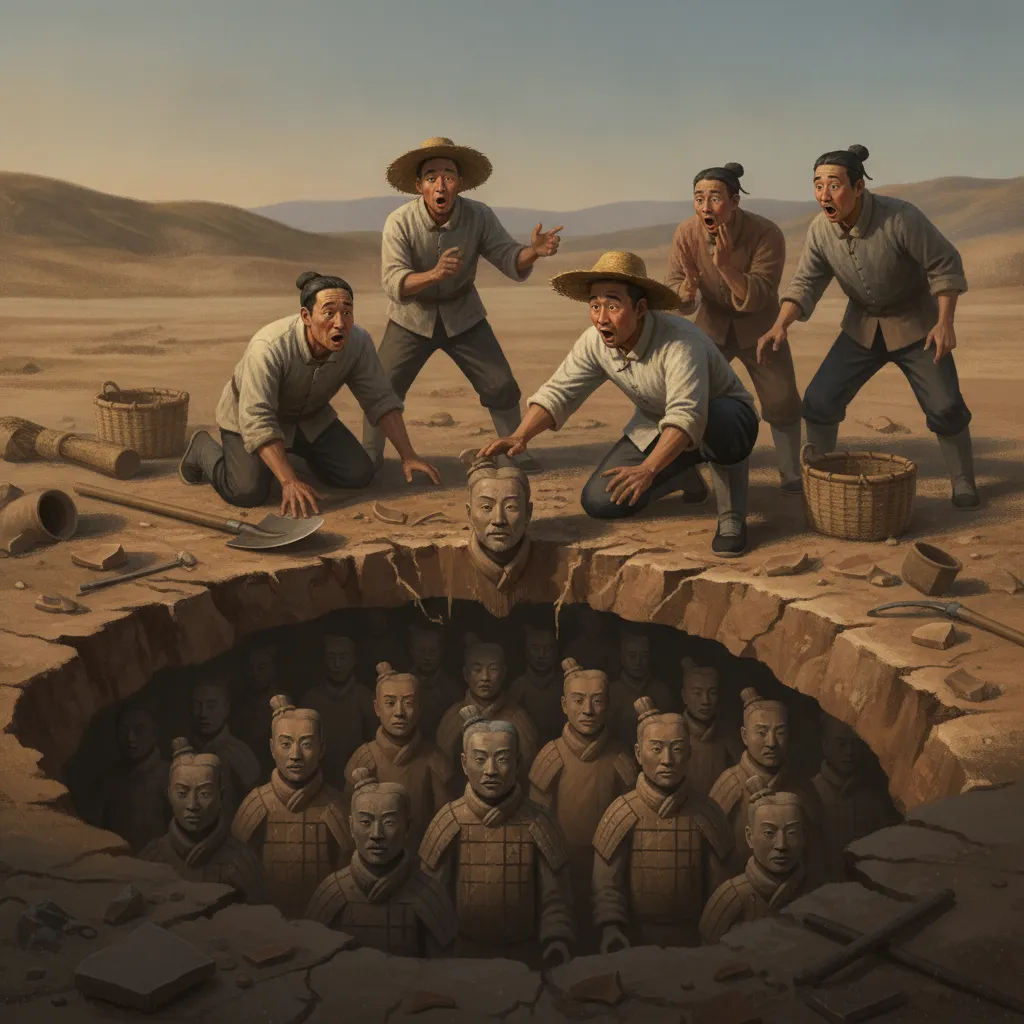
Farmers digging a well in 1974 accidentally stumbled onto one of the greatest archaeological discoveries of the 20th century: an underground army of thousands of life-sized clay soldiers built to guard a 2,000-year-old emperor's tomb.
Cheat Sheet
- One of the world's oldest continuous civilizations, with written records and dynastic rule tracing back over 3,000 years.
- The Qin Dynasty's first emperor, Qin Shi Huang, unified China in 221 BCE and began construction linking early sections of what became the Great Wall.
- Qin Shi Huang's tomb complex includes the Terracotta Army, thousands of life-sized clay soldiers discovered accidentally by farmers in 1974.
- The Silk Road, a network of trade routes established during the Han Dynasty, connected China to Central Asia, the Middle East, and Europe.
- Ancient China is credited with major inventions including paper, gunpowder, the compass, and woodblock printing — often called the 'Four Great Inventions.'
- Confucianism, developed by philosopher Confucius around the 5th century BCE, deeply shaped Chinese governance, ethics, and society for over two millennia.
The 60-Second Version
Ancient China ranks among the world's oldest continuously documented civilizations, with written records and organized dynastic rule stretching back more than 3,000 years. Its political unification into something resembling a single empire came in 221 BCE, when Qin Shi Huang consolidated competing warring states under Qin Dynasty rule and launched major infrastructure projects, including early construction that would eventually become part of the Great Wall. That same emperor's tomb complex remained hidden for over two millennia until farmers accidentally discovered it in 1974, unearthing the now-famous Terracotta Army, thousands of individually detailed clay soldiers built to protect the emperor in the afterlife. Later imperial China, particularly under the Han Dynasty, established the Silk Road, an extensive network of trade routes that connected China commercially and culturally to Central Asia, the Middle East, and eventually Europe. Ancient and imperial China is also credited with an extraordinary run of foundational inventions, including paper, gunpowder, the compass, and woodblock printing, technologies with consequences that reshaped the entire world well beyond China's own borders, while the philosophical framework of Confucianism, developed around the 5th century BCE, shaped Chinese governance and social values for more than two thousand years afterward.
The Long Version
One of the World's Oldest Continuous Civilizations
Ancient China ranks among the world's oldest continuously documented civilizations, with written records and organized dynastic rule stretching back more than 3,000 years, giving it one of history's longest unbroken traditions of recorded governance and culture.
An Emperor Who Unified a Fractured Land
China's political unification into something resembling a single empire arrived in 221 BCE, when Qin Shi Huang consolidated a collection of competing warring states under Qin Dynasty rule, launching major infrastructure projects along the way, including early construction linking sections that would eventually become part of the Great Wall of China.
An Army Hidden Underground for Two Millennia
That same emperor's elaborate tomb complex remained completely hidden for over two thousand years until farmers digging a well accidentally discovered it in 1974, unearthing the now-famous Terracotta Army, thousands of individually detailed, life-sized clay soldiers built specifically to protect the emperor's spirit in the afterlife.
Trade Routes and Foundational Inventions
Later imperial China, particularly under the Han Dynasty, established the Silk Road, an extensive network of overland trade routes connecting China commercially and culturally to Central Asia, the Middle East, and eventually Europe. Ancient and imperial China is also credited with an extraordinary run of foundational inventions, including paper, gunpowder, the compass, and woodblock printing, technologies whose consequences reshaped the entire world well beyond China's own borders, while the philosophical framework of Confucianism, developed around the 5th century BCE, shaped Chinese governance and social values for more than two thousand years afterward.
Ad slot (placeholder — set NEXT_PUBLIC_ADSENSE_SLOT_ID once an ad unit is created)
Why People Care
Ancient China's political, technological, and philosophical achievements shaped not just its own long civilizational history but much of the wider world, and understanding this history helps explain the deep roots behind many aspects of modern Chinese culture and governance still visible today.
Glossary
- Qin Dynasty
- The dynasty founded by Qin Shi Huang in 221 BCE that first unified China and began major infrastructure projects, including early Great Wall sections.
- Terracotta Army
- Thousands of life-sized clay soldier statues buried with Qin Shi Huang, accidentally discovered by farmers in 1974.
- Silk Road
- A network of trade routes established during the Han Dynasty connecting China to Central Asia, the Middle East, and Europe.
- Confucianism
- A philosophical and ethical system developed by Confucius around the 5th century BCE that deeply shaped Chinese governance and society.
- Four Great Inventions
- Paper, gunpowder, the compass, and woodblock printing — four inventions widely credited to ancient and imperial China.
Go Deeper
- The Metropolitan Museum of Art — Ancient China
- The Cambridge History of Ancient China
More to Explore
- The Indus Valley Civilization
One of the world's largest and most sophisticated ancient civilizations left behind thousands of inscriptions — and to this day, nobody has been able to read a single one of them.
- Ancient Greece
Ancient Greece never existed as one country — it was a patchwork of fiercely independent city-states that somehow still managed to invent democracy, philosophy, and the Olympics.
- Mesopotamia
Long before Egypt's pyramids, a civilization nestled between two rivers had already invented writing, cities, and formal law codes — earning it the nickname "the cradle of civilization."
- The Maya
A civilization that invented the concept of zero independently, then built some of the tallest structures in the Americas without metal tools or the wheel.
- Ancient Egypt
A civilization so stable that it lasted longer than the time separating us from Cleopatra separates her from the building of the pyramids.