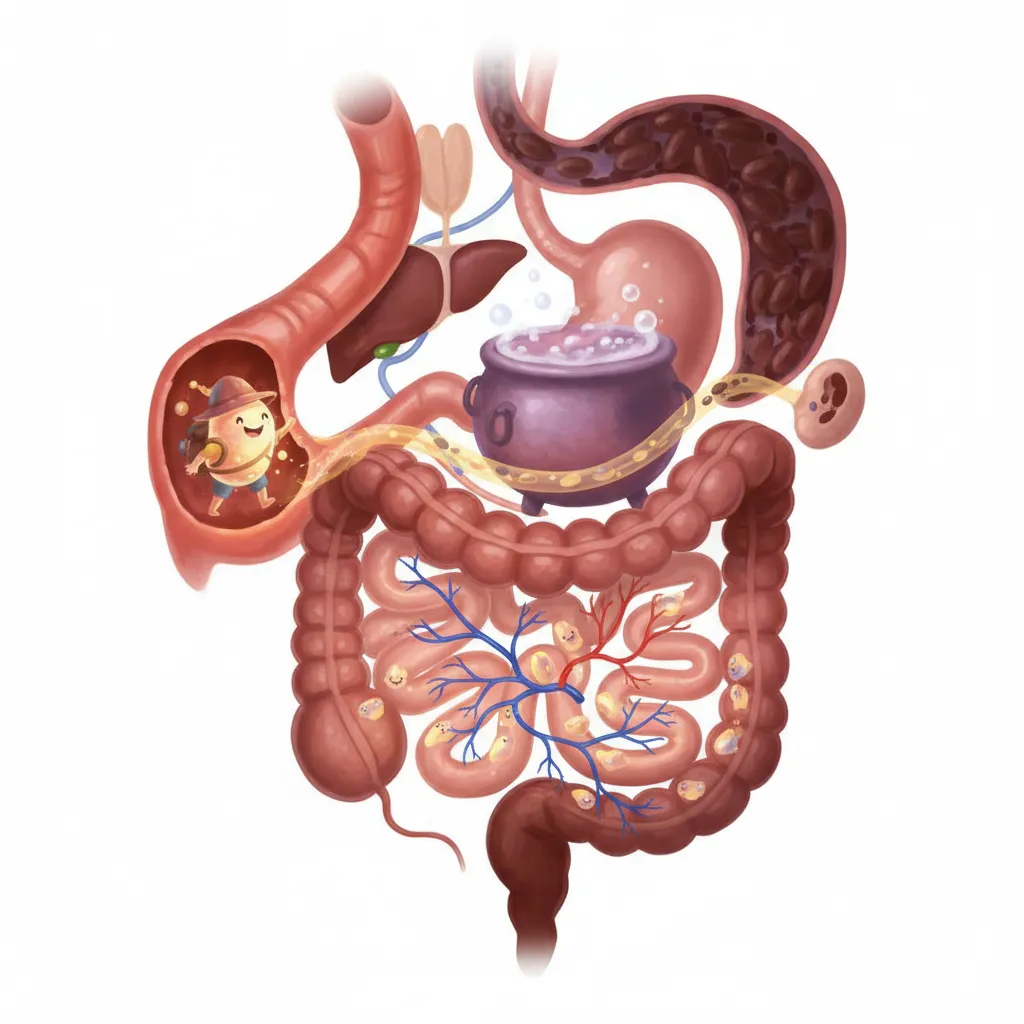
The Digestive System
Despite its name, the small intestine is actually the longest section of your entire digestive tract — it's just narrower than the large intestine.
Cheat Sheet
- The digestive system breaks down food into nutrients the body can absorb and use for energy, growth, and repair, while eliminating what the body cannot use.
- Digestion begins in the mouth, where chewing and enzymes in saliva start breaking down food before it even reaches the stomach.
- The stomach uses a combination of muscular churning and strong acidic digestive juices to further break down food into a semi-liquid mixture before passing it to the small intestine.
- The small intestine, despite its name, is the longest section of the digestive tract and is where the majority of nutrient absorption into the bloodstream actually occurs.
- The large intestine primarily absorbs water and forms solid waste, and it also hosts trillions of gut bacteria that assist with digestion and overall health.
- The entire digestive process, from eating to elimination, typically takes between 24 and 72 hours, varying based on the specific foods consumed and individual differences.
The 60-Second Version
The digestive system breaks down food into nutrients the body can absorb and use for energy, growth, and repair, while eliminating what the body cannot use. Digestion begins in the mouth, where chewing and enzymes in saliva start breaking down food before it even reaches the stomach. The stomach uses a combination of muscular churning and strong acidic digestive juices to further break down food into a semi-liquid mixture before passing it to the small intestine. The small intestine, despite its name, is the longest section of the digestive tract and is where the majority of nutrient absorption into the bloodstream actually occurs. The large intestine primarily absorbs water and forms solid waste, and it also hosts trillions of gut bacteria that assist with digestion and overall health. The entire digestive process, from eating to elimination, typically takes between 24 and 72 hours, varying based on the specific foods consumed and individual differences.
The Long Version
Digestion Starts Before You Swallow
Digestion begins in the mouth, where chewing physically breaks food into smaller pieces while enzymes present in saliva start chemically breaking down certain components, such as starches, before food even reaches the stomach, meaning digestion is already actively underway well before a bite is ever swallowed.
The Stomach's Chemical and Mechanical Work
The stomach uses a combination of powerful muscular churning and strong acidic digestive juices to further break food down into a semi-liquid mixture called chyme, creating an environment acidic enough to also help kill many harmful bacteria present in food, before gradually releasing this mixture into the small intestine for the next stage of digestion.
Where Nutrient Absorption Actually Happens
The small intestine, despite its name, is the longest section of the digestive tract, typically over twenty feet long when fully extended, and it is where the majority of nutrient absorption into the bloodstream actually occurs, aided by millions of tiny finger-like projections called villi that dramatically increase the surface area available for absorption.
The Large Intestine, Gut Bacteria, and Overall Timing
The large intestine primarily absorbs water and forms solid waste from what remains after the small intestine has extracted most usable nutrients, and it also hosts trillions of gut bacteria, collectively known as the gut microbiome, that assist with digestion, produce certain vitamins, and increasingly appear to influence overall health well beyond digestion alone. Altogether, the entire digestive process, from eating to elimination, typically takes between 24 and 72 hours, varying considerably based on the specific foods consumed and individual differences in metabolism and gut health.
Ad slot (placeholder — set NEXT_PUBLIC_ADSENSE_SLOT_ID once an ad unit is created)
Glossary
- Enzyme
- A specialized protein that speeds up chemical reactions, including breaking down food into absorbable nutrients during digestion.
- Small intestine
- The longest section of the digestive tract, where the majority of nutrient absorption into the bloodstream occurs, despite its name.
- Large intestine
- The section of the digestive tract that primarily absorbs water and forms solid waste, and hosts a large population of gut bacteria.
- Gut microbiome
- The trillions of bacteria and other microorganisms living in the digestive tract, particularly the large intestine, that assist with digestion and overall health.
- Peristalsis
- The wave-like muscular contractions that move food through the digestive tract.