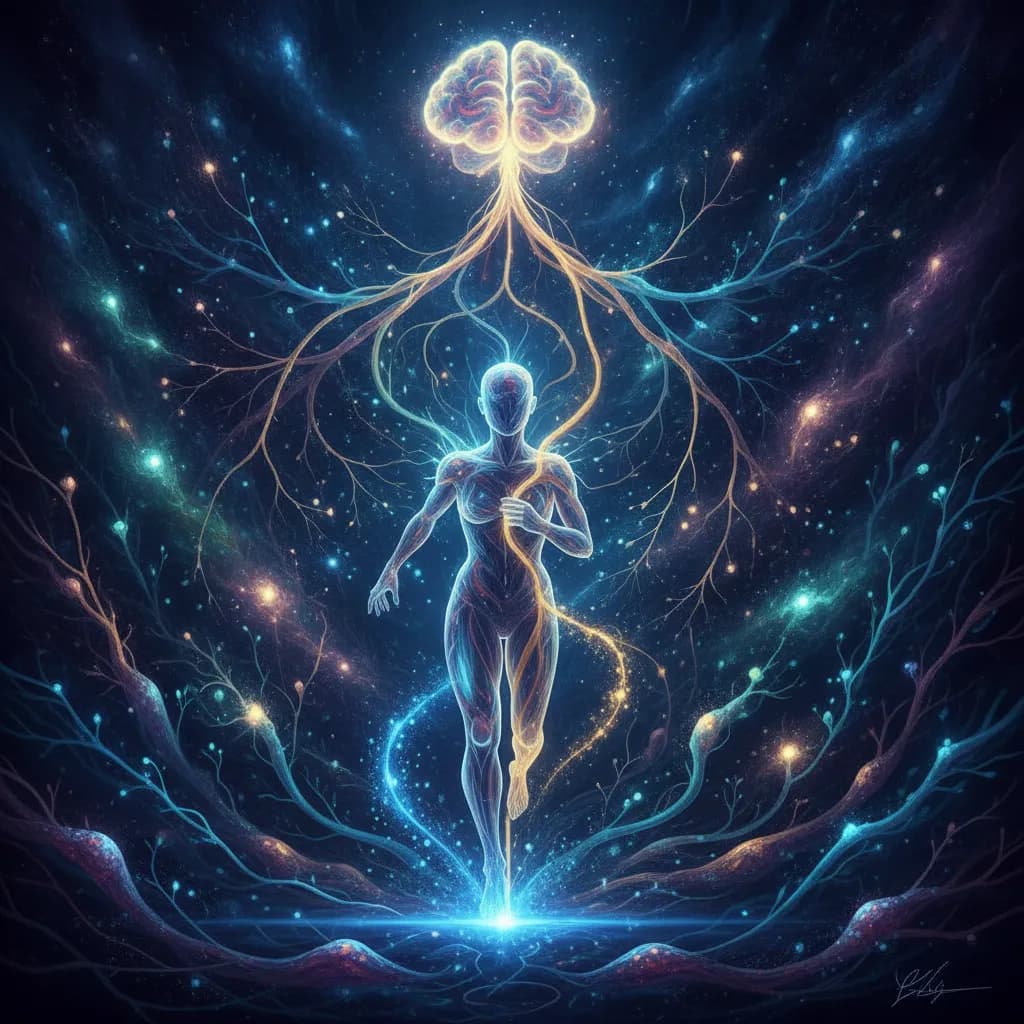
The Nervous System
A communication network so fast that a signal can travel from your toe to your brain and back in a fraction of a second — all without you ever consciously noticing it happen.
Cheat Sheet
- The nervous system is the body's primary communication network, using electrical and chemical signals to coordinate everything from movement to thought to involuntary body functions.
- It's divided into the central nervous system (the brain and spinal cord) and the peripheral nervous system (the network of nerves connecting the central system to the rest of the body).
- Neurons, the nervous system's basic functional cell, transmit signals using a combination of electrical impulses within the cell and chemical neurotransmitters between cells.
- The autonomic nervous system controls involuntary functions like heart rate, digestion, and breathing, operating largely without conscious awareness or control.
- The brain itself is highly specialized regionally, with different areas primarily responsible for distinct functions like movement, language, memory, and sensory processing.
- Unlike many other cells in the body, most neurons in the adult brain don't regenerate readily after damage, though the brain does retain a meaningful capacity to reorganize and adapt, known as neuroplasticity.
The 60-Second Version
The nervous system is the body's primary communication network, using electrical and chemical signals to coordinate everything from movement to thought to involuntary body functions. It's divided into the central nervous system, the brain and spinal cord, and the peripheral nervous system, the network of nerves connecting the central system to the rest of the body. Neurons, the nervous system's basic functional cell, transmit signals using a combination of electrical impulses within the cell and chemical neurotransmitters between cells. The autonomic nervous system controls involuntary functions like heart rate, digestion, and breathing, operating largely without conscious awareness or control. The brain itself is highly specialized regionally, with different areas primarily responsible for distinct functions like movement, language, memory, and sensory processing. Unlike many other cells in the body, most neurons in the adult brain don't regenerate readily after damage, though the brain does retain a meaningful capacity to reorganize and adapt, known as neuroplasticity.
The Long Version
Two Interconnected Systems
The nervous system is organized into two main divisions: the central nervous system, comprising the brain and spinal cord, which serves as the body's primary processing and decision-making center, and the peripheral nervous system, the extensive network of nerves branching out to connect the central system with sensory organs, muscles, and other tissues throughout the body.
How Neurons Actually Send Signals
Neurons, the nervous system's specialized signaling cells, transmit information using a combination of rapid electrical impulses traveling within each individual cell and chemical neurotransmitters that carry the signal across small gaps, called synapses, between one neuron and the next, an intricate relay system happening constantly throughout the body.
The Functions You Never Consciously Control
The autonomic nervous system, a specialized branch of the peripheral nervous system, manages essential involuntary bodily functions, including heart rate, digestion, and breathing, operating continuously in the background without requiring any conscious thought or effort, freeing up conscious attention for other tasks.
A Highly Specialized, Not Fully Self-Repairing Brain
Different regions of the brain are specialized for distinct functions, including movement control, language processing, memory formation, and sensory interpretation, rather than operating as one undifferentiated mass. Unlike many other cell types in the body, most neurons in the adult brain don't readily regenerate after significant damage, though the brain retains a meaningful degree of neuroplasticity, an ability to reorganize existing neural connections and adapt functionally, particularly in response to learning or certain types of injury.
Ad slot (placeholder — set NEXT_PUBLIC_ADSENSE_SLOT_ID once an ad unit is created)
Glossary
- Neuron
- The nervous system's basic functional cell, specialized to transmit electrical and chemical signals.
- Central nervous system
- The brain and spinal cord, the nervous system's core processing and control center.
- Peripheral nervous system
- The network of nerves connecting the central nervous system to the rest of the body.
- Neurotransmitter
- A chemical messenger that transmits signals between neurons across a small gap called a synapse.
- Neuroplasticity
- The brain's capacity to reorganize and adapt its structure and function, particularly following injury or learning.