The Respiratory System
You breathe about 20,000 times a day without ever thinking about it.
By Greg Goodwin · Published October 16, 2026 · Updated October 24, 2026
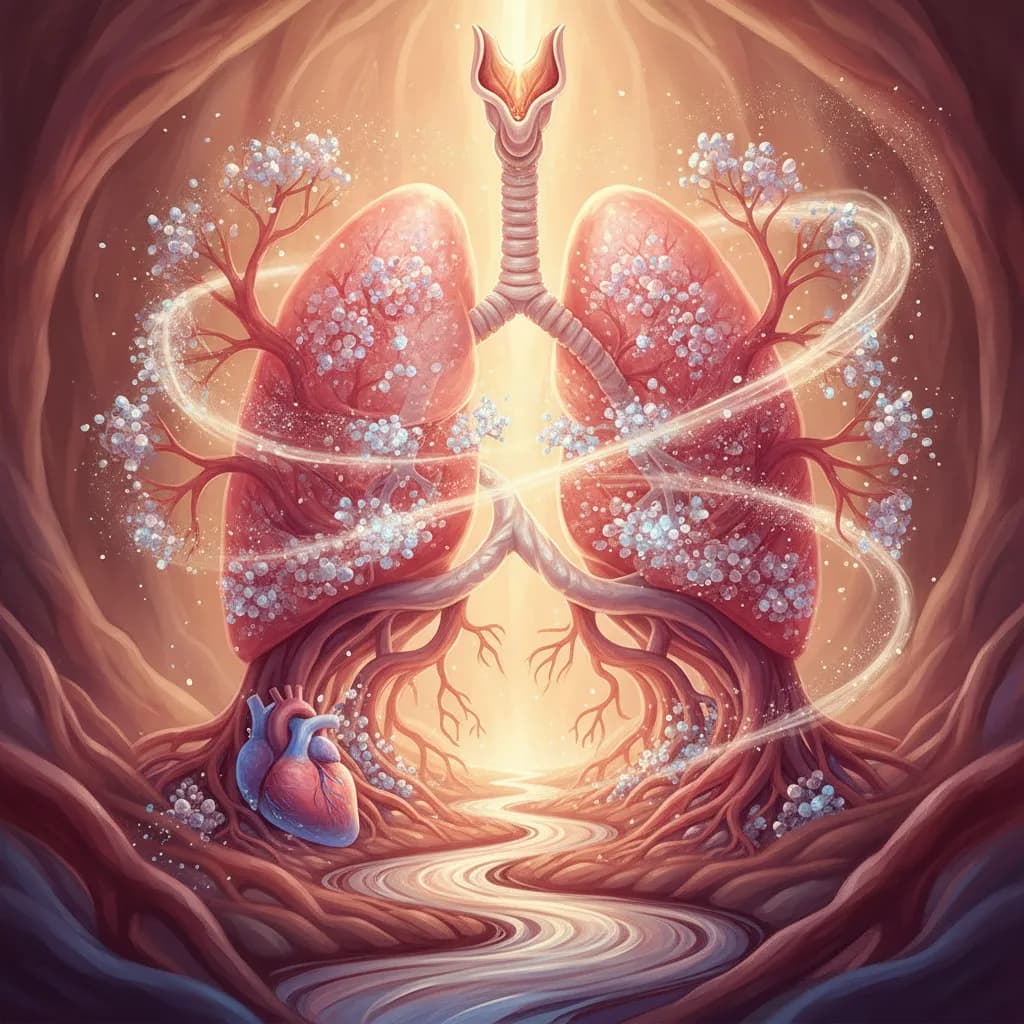
Cheat Sheet
- Job: bring oxygen into the blood and remove carbon dioxide.
- Air path: nose or mouth, pharynx, larynx, trachea, bronchi, bronchioles, then alveoli.
- Alveoli: roughly 300 to 500 million microscopic air sacs, where gas exchange occurs.
- Diaphragm: the dome-shaped muscle under the lungs that does most of the work of inhaling.
- Rate: an adult at rest breathes roughly 12 to 20 times a minute, around 20,000 breaths a day.
- Trigger to breathe: rising carbon dioxide, not low oxygen, is the main signal detected by the brainstem.
The 60-Second Version
Every cell in your body needs oxygen to turn food into energy, and produces carbon dioxide as waste. The respiratory system handles the exchange. Air enters through the nose or mouth, passes down the windpipe, and travels through branching airways into the lungs, ending in hundreds of millions of tiny air sacs called alveoli. There, oxygen crosses a membrane thinner than a cell into the blood, where hemoglobin carries it throughout the body, while carbon dioxide moves the other way and is exhaled. Breathing is driven mainly by the diaphragm and controlled automatically by the brainstem, though you can override it briefly, for example to speak or hold your breath.
The Long Version
Filtering the Air
The nose warms, humidifies, and filters incoming air. Hairs and mucus trap dust and microbes, and cilia lining the airways beat in coordinated waves to move the mucus up and out, where it is swallowed or coughed up. The larynx, or voice box, holds the vocal cords and, with the epiglottis, helps keep food from entering the windpipe. The trachea, reinforced by C-shaped rings of cartilage, divides into two main bronchi, one for each lung.
The Branching Tree
Inside the lungs, the bronchi split repeatedly, about 23 times, into ever smaller bronchioles, resembling an upside-down tree. They end in clusters of alveoli. Together, the alveoli provide a surface area estimated at 50 to 75 square meters, far larger than the body's outer surface. The right lung has three lobes and the left has two, leaving room for the heart.
The Mechanics of Breathing
When you inhale, the diaphragm contracts and flattens, and the muscles between the ribs lift the chest. The chest cavity expands, lowering pressure inside the lungs, and air flows in. Exhaling at rest is mostly passive, as the elastic lungs and muscles relax. Forceful breathing, as in exercise, involves additional muscles in the abdomen and neck. Coughing and sneezing are protective reflexes that expel irritants at high speed.
Gas Exchange and Control
In the alveoli, oxygen diffuses into the capillaries, where about 98 percent binds to hemoglobin in red blood cells. Carbon dioxide travels mostly dissolved in blood as bicarbonate and returns to the lungs to be exhaled. The brainstem's respiratory centers monitor carbon dioxide and acidity of the blood and adjust breathing rate accordingly, which is why holding your breath becomes uncomfortable because of rising carbon dioxide, not falling oxygen. Altitude, exercise, and illness can change breathing patterns.
Common Problems
Asthma narrows airways with inflammation; chronic obstructive pulmonary disease (COPD) involves lasting airflow limitation, often from smoking; pneumonia fills alveoli with fluid; and lung cancer is the leading cause of cancer death worldwide. Smoking damages cilia and alveoli. Vaccines, clean air, and not smoking are major protective measures. A doctor can evaluate any persistent breathing concerns.
Why People Care
Breathing is among the few body functions that is both automatic and under conscious control, which is why breathing techniques are used in meditation, singing, and sports. Understanding it also clarifies why air quality, smoking, and respiratory illnesses are major public health concerns.
Glossary
- Alveoli
- Tiny, thin-walled air sacs in the lungs surrounded by capillaries, where oxygen and carbon dioxide are exchanged.
- Cilia
- Microscopic hairlike structures lining the airways that sweep mucus and trapped particles upward.
- Surfactant
- A soapy substance that keeps alveoli from collapsing by reducing surface tension.
- Hemoglobin
- The iron-containing protein in red blood cells that carries oxygen.
- Tidal volume
- The amount of air moved in or out with each normal breath, about 500 milliliters in adults.
Go Deeper
More to Explore
- The Skeletal System
Your scaffolding is alive: it banks calcium, brews blood, and quietly rebuilds itself while you sit there.
- The Endocrine System
Your body runs a slow, long-distance messaging service using chemicals instead of wires.
- The Digestive System
Despite its name, the small intestine is actually the longest section of your entire digestive tract — it's just narrower than the large intestine.
- The Circulatory System
Your heart beats roughly 100,000 times a day without you ever consciously thinking about it — a lifetime total in the billions.
- The Nervous System
Your body's wiring runs on electricity and chemistry, and it keeps your heart beating without ever asking your opinion.