The Endocrine System
Your body runs a slow, long-distance messaging service using chemicals instead of wires.
By Greg Goodwin · Published October 16, 2026 · Updated October 24, 2026
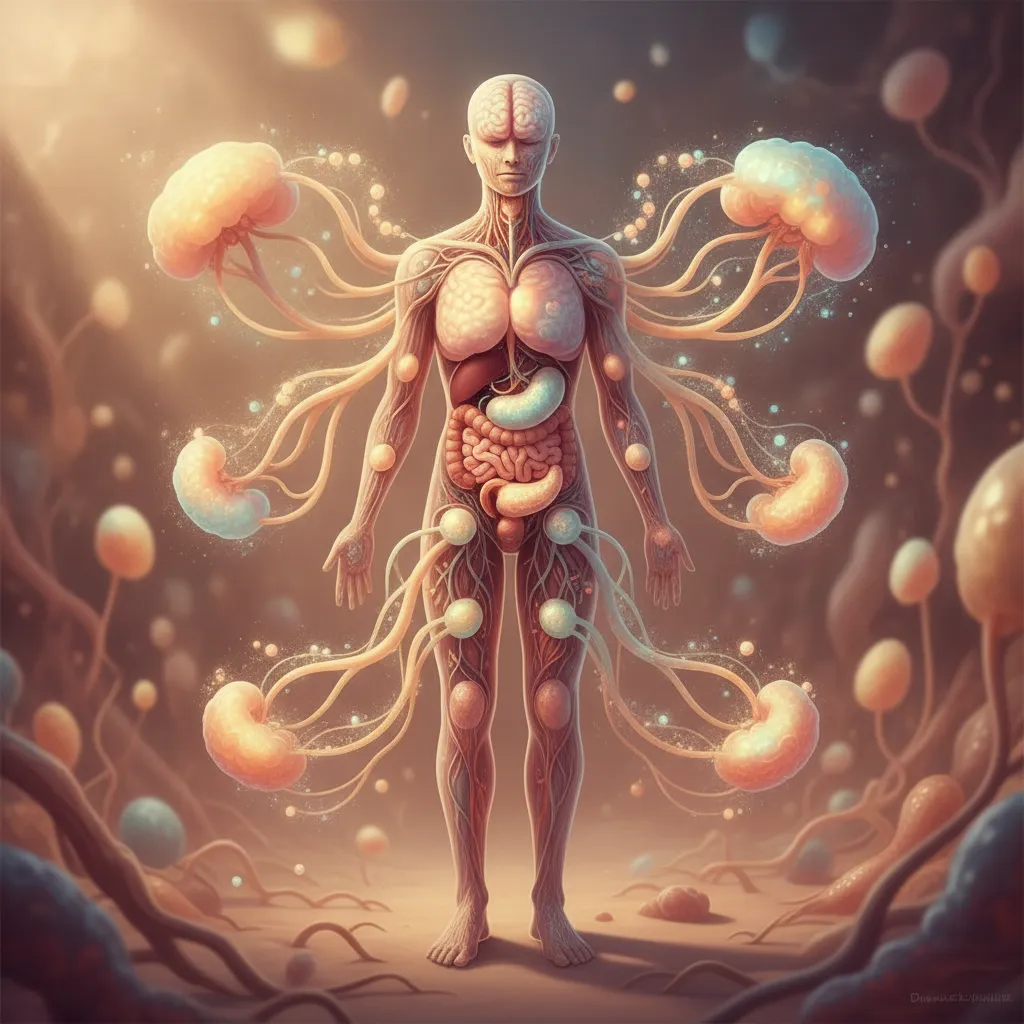
Cheat Sheet
- What it is: a network of glands that release hormones directly into the bloodstream.
- Main glands: hypothalamus, pituitary, thyroid, parathyroids, adrenals, pancreas, pineal, and ovaries or testes.
- Pituitary: pea-sized, often called the 'master gland,' but controlled by the hypothalamus above it.
- Insulin and glucagon: pancreatic hormones that keep blood sugar in a narrow range.
- Speed: hormones act more slowly than nerve impulses, but their effects can last minutes to weeks.
- Naming: the word 'hormone' was coined in 1905 by physiologist Ernest Starling, from the Greek for 'to set in motion.'
The 60-Second Version
The endocrine system is a set of glands and tissues that make hormones, chemical signals carried by the blood to distant organs. Where the nervous system sends fast electrical messages, the endocrine system manages longer-term processes: growth, metabolism, reproduction, blood sugar, salt and water balance, and the stress response. A small region of the brain, the hypothalamus, links the two systems and directs the pituitary gland, which releases hormones that tell other glands, like the thyroid and adrenals, how much to produce. Most hormone levels are tuned by feedback loops. When the system misfires, conditions such as diabetes or thyroid disorders can follow. This is general information, not medical advice.
The Long Version
Messengers in the Blood
A hormone works like a key that fits only cells with the matching receptor. That's why a tiny amount released in one place can alter specific organs far away. Some hormones, such as insulin, are proteins; others, like cortisol and sex hormones, are steroids made from cholesterol. Because they travel through the bloodstream, they take seconds to minutes to act, but they can affect the body for hours or longer.
The Command Center
The hypothalamus monitors body temperature, hunger, and other conditions and sends releasing hormones to the pituitary. The anterior pituitary then secretes hormones such as growth hormone, thyroid-stimulating hormone, and ACTH, which stimulates the adrenals. The posterior pituitary releases oxytocin and antidiuretic hormone, which helps the kidneys conserve water. Because the pituitary is itself under the hypothalamus's control, the "master gland" label is somewhat misleading.
Metabolism and Blood Sugar
The thyroid, in the neck, produces hormones that set the body's metabolic rate; too little can cause fatigue and weight gain, too much can cause a racing heart and weight loss. The pancreas contains clusters of cells that release insulin when blood sugar rises and glucagon when it falls. In type 1 diabetes, the body doesn't make enough insulin; in type 2, cells respond poorly to it. Insulin was first isolated in 1921 by Frederick Banting and Charles Best, transforming diabetes from a fatal disease into a manageable one.
Stress, Growth, and Reproduction
The adrenal glands sit atop the kidneys. The inner portion releases adrenaline during a "fight or flight" reaction, while the outer portion makes cortisol, which mobilizes energy and regulates inflammation. Growth hormone drives growth in childhood. At puberty, signals from the brain trigger the ovaries or testes to produce estrogen, progesterone, or testosterone. The parathyroid glands, small structures behind the thyroid, control calcium levels, and the pineal gland releases melatonin to help regulate sleep cycles.
When It Goes Wrong
Because hormones work in small amounts, small errors have large effects. Common problems include diabetes, hypothyroidism and hyperthyroidism, polycystic ovary syndrome, and adrenal disorders. Many can be treated with medication, hormone replacement, or lifestyle changes. Environmental chemicals that mimic hormones, sometimes called endocrine disruptors, are an active area of research.
Why People Care
Hormones influence energy, mood, growth, fertility, and aging, and many common health conditions involve them. Understanding the basics helps people make sense of diagnoses and conversations with their doctors.
Glossary
- Hormone
- A chemical messenger made in one tissue that travels in the blood and changes the activity of target cells.
- Negative feedback
- A control loop where a rising hormone level triggers a response that lowers it, like a thermostat.
- Receptor
- A protein on or in a cell that a hormone binds to, triggering a response.
- Hypothalamus
- A brain region that links the nervous and endocrine systems.
- Cortisol
- An adrenal hormone involved in stress responses, metabolism, and immune regulation.
Go Deeper
More to Explore
- The Skeletal System
Your scaffolding is alive: it banks calcium, brews blood, and quietly rebuilds itself while you sit there.
- The Respiratory System
You breathe about 20,000 times a day without ever thinking about it.
- The Digestive System
Despite its name, the small intestine is actually the longest section of your entire digestive tract — it's just narrower than the large intestine.
- The Circulatory System
Your heart beats roughly 100,000 times a day without you ever consciously thinking about it — a lifetime total in the billions.
- The Nervous System
Your body's wiring runs on electricity and chemistry, and it keeps your heart beating without ever asking your opinion.