Espresso
A tiny, intense coffee made by forcing hot water through a puck of grounds in about half a minute, and the base of nearly every cafe menu.
By Greg Goodwin · Published October 24, 2026
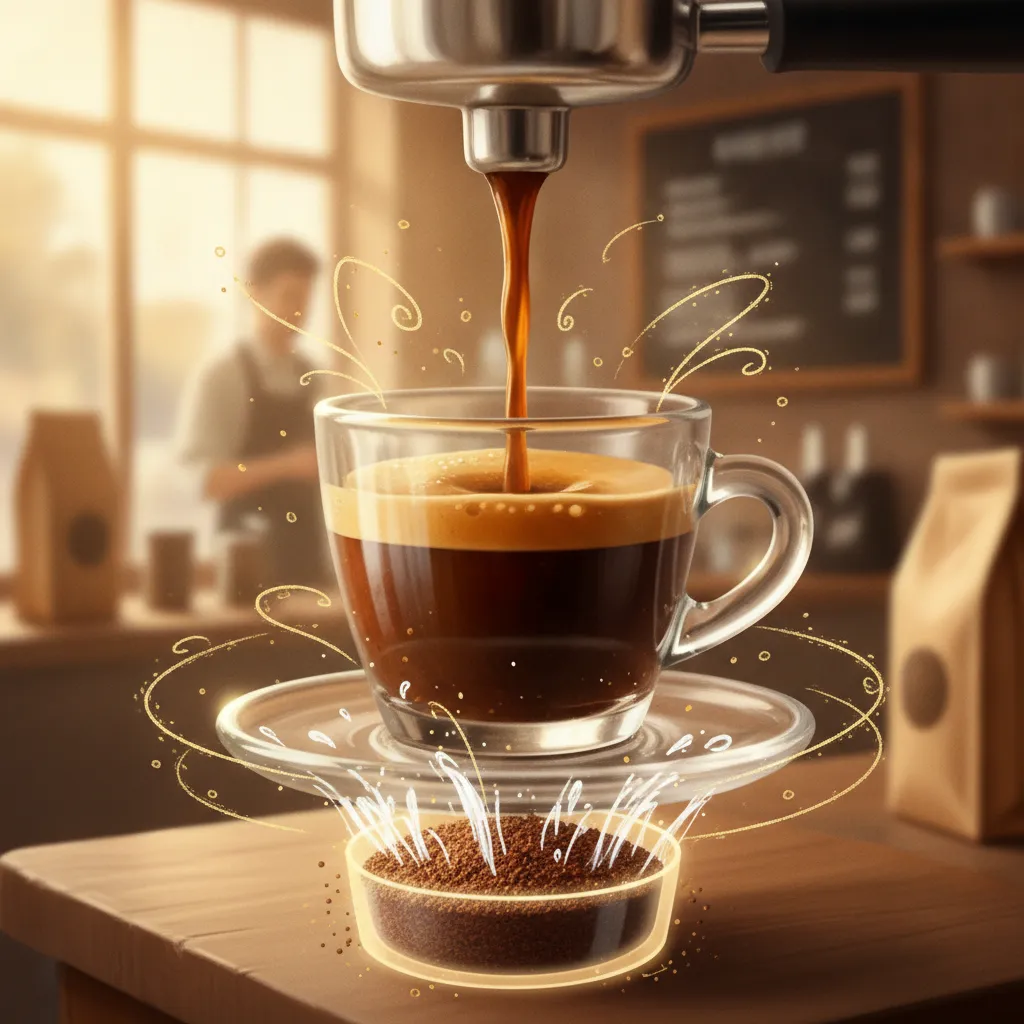
Cheat Sheet
- Classic definition: the older SCAA definition describes 25 to 35 ml of coffee from 7 to 9 grams of grounds.
- Pressure: water forced through the coffee at roughly 9 to 10 atmospheres, commonly 9 bars on machines.
- Temperature: water between about 195 and 205 degrees F (roughly 90 to 96 C).
- Time: traditional definitions give 20 to 30 seconds of brewing.
- Modern recipe: a 2017 survey of 275 baristas found an average of 18 to 20 g in and about 36.5 g out, roughly 1:2.
- Earliest patent: Angelo Moriondo's Italian patent is dated 16 May 1884.
The 60-Second Version
Espresso is not a type of bean or a roast. It is a way of making coffee: finely ground beans are packed into a basket, and hot water is pushed through them under pressure for roughly half a minute. The result is a small, concentrated drink with a layer of foam on top called crema. Because it is so concentrated, it is both a drink in its own right and the foundation of most cafe favorites. Add steamed milk and you get a latte or cappuccino, add hot water and you get an Americano, and add a little foamed milk to a short shot and you get a macchiato. Machines typically brew at about 9 bars of pressure. The craft lies in grind size, dose, water temperature, and timing, all of which change how sweet, bitter, or sour a shot tastes.
The Long Version
A Brief History of the Machine
Before espresso, coffee was brewed slowly by steeping or dripping. Italian inventors wanted speed for busy cafes. Angelo Moriondo's patent is dated 16 May 1884, and his machine brewed in bulk rather than making single servings. Luigi Bezzera applied for improvements on 19 December 1901, and the patent was bought by Desiderio Pavoni, who founded the La Pavoni company in 1905, although sources differ on the exact year of the purchase. Over the following decades, machines gained better pressure control, which is what produced the rich crema modern drinkers expect. Who deserves the title of inventor depends on how you define the word espresso.
What Counts as a Real Shot
Definitions vary. The Specialty Coffee Association's magazine cites the older SCAA definition: a 25 to 35 ml beverage from 7 to 9 grams of coffee, brewed with water at 195 to 205 degrees F under 9 to 10 atmospheres of pressure for 20 to 30 seconds. Modern practice has drifted. A 2017 survey of 275 respondents described the average shot as an 18 to 20 gram dose producing about 36.5 grams of liquid in 25 to 30 seconds, at 9 bars and 200 degrees F, often with pre-infusion. That is a brew ratio near 1:2 by weight. These are working benchmarks, not strict laws, and cafes adjust them to suit the coffee.
The Variables a Barista Controls
Taste is steered mostly by grind and dose. A finer grind slows the water and extracts more from the coffee, while a coarser grind lets water rush through. Too little extraction tastes sour and thin, and too much tastes bitter and harsh. Baristas typically weigh both the dose going in and the liquid coming out, then adjust grind to land in the target time window. Fresh beans, clean equipment, and even tamping matter too, because uneven packing encourages channeling, where water finds a shortcut through the puck and spoils the shot.
Drinks Built on a Shot
Espresso by itself is served as a single or double, often sipped alongside a glass of water. The classic menu is built from variations. A cappuccino pairs espresso with steamed milk and a thick layer of foam, a latte uses more steamed milk with a thin cap of foam, and a flat white sits between them with a smoother, velvety texture. An Americano adds hot water for a longer, milder drink, and a macchiato marks a shot with a spot of milk foam. Names and proportions differ by country and cafe, so it is worth asking what a menu means by each.
Making It at Home
Home machines range from simple pump models to semi-automatic machines with a portafilter and steam wand, and capsule machines trade control for convenience. The biggest upgrade for most people is a good burr grinder, since inconsistent grinds undermine even an expensive machine. Start from a ratio such as 1:2 and about 25 to 30 seconds, taste the result, and change only one variable at a time. Descale the machine regularly and clean the group head, because old coffee oils turn rancid and quickly flatten flavor.
Why People Care
Espresso sits at the center of cafe culture, so knowing what a shot is, how it differs from other coffee, and why some taste sour or bitter makes ordering and brewing less of a guessing game. It also explains why the same beans can taste very different across cafes.
Glossary
- Crema
- The pale brown foam layer on top of a fresh shot, made of tiny air bubbles mixed with coffee oils.
- Dose
- The weight of ground coffee placed in the portafilter basket before brewing.
- Brew ratio
- The weight of ground coffee compared with the weight of liquid espresso in the cup, such as 1:2.
- Portafilter
- The handled basket that holds the ground coffee and locks into the machine's group head.
- Channeling
- Water carving uneven paths through the coffee puck, causing some grounds to over-extract and others to under-extract.
Go Deeper
More to Explore
- Tea Culture
Green, black, white, and oolong tea all come from one plant; processing does most of the flavor work.
- Cocktails
Prohibition tried to end American drinking but arguably sent its bartenders, and their cocktails, off to London and Paris.
- Whiskey
A bottle can legally call itself bourbon only if it's made in America — but nothing requires it to be made in Kentucky, despite what most people assume.
- Craft Beer
One change to US federal law in 1978 is the reason your neighborhood brewery exists at all.
- Coffee
The world's most popular ritual is also one of its most quietly complicated crops.