Tea Culture
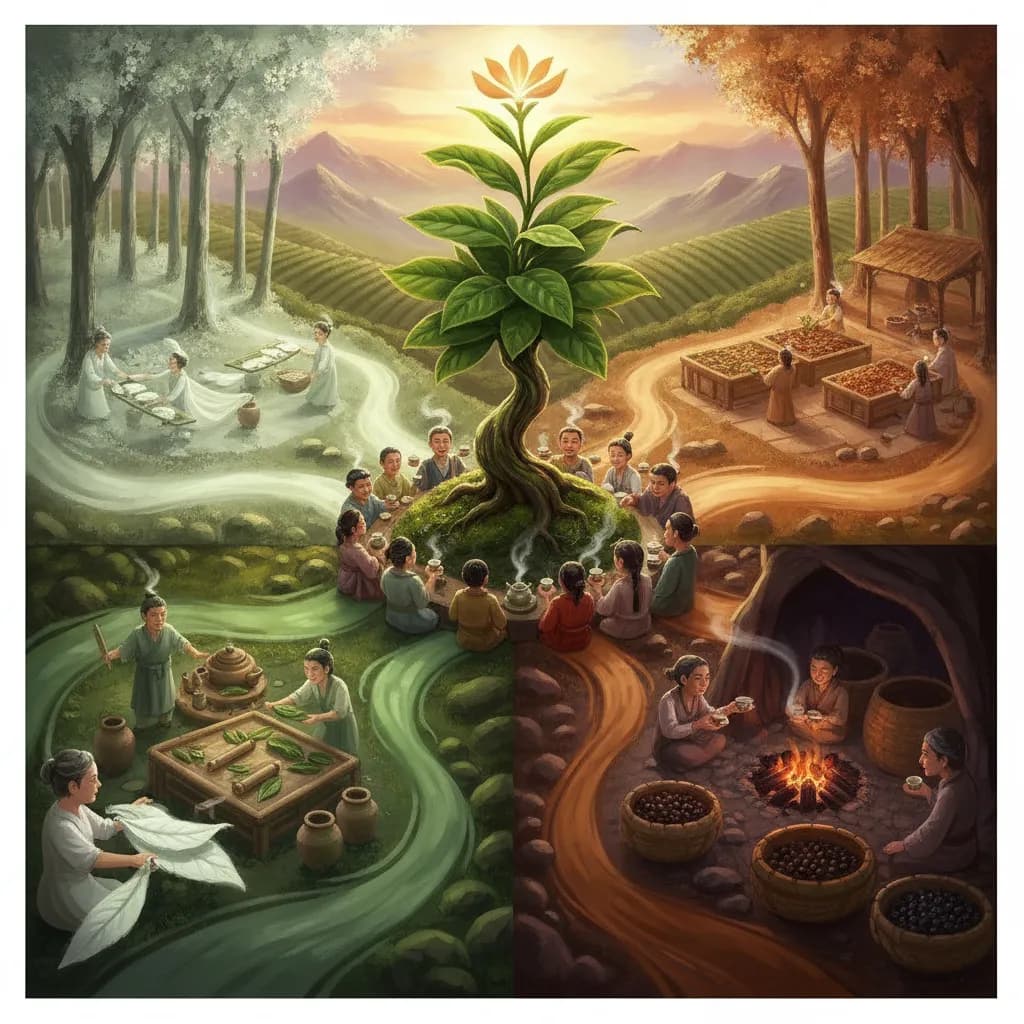
Every "true" tea, whether green, black, white, or oolong, actually comes from the exact same plant — the wildly different flavors come entirely from how the leaves are processed afterward.
Cheat Sheet
- Tea, made from the leaves of the Camellia sinensis plant, is the second most widely consumed beverage in the world after water.
- All true teas, including green, black, oolong, and white tea, come from the same plant species, with differences in flavor and color resulting primarily from how the leaves are processed after harvesting.
- Tea originated in China, where it has been consumed for thousands of years, before spreading globally and developing distinct regional traditions in countries including Japan, India, and the United Kingdom.
- Formal tea ceremonies, most notably Japan's chanoyu, elevate tea preparation and serving into a deliberate, ritualized practice emphasizing mindfulness, respect, and aesthetic simplicity.
- Herbal "teas," such as chamomile or peppermint, aren't technically true tea at all, since they don't contain any Camellia sinensis leaves, and are more accurately described as tisanes.
- Britain's deep cultural association with tea, including the tradition of afternoon tea, developed significantly through historical trade relationships with tea-producing colonies, particularly India.
The 60-Second Version
Tea, made from the leaves of the Camellia sinensis plant, is the second most widely consumed beverage in the world after water. All true teas, including green, black, oolong, and white tea, come from the same plant species, with differences in flavor and color resulting primarily from how the leaves are processed after harvesting. Tea originated in China, where it has been consumed for thousands of years, before spreading globally and developing distinct regional traditions in countries including Japan, India, and the United Kingdom. Formal tea ceremonies, most notably Japan's chanoyu, elevate tea preparation and serving into a deliberate, ritualized practice emphasizing mindfulness, respect, and aesthetic simplicity. Herbal "teas," such as chamomile or peppermint, aren't technically true tea at all, since they don't contain any Camellia sinensis leaves, and are more accurately described as tisanes. Britain's deep cultural association with tea, including the tradition of afternoon tea, developed significantly through historical trade relationships with tea-producing colonies, particularly India.
The Long Version
One Plant, Many Different Teas
All true teas, including green, black, oolong, and white tea, are made from the leaves of the exact same plant species, Camellia sinensis, with the significant differences in flavor, color, and character between these tea types resulting primarily from variations in how the leaves are processed after harvesting, particularly the degree of oxidation they undergo, rather than from different plants entirely.
From Ancient China to a Global Beverage
Tea originated in China, where it has been consumed for thousands of years, developing deep cultural and historical roots before gradually spreading across the world and taking on distinct regional identities and preparation traditions in countries including Japan, India, and the United Kingdom, each developing their own particular relationship with tea over subsequent centuries.
Tea as Ritual, Not Just Beverage
In several cultures, tea preparation and serving has been elevated well beyond simple beverage consumption into a deliberate, ritualized practice, most notably in Japan's chanoyu, a formal tea ceremony emphasizing mindfulness, respect, and aesthetic simplicity in every stage of the preparation and serving process, reflecting values extending considerably beyond the tea itself.
What Counts as "Real" Tea, and Britain's Colonial Tea History
Herbal "teas," such as chamomile or peppermint, are technically not true tea at all, since they contain no Camellia sinensis leaves, and are more accurately described using the term tisane. Separately, Britain's deep cultural association with tea, including the enduring tradition of afternoon tea, developed significantly through historical trade relationships with tea-producing colonial territories, particularly India, a history directly tied to Britain's broader colonial and trade history.
Ad slot (placeholder — set NEXT_PUBLIC_ADSENSE_SLOT_ID once an ad unit is created)
Glossary
- Camellia sinensis
- The plant species from which all true teas, including green, black, oolong, and white tea, are made.
- Oxidation (in tea processing)
- A chemical process during tea leaf processing that significantly affects the tea's final flavor and color, distinguishing black tea from green tea.
- Chanoyu
- Japan's formal tea ceremony, a ritualized practice emphasizing mindfulness, respect, and aesthetic simplicity.
- Tisane
- The more technically accurate term for herbal "teas" that don't actually contain Camellia sinensis leaves.
- Afternoon tea
- A British tea tradition that developed significantly through historical trade relationships with tea-producing colonies.
Go Deeper
- UK Tea and Infusions Association
- World Atlas of Tea