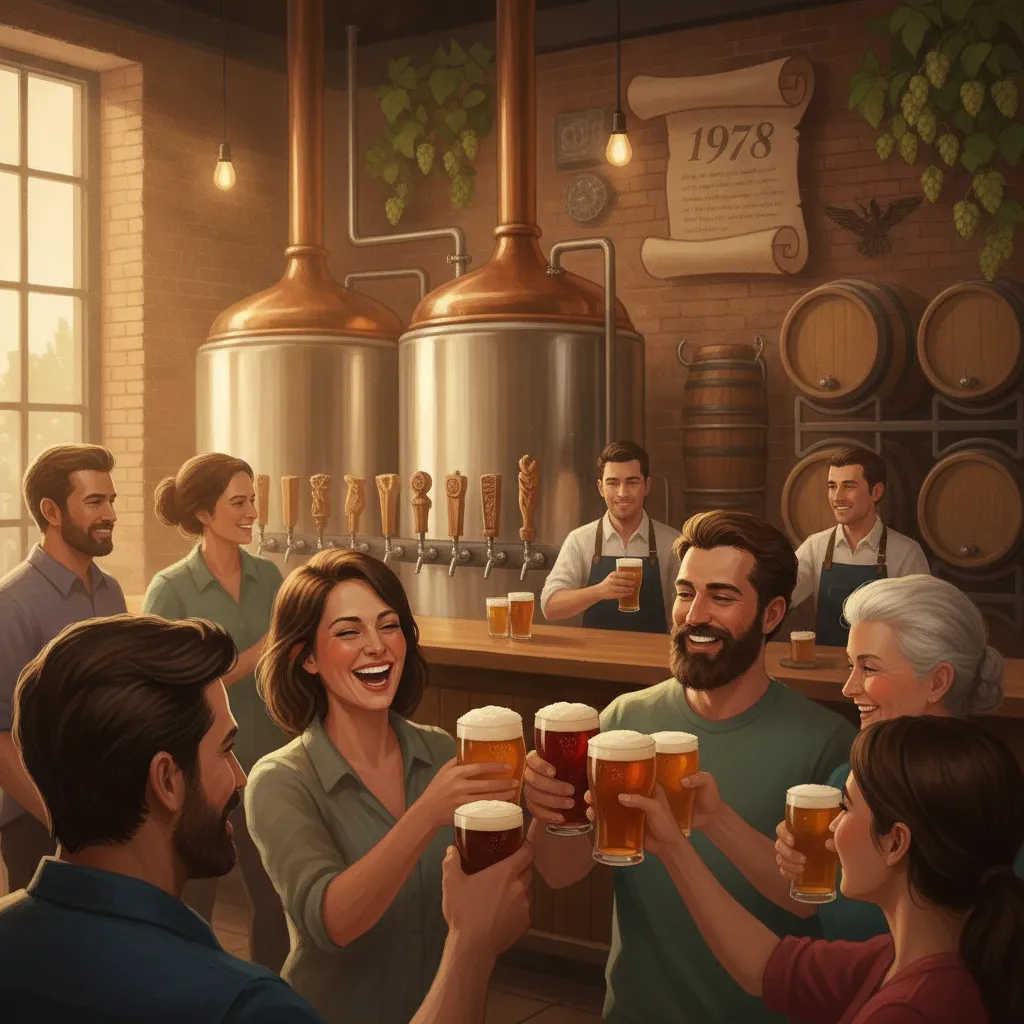
Craft Beer
One change to US federal law in 1978 is the reason your neighborhood brewery exists at all.
Cheat Sheet
- Beer is fermented grain (usually malted barley), and "craft" generally refers to small, independent breweries prioritizing flavor and traditional methods over mass production.
- Ales and lagers are the two fundamental beer families, distinguished by yeast type and fermentation temperature, not color or strength.
- IPA (India Pale Ale) is the flagship style of the American craft movement, defined by heavy hop use for bitterness and aroma.
- Hops contribute bitterness, aroma, and act as a natural preservative — different hop varieties give wildly different flavor profiles (citrus, pine, floral).
- IBU (International Bitterness Units) measures a beer's bitterness; ABV (Alcohol by Volume) measures its strength — the two don't always correlate.
- The craft beer movement in the US traces largely to a change in federal law in 1978 that legalized home brewing, fueling a wave of future professional brewers.
The 60-Second Version
Beer is made from fermented grain, almost always malted barley, and splits into two fundamental families based on yeast type and fermentation temperature: ales, fermented warm with a yeast that rises to the top, producing fruitier and more complex flavors, and lagers, fermented cool with a yeast that settles to the bottom, producing a crisper, cleaner result. "Craft" beer generally refers to beer from small, independent breweries prioritizing flavor and traditional technique over mass-market consistency and scale. IPA (India Pale Ale) became the flagship style of the American craft movement, defined by heavy use of hops — the flower cones that contribute bitterness, aroma, and natural preservation — with different hop varieties producing wildly different flavors, from citrus and pine to floral and earthy. Two numbers help decode a beer's character: IBU (International Bitterness Units) measures bitterness, while ABV (Alcohol by Volume) measures strength, and the two don't necessarily move together.
The Long Version
Ales vs Lagers
The ale-versus-lager split is about yeast biology, not color or strength, despite common assumptions otherwise (a stout is a dark ale, not automatically a lager; a pale lager can still be quite strong). Ale yeast ferments at warmer temperatures and rises to the top of the fermentation vessel, producing more pronounced fruity and spicy flavor compounds as a byproduct. Lager yeast ferments at cooler temperatures and settles to the bottom, producing a cleaner, crisper result with fewer of those fruity notes — which is why lagers, including familiar pale lagers and pilsners, tend to taste lighter and more neutral than most ales.
What Hops Actually Do
Hops serve three distinct functions in brewing: they contribute bitterness that balances out malt's natural sweetness, they contribute aroma and flavor ranging from citrus and tropical fruit to pine and earth depending on the variety, and historically they acted as a natural preservative that helped beer survive long journeys — which is literally where India Pale Ale gets its name, since it was originally brewed with extra hops specifically to survive the long sea voyage from England to colonial India.
How "Craft" Became a Movement
Homebrewing was federally illegal in the United States until a 1978 law, signed by President Carter, legalized it — a change that quietly seeded an entire generation of hobbyist brewers, some of whom went on to found the small commercial breweries that became the modern American craft beer movement. IPA emerged as that movement's flagship, signature style specifically because heavy hop use let brewers showcase bold, distinctive flavor in a way that stood in deliberate contrast to the lighter, more neutral mass-market lagers that dominated the market at the time.
Reading a Beer Label
IBU (International Bitterness Units) gives a rough numerical sense of a beer's bitterness, while ABV (Alcohol by Volume) states its strength as a percentage — the two don't automatically correlate, since a beer can be very bitter but only moderately strong, or vice versa. "Session beer" describes beers deliberately brewed with lower alcohol content, meant to be drunk several of in one sitting without the strength catching up with you, a style that grew partly as a reaction against the trend toward increasingly high-ABV craft offerings.
Ad slot (placeholder — set NEXT_PUBLIC_ADSENSE_SLOT_ID once an ad unit is created)
Glossary
- Ale
- Beer fermented with top-fermenting yeast at warmer temperatures, producing fruitier, more complex flavors.
- Lager
- Beer fermented with bottom-fermenting yeast at cooler temperatures, producing a crisper, cleaner flavor.
- Hops
- Flower cones added during brewing for bitterness, aroma, and preservation.
- IBU
- International Bitterness Units, a scale measuring a beer's perceived bitterness.
- Session beer
- A beer brewed with lower alcohol content, meant to be enjoyable to drink several of in one sitting.