Gaming Consoles
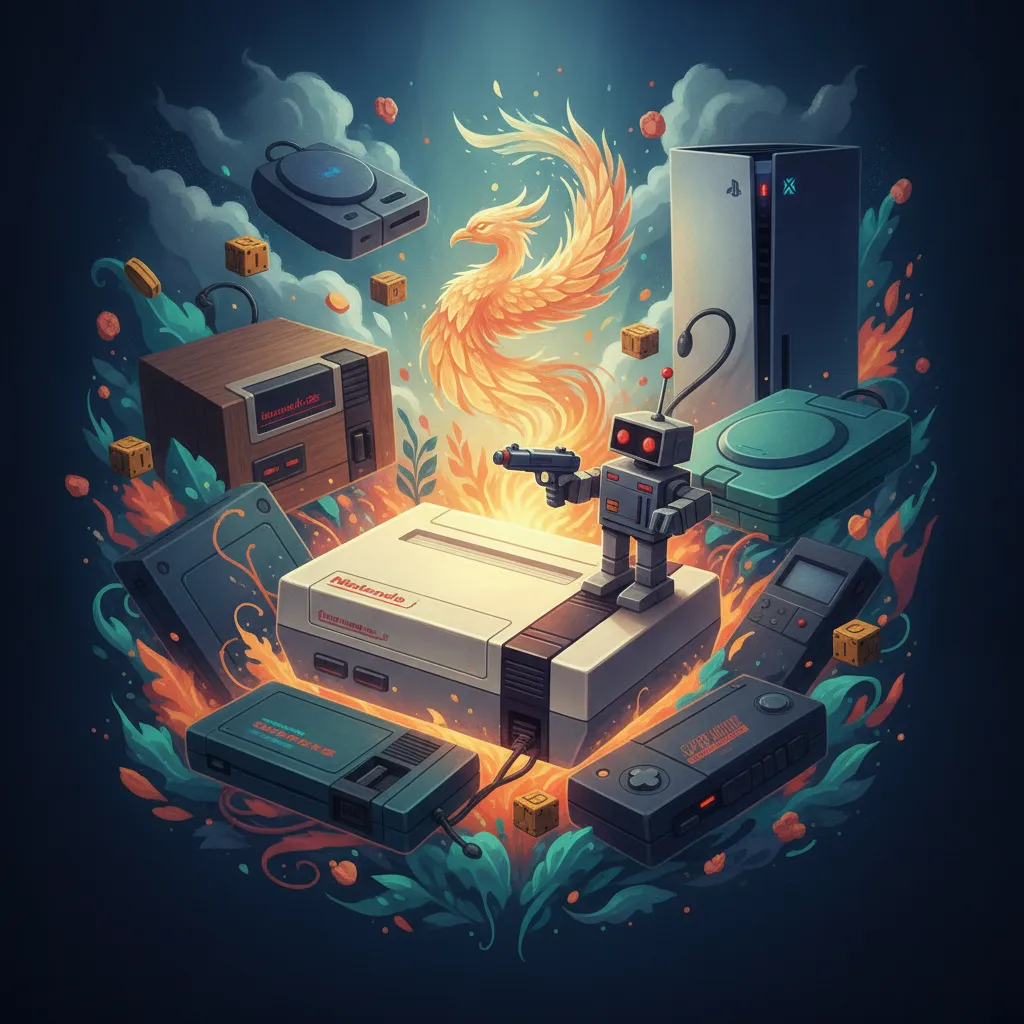
The video game industry nearly died in 1983 — and the console that revived it did so partly by refusing to call itself a "video game system" at all.
Cheat Sheet
- The 1972 Magnavox Odyssey is widely credited as the first commercial home video game console.
- The 1983 North American video game market crash nearly ended the industry before Nintendo's 1985 NES relaunch revived it.
- Console makers commonly sell hardware at a loss (or near-zero margin) and profit primarily from game and subscription sales — a strategy known as the 'razor and blades' model.
- Backward compatibility, the ability to play older games on newer hardware, has become an increasingly prominent competitive selling point since the 2010s.
- Cloud gaming services stream games from remote servers, aiming to remove the need for dedicated console hardware entirely.
- Handheld/console hybrids, popularized by the Nintendo Switch's 2017 launch, blend portable and home gaming into a single device.
The 60-Second Version
Gaming consoles have gone through several distinct eras since the earliest home systems appeared in the early 1970s, evolving from simple dedicated hardware capable of a single game into today's powerful, internet-connected multimedia platforms. The industry actually collapsed almost entirely in North America in 1983 under a flood of low-quality games and market oversaturation, a crash so severe that Nintendo reportedly marketed its 1985 relaunch as an "Entertainment System" specifically to avoid the tainted "video game" label. Since then, console makers have largely converged on a business strategy of selling hardware near cost while making their real profit from game sales, subscriptions, and increasingly digital storefronts. Competitive advantage today often comes down to factors beyond raw hardware power, including exclusive games only available on one platform, backward compatibility with older game libraries, and newer approaches like cloud streaming or hybrid handheld-console devices that blur the line between portable and home gaming entirely.
The Long Version
From Single-Game Boxes to Multimedia Hubs
Home gaming consoles trace back to the 1972 Magnavox Odyssey, a remarkably primitive device by modern standards that could only produce simple on-screen shapes, and the category has since evolved through several hardware generations into today's consoles, which function as full multimedia and online entertainment platforms well beyond just playing games.
The Crash That Almost Ended It All
The North American video game industry suffered a severe market crash in 1983, driven by a flood of low-quality, rushed games and general market oversaturation that nearly destroyed public confidence in home gaming entirely, a collapse serious enough that Nintendo's subsequent 1985 relaunch was deliberately marketed and packaged as an "Entertainment System" to distance itself from the tarnished "video game" branding.
Making Money on the Games, Not the Box
Since that recovery, most console manufacturers have settled into a similar underlying business strategy, commonly called the "razor and blades" model, selling hardware at a thin margin or even a loss while generating the bulk of actual profit from game sales, subscription services, and digital storefronts built directly into the console.
What Actually Wins Console Wars
Competing platforms increasingly differentiate themselves on factors well beyond raw processing power, including exclusive games unavailable anywhere else, backward compatibility that preserves access to a player's existing game library across hardware generations, and newer approaches like cloud gaming services that stream games from remote servers, or hybrid devices like the Nintendo Switch that combine portable and home console functionality into one product.
Ad slot (placeholder — set NEXT_PUBLIC_ADSENSE_SLOT_ID once an ad unit is created)
Why People Care
Gaming consoles sit at the center of a multi-billion-dollar entertainment industry, and understanding both their history and their underlying business model explains why console makers make the pricing, exclusivity, and platform decisions that shape which games players can actually access.
Glossary
- Razor and blades model
- A pricing strategy where hardware is sold at low or no profit to drive sales of higher-margin software or subscriptions.
- Backward compatibility
- A console's ability to play games originally released for an earlier generation of hardware.
- Cloud gaming
- A service model that streams video games from remote servers, reducing reliance on local console hardware.
- Console generation
- A grouping of gaming hardware released within a similar technological era, generally spanning five to seven years.
- Exclusive title
- A game released only on a specific console platform, often used to differentiate competing hardware makers.
Go Deeper
- The Ultimate History of Video Games, by Steven L. Kent
- IGN — History of Gaming Consoles
More to Explore
- Wearables
A device small enough to sit quietly on your wrist all day, yet packed with enough sensors to estimate your heart rate, sleep quality, and blood oxygen level.
- Smartphones
A device that most people now check dozens or even hundreds of times a day — despite the entire category of "modern smartphone" being less than two decades old.
- Smart Home Devices
A category of devices whose biggest historical headache wasn't the technology itself, but simply getting one brand's gadgets to talk to another brand's gadgets.
- Drones
A technology that went from a specialized military tool to something available at ordinary consumer electronics stores in a remarkably short span of time.
- How Search Engines Work
Before it can answer a single search query, a search engine has already spent years quietly sending out automated programs to read and re-read essentially the entire public internet.