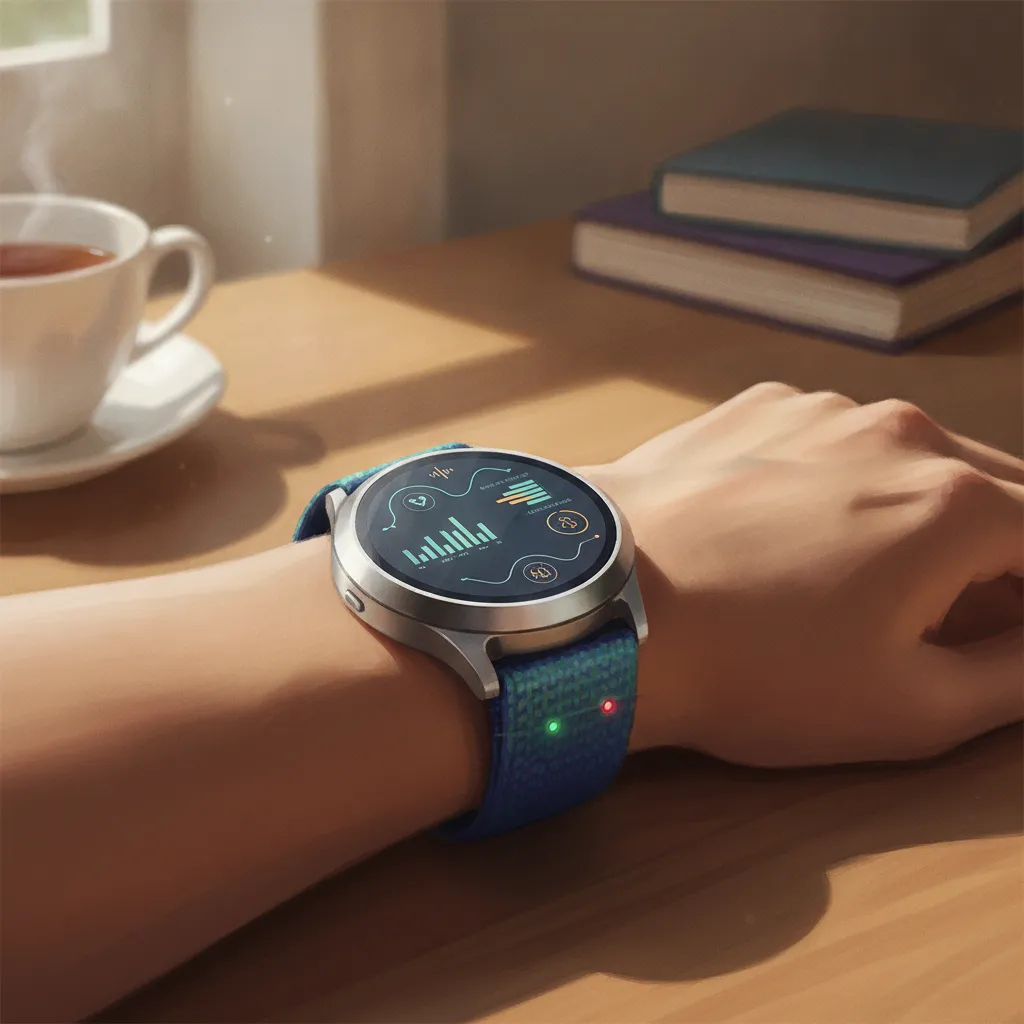
Wearables
A device small enough to sit quietly on your wrist all day, yet packed with enough sensors to estimate your heart rate, sleep quality, and blood oxygen level.
Cheat Sheet
- Wearables are electronic devices worn on the body, most commonly as smartwatches or fitness trackers, that collect data and connect to a smartphone or the internet.
- Most consumer wearables track basic health and activity metrics like step count, heart rate, and sleep patterns using built-in sensors.
- Some newer wearables have added more advanced health sensors, including blood oxygen monitoring and features aimed at detecting irregular heart rhythms, though these are generally framed as wellness tools rather than certified medical diagnostic devices.
- Battery life remains one of the biggest engineering constraints on wearable design, since packing more sensors and features into a small, comfortably wearable device increases power demands significantly.
- The wearables market extends well beyond smartwatches to include fitness rings, smart glasses, and specialized devices for specific sports or medical monitoring purposes.
- Data privacy is a significant and growing concern with wearables, since the devices continuously collect detailed personal health and location information, often synced to cloud services operated by the device manufacturer.
The 60-Second Version
Wearables are electronic devices worn on the body, most commonly as smartwatches or fitness trackers, that collect data and connect to a smartphone or the internet. Most consumer wearables track basic health and activity metrics like step count, heart rate, and sleep patterns using built-in sensors. Some newer wearables have added more advanced health sensors, including blood oxygen monitoring and features aimed at detecting irregular heart rhythms, though these are generally framed as wellness tools rather than certified medical diagnostic devices. Battery life remains one of the biggest engineering constraints on wearable design, since packing more sensors and features into a small, comfortably wearable device increases power demands significantly. The wearables market extends well beyond smartwatches to include fitness rings, smart glasses, and specialized devices for specific sports or medical monitoring purposes. Data privacy is a significant and growing concern with wearables, since the devices continuously collect detailed personal health and location information, often synced to cloud services operated by the device manufacturer.
The Long Version
What Wearables Actually Track
Consumer wearables use a combination of built-in sensors, typically including an accelerometer to detect movement, an optical heart rate sensor, and increasingly a blood oxygen sensor, to estimate a range of health and activity metrics: step count, distance traveled, heart rate throughout the day, sleep duration and quality, and in some cases more specialized signals like irregular heart rhythm alerts.
Wellness Tool, Not Medical Device
While some wearables have gained regulatory clearance for specific limited medical features, the large majority of consumer wearable health tracking is explicitly marketed as general wellness information rather than as a certified diagnostic medical device, a distinction that matters both legally for the manufacturer and practically for how much clinical weight users should place on the readings.
The Battery Life Engineering Challenge
Cramming multiple sensors, a display, wireless connectivity, and enough processing power to run apps into a device small and light enough to comfortably wear all day creates a persistent tension with battery life, one of the most consistently cited limitations across the wearable category and a major focus of ongoing hardware engineering effort.
Beyond the Smartwatch
While smartwatches dominate mainstream wearable adoption, the broader category includes fitness rings offering more discreet all-day tracking, smart glasses experimenting with augmented reality or hands-free photography, and specialized devices built for specific sports or targeted medical monitoring purposes, reflecting a much wider range of form factors than the wrist-worn smartwatch alone.
Ad slot (placeholder — set NEXT_PUBLIC_ADSENSE_SLOT_ID once an ad unit is created)
Glossary
- Fitness tracker
- A wearable device primarily focused on monitoring physical activity metrics like steps, heart rate, and sleep.
- Smartwatch
- A wearable device combining fitness tracking with broader smartphone-like features such as notifications and apps.
- Biometric sensor
- A sensor built into a wearable device that measures a physiological signal, such as heart rate or blood oxygen.
- Sync
- The process of transferring data collected by a wearable device to a connected smartphone app or cloud service.
- Wellness device
- A device marketed for general health tracking, distinct from a medically certified diagnostic device.