Electric Vehicles
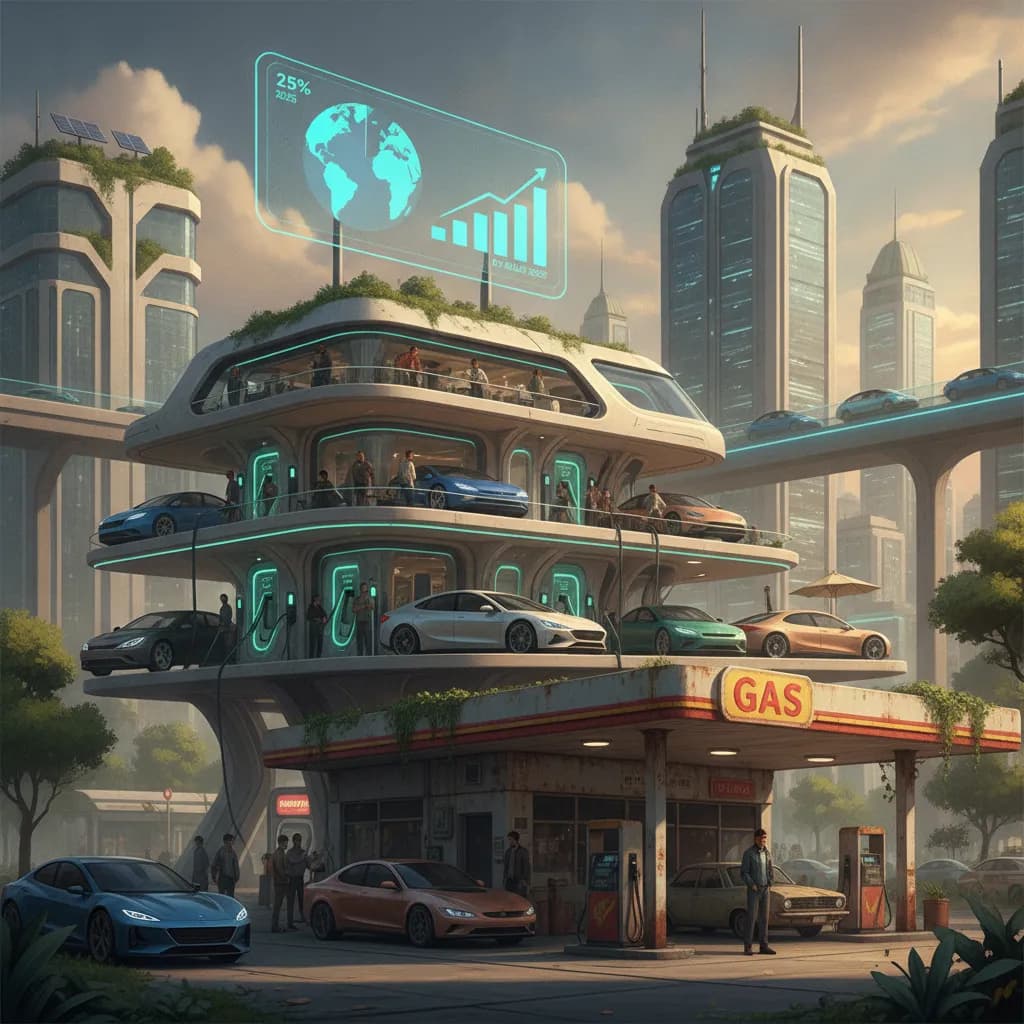
Gas stations are getting nervous: one in four new cars sold worldwide in 2025 plugged in instead.
By Greg Goodwin · Published November 4, 2026
Cheat Sheet
- Global scale: more than 20 million electric cars were sold in 2025, about 25% of new cars worldwide (IEA).
- China: more than 13 million electric cars sold in 2025, a share of almost 55%.
- United States: roughly 10% of 2025 new car sales, but only 6-7% in the fourth quarter after the federal credits ended.
- Norway: about 97% of new cars sold in 2025 were electric, the highest share among the markets the IEA highlights.
- Average range: a new battery electric car goes almost 380 km (about 236 miles), a figure the IEA says has plateaued.
- Fill-up cost: the US Department of Energy's example is about $6 to charge a 54 kWh battery at 10.7 cents per kWh.
The 60-Second Version
An electric vehicle runs on a battery pack and one or more electric motors instead of a gasoline engine, so there is no tailpipe and no oil change. In everyday talk the term usually covers battery electric cars, which use only electricity, and plug-in hybrids, which pair a battery with a fuel engine. You charge at home overnight, at work, or at public stations, and the fastest public chargers can add many miles of driving in about half an hour. The International Energy Agency counted more than 20 million electric cars sold worldwide in 2025, about one in four new cars, with China far out in front. In the United States the share was about one in ten, and federal purchase credits ended after September 2025. For shoppers the big questions are range, charging access, and price, and the answers depend heavily on where you live and how you drive.
The Long Version
How an Electric Car Works
An electric car stores energy in a large battery pack and sends it to an electric motor that turns the wheels. A motor delivers its pulling power right away, which is why many electric cars feel quick off the line. Most also recover some energy when you slow down, a trick called regenerative braking that lets the motor act as a generator. Battery electric vehicles, or BEVs, have no fuel engine at all, while plug-in hybrids, or PHEVs, add a smaller battery to a gasoline engine so shorter trips can run on electricity. The IEA found that BEVs made up 65% of electric car sales in 2025, with plug-in hybrids and extended-range models making up the rest.
The Global Picture in 2025
The IEA's Global EV Outlook 2026 reports that electric car sales grew about 20% in 2025 to exceed 20 million, lifting their share of the overall car market to 25%. China sold more than 13 million, roughly six of every ten electric cars worldwide, at a share of almost 55%. Europe reached 4.2 million sales, or 28% of new cars, with the European Union just under 27% and Norway near 97%. The United States sold around 1.5 million, slightly fewer than in 2024. The IEA projects about 23 million electric car sales in 2026, though forecasts like that are estimates and depend on policy and prices.
Charging: Home, Public, and the Plug Wars
The US Department of Energy notes that most drivers charge overnight at home using AC Level 1 or Level 2 equipment. Level 1 uses the cord that comes with the vehicle and a regular outlet; Level 2 uses 240 volts and is faster. Public DC fast chargers send direct current straight to the battery and are the road-trip option. On the plug itself, Tesla's connector, known as NACS, was standardized by SAE International in 2023 as J3400, and other automakers have been adding access to Tesla's charging network and adopting the connector, though details vary by brand and model year. As a cost example, DOE figures that charging a 54 kWh battery at 10.7 cents per kWh costs about $6, but real electricity prices differ widely.
The US Story: Credits Come and Go
The One Big Beautiful Bill Act, signed July 4, 2025, ended the federal tax credits for new and used electric cars for vehicles acquired after September 30, 2025. The new-vehicle credit had been worth up to $7,500. The IEA says US electric car sales rose almost 15% in the first three quarters of 2025, partly as buyers rushed ahead of the deadline, then fell 45% in the fourth quarter compared with a year earlier. Electric cars were 6-7% of fourth-quarter sales and about 10% across the full year. Tax rules and state or utility incentives change often, so check current ones before buying.
Range, Price, and Real-World Questions
Range is the top worry for many shoppers, but the IEA notes that average daily driving is around 40 km in many markets and about 65 km in the United States, a small slice of a typical battery. Lower-priced models usually carry smaller batteries and shorter range, which is one reason average range has stopped climbing. Choice is growing: nearly 1,000 of the roughly 2,500 car models available worldwide in 2025 were electric, though just five models made up around 20% of global BEV sales. In the United States, over 85% of electric models are large cars or SUVs, a reminder that the market looks different in each region.
Why People Care
Electric cars are reshaping what people drive, how they fuel up, and what governments subsidize or stop subsidizing. Knowing the basics, from BEVs versus plug-in hybrids to charging levels and what range really means for daily use, helps you follow the debate and shop smarter. Prices and policies move fast, so confirm current figures.
Glossary
- BEV
- Battery electric vehicle, a car that runs only on electricity stored in its battery and has no fuel engine.
- PHEV
- Plug-in hybrid electric vehicle, which pairs a rechargeable battery with a fuel engine.
- kWh
- Kilowatt-hour, the unit used for battery size and for electricity billing; bigger batteries store more kWh.
- Level 2 charging
- AC charging at 240 volts, typically installed at homes, workplaces, and public lots, faster than a standard outlet.
- NACS / J3400
- The charging connector Tesla developed, standardized by SAE International in 2023 as J3400.
Go Deeper
More to Explore
- Gaming Consoles
The video game industry nearly died in 1983 — and the console that revived it did so partly by refusing to call itself a "video game system" at all.
- Wearables
Your wrist gadget quietly tracks steps, heart rate, and sleep, and some models even keep an eye on blood oxygen.
- Smartphones
The touchscreen smartphone is only as old as the 2007 iPhone, yet it's now the main route online for much of the world.
- Smart Home Devices
Smart home gadgets' biggest headache has been less the tech than getting one brand's devices to talk to another's.
- Drones
A technology that went from a specialized military tool to something available at ordinary consumer electronics stores in a remarkably short span of time.