Volcanoes
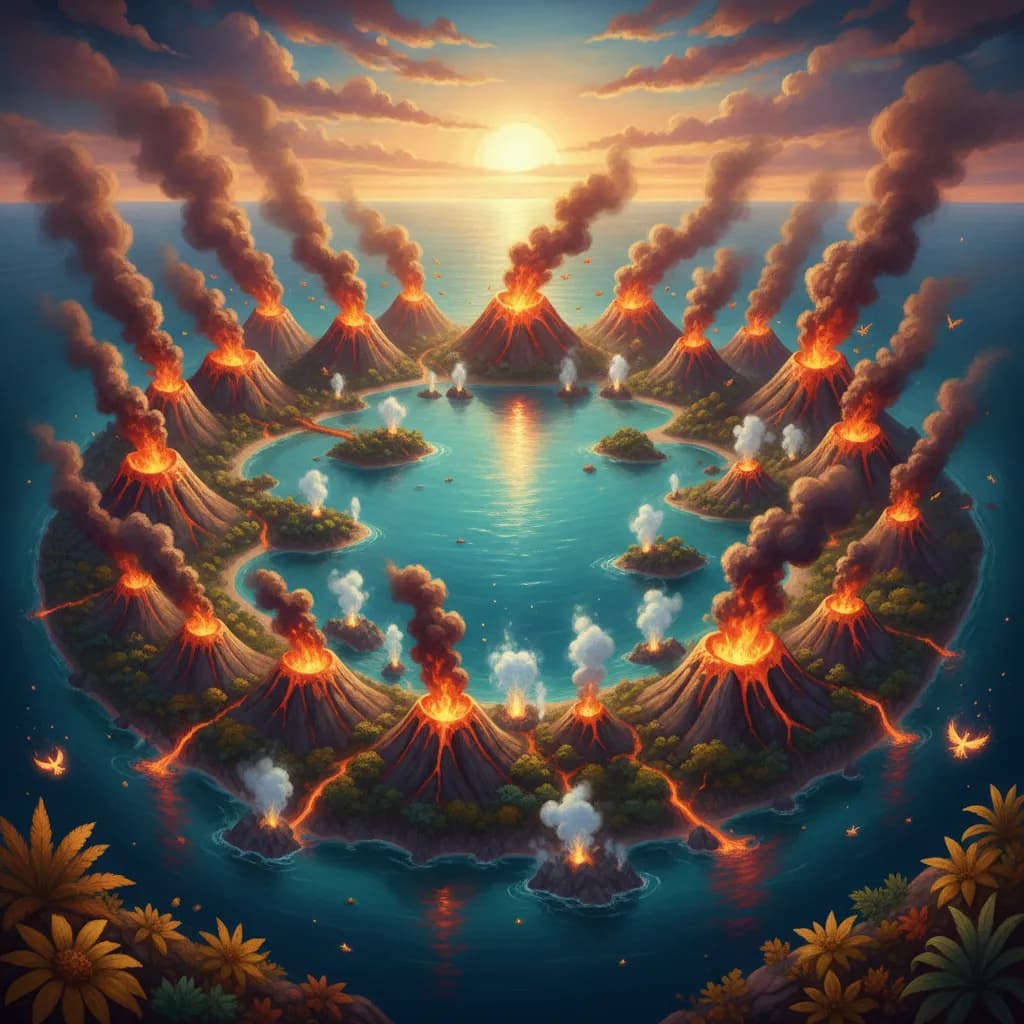
Roughly three-quarters of the world's active volcanoes sit along a single horseshoe-shaped zone circling the Pacific Ocean, appropriately nicknamed the Ring of Fire.
Cheat Sheet
- Volcanoes form when molten rock, called magma, rises from beneath the Earth's crust and erupts onto the surface as lava, ash, and volcanic gases.
- Most volcanoes occur along tectonic plate boundaries, particularly around the Pacific Ring of Fire, a horseshoe-shaped zone responsible for roughly 75% of the world's active volcanoes.
- Volcanic eruptions are generally classified as effusive, involving relatively gentle lava flows, or explosive, involving violent eruptions of ash, gas, and rock fragments.
- The Volcanic Explosivity Index (VEI) is a scale used by volcanologists to measure and compare the relative size and intensity of volcanic eruptions.
- Volcanic soil is often exceptionally fertile due to its rich mineral content, which is why densely populated agricultural regions frequently exist near active volcanoes despite the inherent risk.
- Supervolcanoes, capable of eruptions thousands of times larger than typical volcanic events, have occurred in Earth's history and could cause significant global climate disruption if one were to erupt again.
The 60-Second Version
Volcanoes form when molten rock, called magma, rises from beneath the Earth's crust and erupts onto the surface as lava, ash, and volcanic gases. Most volcanoes occur along tectonic plate boundaries, particularly around the Pacific Ring of Fire, a horseshoe-shaped zone responsible for roughly 75% of the world's active volcanoes. Volcanic eruptions are generally classified as effusive, involving relatively gentle lava flows, or explosive, involving violent eruptions of ash, gas, and rock fragments. The Volcanic Explosivity Index (VEI) is a scale used by volcanologists to measure and compare the relative size and intensity of volcanic eruptions. Volcanic soil is often exceptionally fertile due to its rich mineral content, which is why densely populated agricultural regions frequently exist near active volcanoes despite the inherent risk. Supervolcanoes, capable of eruptions thousands of times larger than typical volcanic events, have occurred in Earth's history and could cause significant global climate disruption if one were to erupt again.
The Long Version
How Volcanoes Form
Volcanoes form when molten rock, called magma, rises from beneath the Earth's crust through cracks or weak points and erupts onto the surface as lava, ash, and volcanic gases, gradually building up the distinctive cone or dome shapes commonly associated with volcanic mountains over repeated eruptions across long timescales.
Where Volcanoes Occur
Most volcanoes occur along tectonic plate boundaries, where the shifting and colliding of the Earth's crustal plates creates the conditions necessary for magma to reach the surface, particularly around the Pacific Ring of Fire, a horseshoe-shaped zone stretching from South America through North America, across to Asia, and down through Oceania, responsible for roughly 75% of the world's active volcanoes and a similarly outsized share of major earthquakes.
Effusive vs. Explosive Eruptions
Volcanic eruptions are generally classified into two broad categories: effusive eruptions, involving relatively gentle, flowing lava that moves gradually across the landscape, and explosive eruptions, involving violent bursts of ash, gas, and rock fragments launched forcefully into the atmosphere. Volcanologists use the Volcanic Explosivity Index (VEI), a standardized scale, to measure and compare the relative size and intensity of these different eruptions, allowing meaningful comparison across historical and modern volcanic events.
Fertile Ground and the Threat of Supervolcanoes
Despite the inherent danger, volcanic soil is often exceptionally fertile due to its rich mineral content, which is why densely populated agricultural regions frequently exist near active volcanoes throughout history, from ancient civilizations to present-day communities. At the extreme end of the scale, supervolcanoes, capable of eruptions thousands of times larger than typical volcanic events, have occurred in Earth's geological history and could cause significant global climate disruption, including years of cooling temperatures, if one were to erupt again.
Ad slot (placeholder — set NEXT_PUBLIC_ADSENSE_SLOT_ID once an ad unit is created)
Glossary
- Magma
- Molten rock located beneath the Earth's surface, which becomes known as lava once it erupts above ground.
- Pacific Ring of Fire
- A horseshoe-shaped zone around the Pacific Ocean where roughly 75% of the world's active volcanoes are located, due to tectonic plate activity.
- Volcanic Explosivity Index (VEI)
- A scale used by volcanologists to measure and compare the relative size and intensity of volcanic eruptions.
- Effusive eruption
- A relatively gentle type of volcanic eruption characterized by flowing lava rather than violent explosions.
- Supervolcano
- A volcano capable of an eruption thousands of times larger than a typical volcanic event, with potential for major global climate impact.