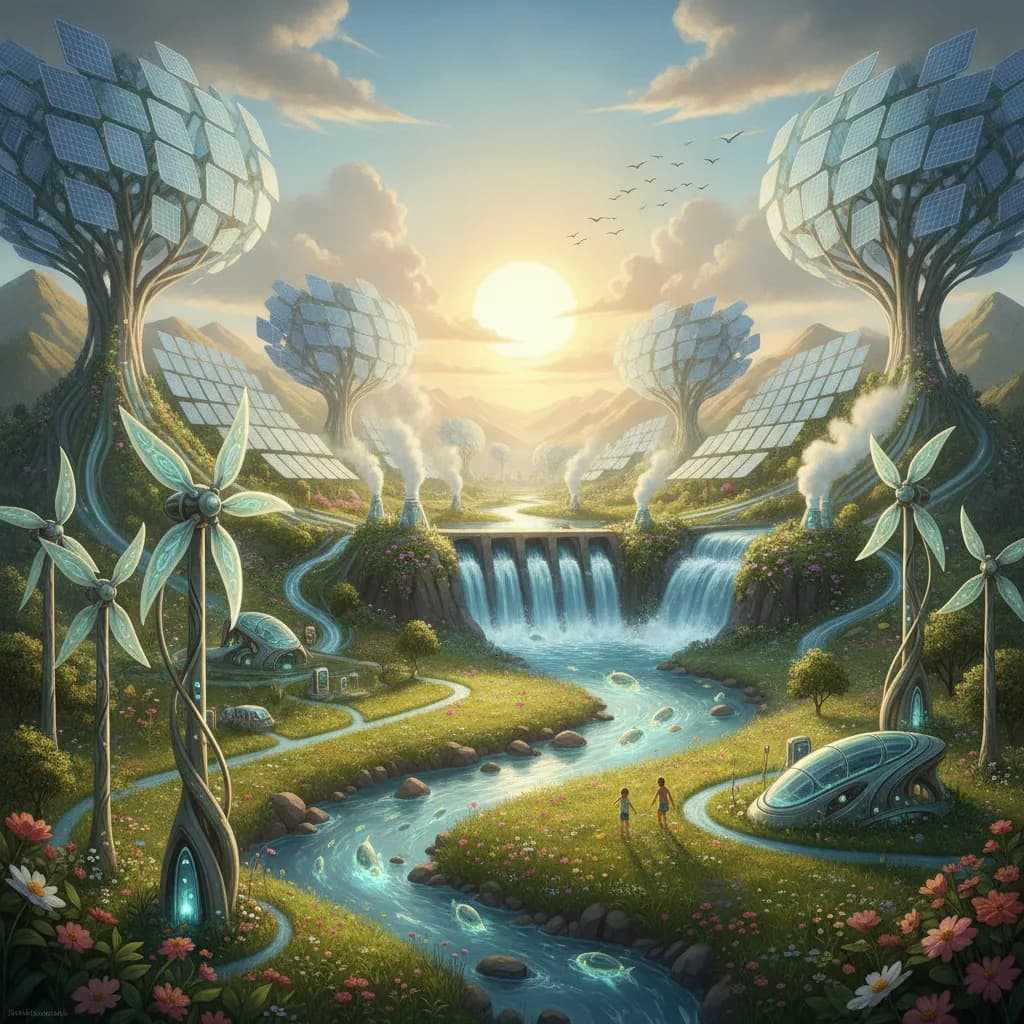
Renewable Energy
A category of energy that, in a growing number of places, has quietly gone from an expensive idealistic alternative to the actual cheapest option on the table.
Cheat Sheet
- Renewable energy comes from naturally replenishing sources, including solar, wind, hydroelectric, and geothermal power, as opposed to finite fossil fuels like coal, oil, and natural gas.
- Solar and wind power have seen dramatic cost declines over the past decade, making them increasingly cost-competitive with, and in many regions cheaper than, traditional fossil fuel power generation.
- A significant challenge for solar and wind power specifically is intermittency, since they only generate electricity when the sun is shining or wind is blowing, requiring storage or backup solutions to ensure reliable power supply.
- Battery storage technology has become an increasingly important complementary piece of renewable energy infrastructure, helping store excess power generated during peak production for use during periods of lower generation.
- Hydroelectric power, generated by moving water, remains one of the largest sources of renewable electricity globally, though its expansion is significantly limited by suitable geography and river systems.
- Global renewable energy adoption has grown substantially in recent years, though the pace and mix of that growth varies considerably by country, driven by differing government policy, existing infrastructure, and natural resource availability.
The 60-Second Version
Renewable energy comes from naturally replenishing sources, including solar, wind, hydroelectric, and geothermal power, as opposed to finite fossil fuels like coal, oil, and natural gas. Solar and wind power have seen dramatic cost declines over the past decade, making them increasingly cost-competitive with, and in many regions cheaper than, traditional fossil fuel power generation. A significant challenge for solar and wind power specifically is intermittency, since they only generate electricity when the sun is shining or wind is blowing, requiring storage or backup solutions to ensure reliable power supply. Battery storage technology has become an increasingly important complementary piece of renewable energy infrastructure, helping store excess power generated during peak production for use during periods of lower generation. Hydroelectric power, generated by moving water, remains one of the largest sources of renewable electricity globally, though its expansion is significantly limited by suitable geography and river systems. Global renewable energy adoption has grown substantially in recent years, though the pace and mix of that growth varies considerably by country, driven by differing government policy, existing infrastructure, and natural resource availability.
The Long Version
From Expensive Alternative to Cost Leader
Solar and wind power have undergone a dramatic cost decline over roughly the past decade, driven by improved technology and manufacturing scale, to the point where they're now increasingly cost-competitive with, and in many regions actually cheaper than, traditional fossil fuel power generation, a striking shift from their earlier reputation as a considerably more expensive alternative energy source.
The Intermittency Problem
A significant technical challenge specific to solar and wind power is intermittency, the reality that these sources only generate electricity under specific conditions, when the sun is shining or wind is blowing, rather than continuously on demand, requiring either energy storage solutions or backup generation capacity to ensure a reliable overall power supply, particularly as these sources make up a larger share of the total electricity grid.
Batteries as the Complementary Piece
Battery storage technology has become an increasingly important complementary component of renewable energy infrastructure, allowing excess electricity generated during periods of peak solar or wind production to be stored and later released during periods of lower generation, directly addressing renewable energy's core intermittency challenge as storage technology continues to improve and become more cost-effective.
Hydroelectric's Steady, Geographically Limited Role
Hydroelectric power, generated from the energy of moving water, remains one of the largest single sources of renewable electricity globally and, unlike solar and wind, doesn't face the same intermittency challenge, though its further expansion is significantly constrained by the limited availability of suitable geography and river systems capable of supporting new large-scale hydroelectric infrastructure.
Ad slot (placeholder — set NEXT_PUBLIC_ADSENSE_SLOT_ID once an ad unit is created)
Glossary
- Intermittency
- The challenge that some renewable sources, like solar and wind, only generate electricity under specific conditions, requiring storage or backup solutions.
- Battery storage
- Technology that stores excess electricity generated during peak renewable production for use during periods of lower generation.
- Hydroelectric power
- Electricity generated from moving water, one of the largest sources of renewable electricity globally.
- Geothermal power
- Electricity or heat generated from the Earth's internal heat, a renewable but geographically limited energy source.
- Grid
- The interconnected system of power generation and transmission infrastructure that renewable energy sources must integrate with reliably.