Earthquakes
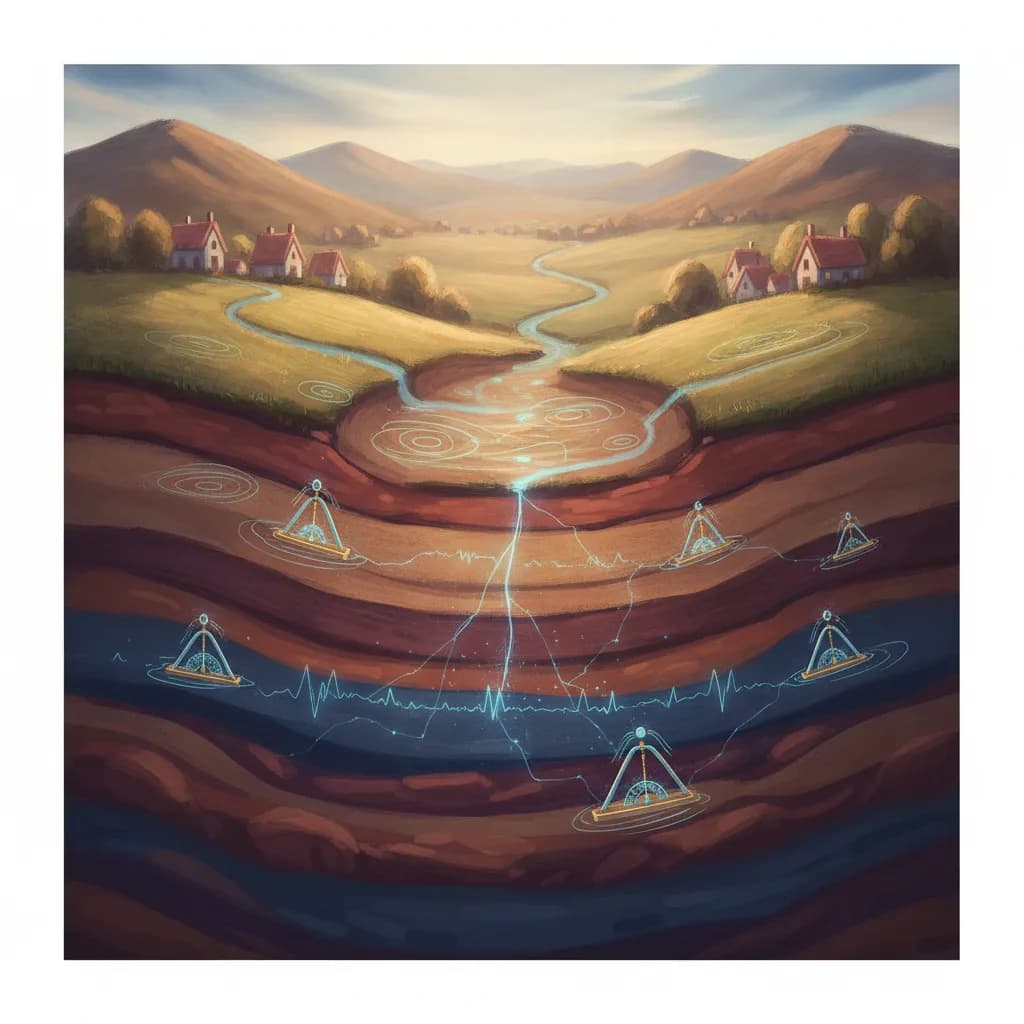
The vast majority of earthquakes happening right now are too small for any human to feel, detected only by sensitive instruments quietly recording the Earth's constant, low-level shifting.
Cheat Sheet
- Earthquakes occur when built-up stress along fault lines, where sections of the Earth's crust meet, is suddenly released, causing the ground to shake.
- The point underground where an earthquake originates is called the focus (or hypocenter), while the point on the surface directly above it is called the epicenter.
- Earthquake magnitude is commonly measured using the moment magnitude scale, which has largely replaced the older Richter scale for measuring the energy released by larger earthquakes.
- The Pacific Ring of Fire, the same tectonic zone associated with most volcanic activity, is also responsible for roughly 90% of the world's earthquakes.
- Most earthquakes are far too small to be felt by humans and are only detected using sensitive instruments called seismometers, while only a small fraction are strong enough to cause noticeable damage.
- Earthquakes themselves cannot currently be reliably predicted in advance, though early warning systems can detect an earthquake's initial waves and provide seconds to tens of seconds of advance notice before stronger shaking arrives.
The 60-Second Version
Earthquakes occur when built-up stress along fault lines, where sections of the Earth's crust meet, is suddenly released, causing the ground to shake. The point underground where an earthquake originates is called the focus (or hypocenter), while the point on the surface directly above it is called the epicenter. Earthquake magnitude is commonly measured using the moment magnitude scale, which has largely replaced the older Richter scale for measuring the energy released by larger earthquakes. The Pacific Ring of Fire, the same tectonic zone associated with most volcanic activity, is also responsible for roughly 90% of the world's earthquakes. Most earthquakes are far too small to be felt by humans and are only detected using sensitive instruments called seismometers, while only a small fraction are strong enough to cause noticeable damage. Earthquakes themselves cannot currently be reliably predicted in advance, though early warning systems can detect an earthquake's initial waves and provide seconds to tens of seconds of advance notice before stronger shaking arrives.
The Long Version
Stress, Fault Lines, and Sudden Release
Earthquakes occur when built-up stress along fault lines, the fractures where sections of the Earth's crust meet and grind against one another, is suddenly released, causing the surrounding ground to shake. This stress accumulates gradually over long periods as tectonic plates slowly move, and it releases abruptly once friction along the fault can no longer hold the built-up pressure in place.
Focus, Epicenter, and Measuring Size
The point underground where an earthquake originates is called the focus, or hypocenter, while the point on the surface directly above it, and typically where shaking is felt most strongly, is called the epicenter. Earthquake magnitude is commonly measured today using the moment magnitude scale, which has largely replaced the older, more limited Richter scale, particularly for accurately measuring the energy released by larger earthquakes.
Where Earthquakes Concentrate
The Pacific Ring of Fire, the same tectonic zone closely associated with most of the world's volcanic activity, is also responsible for roughly 90% of the world's earthquakes, since both phenomena stem from the same underlying tectonic plate boundaries where enormous geological forces are concentrated.
Detection, Frequency, and the Limits of Prediction
Most earthquakes are far too small to be felt by humans at all and are only detected using sensitive instruments called seismometers, which continuously record even minor ground motion, while only a small fraction of earthquakes are strong enough to cause noticeable shaking or damage. Despite significant scientific effort, earthquakes themselves cannot currently be reliably predicted in advance, though earthquake early warning systems can detect an earthquake's faster-moving initial waves and provide anywhere from a few seconds to tens of seconds of advance notice before the more damaging shaking arrives, enough time in some cases to take meaningful protective action.
Ad slot (placeholder — set NEXT_PUBLIC_ADSENSE_SLOT_ID once an ad unit is created)
Glossary
- Fault line
- A fracture in the Earth's crust where sections of rock have moved relative to each other, and where earthquakes commonly originate.
- Epicenter
- The point on the Earth's surface directly above where an earthquake originates underground.
- Moment magnitude scale
- The scale commonly used today to measure earthquake size based on the total energy released, having largely replaced the older Richter scale.
- Seismometer
- A sensitive scientific instrument used to detect and measure ground motion caused by earthquakes.
- Earthquake early warning system
- A system that detects an earthquake's initial, faster-moving waves to provide seconds to tens of seconds of advance notice before stronger shaking arrives.