Apex Predators
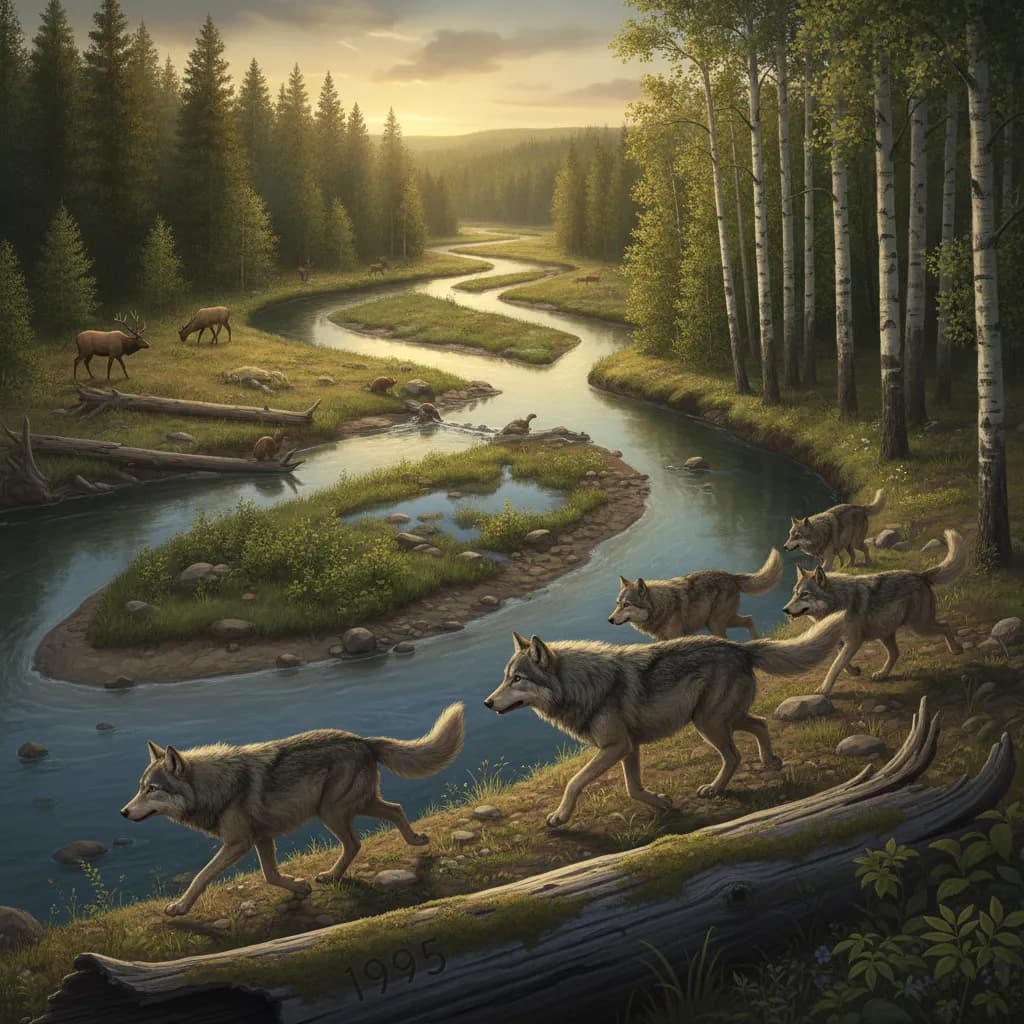
Reintroducing a single predator species to Yellowstone in 1995 ended up changing the actual physical course of the park's rivers — a chain reaction almost nobody predicted.
Cheat Sheet
- An apex predator sits at the top of its food chain, with no natural predators of its own as an adult in its native ecosystem.
- Examples span vastly different environments: orcas and great white sharks in the ocean, wolves and tigers on land, and golden eagles in the sky.
- The reintroduction of wolves to Yellowstone National Park in 1995 triggered a well-documented 'trophic cascade' that reshaped rivers, vegetation, and other animal populations.
- Removing an apex predator from an ecosystem often causes prey populations to grow unchecked, which can trigger cascading, sometimes destructive ecological effects.
- Many apex predator populations worldwide have declined sharply due to habitat loss, hunting, and human-wildlife conflict, despite their ecological importance.
- Apex predator status is relative to a specific ecosystem — an animal can be an apex predator in one environment and prey in another.
The 60-Second Version
An apex predator occupies the very top of its local food chain, facing no natural predators of its own once it reaches adulthood, a role filled by wildly different animals depending on the ecosystem, from orcas and great white sharks in the ocean to wolves and tigers on land. What makes apex predators ecologically significant goes well beyond simply eating other animals, since their presence or absence can trigger a chain reaction throughout an entire ecosystem known as a trophic cascade. The clearest documented example came after wolves were reintroduced to Yellowstone National Park in 1995, a single reintroduction that ended up reshaping vegetation patterns, other animal populations, and even the physical course of the park's rivers as the ecosystem readjusted around the returning predator. That same dynamic runs in reverse when an apex predator disappears from an ecosystem entirely, since prey populations can grow unchecked without that natural check on their numbers, sometimes triggering destructive cascading effects of their own. Despite this outsized ecological importance, many apex predator populations worldwide have declined sharply due to habitat loss, hunting, and ongoing conflict with humans, and it's worth remembering that "apex predator" status is always relative to a specific ecosystem, since an animal can rank at the top of one food chain and still be prey somewhere else entirely.
The Long Version
Sitting at the Top, With No One Above
An apex predator occupies the very top of its local food chain, facing no natural predators of its own once it reaches adulthood, a role filled by strikingly different animals depending on the specific ecosystem, from orcas and great white sharks patrolling the ocean to wolves and tigers on land and golden eagles ruling the sky.
More Than Just Eating Prey
What makes apex predators ecologically significant extends well beyond the simple act of eating other animals, since their presence or absence can trigger a chain reaction rippling through an entire ecosystem, a phenomenon ecologists call a trophic cascade, affecting species and habitat features that have no direct predator-prey relationship with the apex predator itself.
The Wolves That Rerouted Rivers
The clearest documented example of this effect followed the reintroduction of wolves to Yellowstone National Park in 1995, a single reintroduction that ultimately reshaped vegetation patterns, shifted other animal populations, and even altered the physical course of the park's rivers as the broader ecosystem readjusted itself around the returning predator's presence.
What Happens When the Predator Disappears
That same dynamic runs in reverse when an apex predator disappears from an ecosystem entirely, since prey populations can grow unchecked without that natural population control, sometimes triggering destructive cascading effects of their own throughout the food chain. Despite this outsized ecological importance, many apex predator populations worldwide have declined sharply due to habitat loss, hunting, and ongoing human-wildlife conflict, and "apex predator" status always remains relative to a specific ecosystem, since an animal can sit at the top of one food chain while still serving as prey somewhere else entirely.
Ad slot (placeholder — set NEXT_PUBLIC_ADSENSE_SLOT_ID once an ad unit is created)
Why People Care
Apex predators play an outsized role in maintaining ecosystem balance far beyond their own numbers, and understanding trophic cascades like Yellowstone's wolves explains why conservation efforts increasingly treat protecting top predators as essential to preserving entire ecosystems, not just a single species.
Glossary
- Apex predator
- An animal at the top of its local food chain, with no natural predators of its own as an adult.
- Trophic cascade
- A chain reaction of ecological effects triggered by changes at the top of a food chain, often following the loss or return of an apex predator.
- Keystone species
- A species whose presence has an outsized effect on its ecosystem's structure, a role many apex predators fulfill.
- Food chain
- The sequence of organisms through which energy passes as one is eaten by another, ranked from producers to top predators.
- Mesopredator release
- An increase in smaller predator populations that can occur when a dominant apex predator is removed from an ecosystem.
Go Deeper
More to Explore
- Animal Communication
A honeybee returning to the hive can tell its colony the exact direction and distance of a food source using nothing but a carefully choreographed dance.
- Camouflage and Mimicry
An octopus can rearrange its entire skin pattern to disappear against coral in under a second — no other animal on Earth changes its look that fast.
- Marine Life
A planet whose oceans cover most of its surface, contain most of its biodiversity, and remain, even today, mostly unexplored.
- Insects
The single most numerous and diverse group of animals on the entire planet isn't mammals, birds, or fish — it's insects, by an overwhelming margin.
- Extinct Species
More than 99% of every species that has ever existed on Earth is already extinct — meaning extinction, not survival, is actually the historical norm.