Mammals
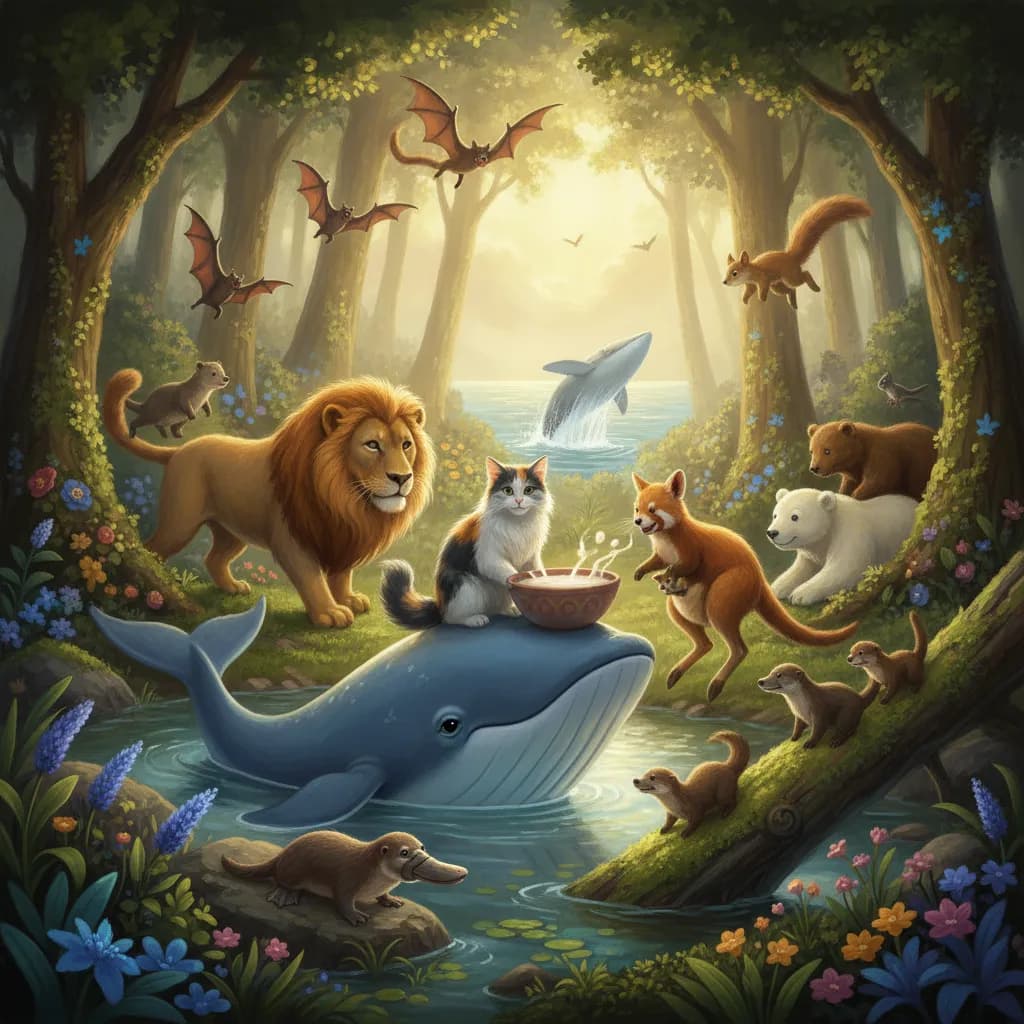
If you have fur, milk, or a cat, you are in the club, and so is a blue whale.
By Greg Goodwin · Published October 17, 2026 · Updated October 24, 2026
Cheat Sheet
- Species count: 6,815 in the Mammal Diversity Database v2.2 (June 2025), including 112 recently extinct; 6,703 are living.
- Taxonomy: 27 orders, 167 families and 1,359 genera.
- Egg-layers: only the monotremes (platypus and echidnas); every other mammal bears live young.
- Defining traits: hair at some stage of life, milk-secreting mammary glands, and hearing through bones in the middle ear.
- Counting history: the 2005 reference list had 5,416 species; the Mammal Diversity Database counted 6,495 in 2018.
- Size range: tiny bats and shrews at one end, the blue whale at the other.
The 60-Second Version
Mammals are warm-blooded vertebrates, animals with backbones, that share a few signature traits. Females produce milk from mammary glands to feed their young, and every mammal has hair at some stage of development. Other hallmarks include a jaw hinged directly to the skull, hearing through small bones in the middle ear, and a muscular diaphragm separating the chest from the abdomen. Scientists currently recognize roughly 6,700 living species, from tiny bats and shrews to the enormous blue whale. They fall into three broad groups. Monotremes, such as the platypus and echidnas, lay eggs. Marsupials give birth to young that finish developing outside the womb, often in a pouch. Placental mammals, the largest group, bear young at a more advanced stage. Mammals first appeared in the late Triassic Period, descending from reptile-like ancestors, and they are the dominant animals on land today.
The Long Version
What Makes a Mammal
Britannica defines a mammal as a member of the class Mammalia, warm-blooded vertebrates distinguished from other chordates by the female's milk-secreting glands and by hair at some stage of development. Unique features include a jaw hinged directly to the skull, hearing by bones in the middle ear, a muscular diaphragm separating the chest and abdominal cavities, and mature red blood cells that lack a nucleus. Mammals generally have four limbs, with the exception of some aquatic species. The label covers animals as different as a bat, a whale, a kangaroo and a human.
Three Ways to Start Life
The biggest split inside the group is how young are born. Monotremes, the platypus and the echidnas, are the only mammals that lay eggs. Marsupial newborns are tiny and complete their development outside the mother's womb, sometimes inside a pouchlike structure. Placental mammals are born at a relatively advanced stage; the name refers to the placenta that nourishes the developing young. Across all three groups, mothers nurse their offspring with milk, and Britannica notes that this long dependence helps young mammals learn from older animals.
Counting Mammals Is a Moving Target
The Mammal Diversity Database, run by the American Society of Mammalogists, lists 6,815 species in version 2.2, released in June 2025. Of those, 112 are recently extinct, meaning they disappeared since about 1500 CE, and 17 are domestic. The earlier reference list from 2005 held 5,416 species, and the database's own 2018 count was 6,495. The growth does not mean the world suddenly gained mammals. It reflects new discoveries and, especially, genetic studies that reveal what looked like one species is actually two or more. Researchers have also said rodents and bats together make up about two-thirds of mammal species. Counts differ between versions and other sources, so numbers like these are best read as approximate.
Where Mammals Came From
According to Britannica, the earliest mammals date from the late Triassic Period, and their immediate ancestors were reptilian therapsids. For roughly the last 70 million years, mammals have been the dominant animals in land ecosystems. Britannica credits two main factors: behavioral adaptability, since young learn from their mothers and others, and the physical adaptability that warm-bloodedness provides across a wide range of climates and conditions.
A Group Built for Variety
Mammals range from small bats and shrews to the blue whale. The group includes meat-eaters, plant-eaters, insect-eaters and omnivores, as well as such major lineages as primates, rodents and cetaceans, the whales and dolphins. The Mammal Diversity Database organizes the whole class into 27 orders, 167 families and 1,359 genera. Because of that spread, "mammal" is a useful category but rarely a useful description: a bat and a bear have a great deal in common biologically and very little in how they live.
Why People Care
Humans are mammals, as are most of the animals we farm, keep as pets, and worry about losing. Knowing the basics explains why dolphins are not fish, why a platypus is so strange, and why conservationists track species counts so closely.
Glossary
- Monotreme
- An egg-laying mammal; the group includes the platypus and echidnas.
- Marsupial
- A mammal whose newborns finish developing outside the womb, sometimes in a pouch.
- Placental mammal
- A mammal whose young are born at a relatively advanced stage of development.
- Therapsid
- A group of reptilian ancestors from which the earliest mammals descended.
- Mammal Diversity Database
- The American Society of Mammalogists' regularly updated list of recognized mammal species.
Go Deeper
More to Explore
- Octopuses and Cephalopods
Eight arms, three hearts, blue blood, and a skin that doubles as a mood ring and a disguise kit.
- Wolves
Every dog you have ever met descends from a wolf, but wolves are far more than ancestors.
- Sharks
Sharks are older than trees, and the vast majority are no threat to people.
- Symbiosis
Nature is full of odd couples, and some of those partnerships are the reason complex life exists at all.
- Hibernation
Some animals handle winter by nearly switching themselves off.