The Manhattan Project
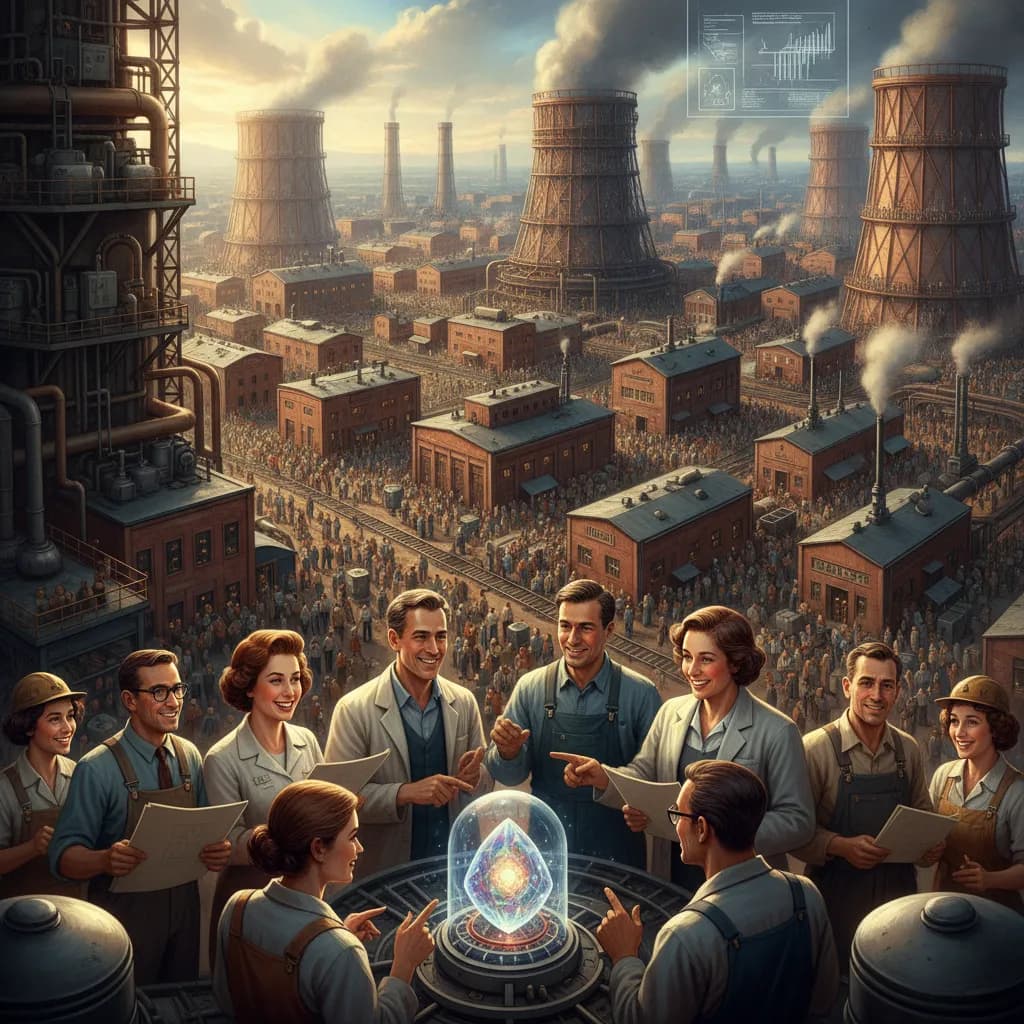
More than 130,000 people worked on the Manhattan Project at its peak, and the overwhelming majority of them had no idea they were helping build the first nuclear weapon.
Cheat Sheet
- A top-secret U.S. research program during World War II that developed the first functional nuclear weapons, running from 1942 to 1946.
- Employed over 130,000 people at its peak across multiple secret sites, including Los Alamos, Oak Ridge, and Hanford — most workers had no idea what the overall project was building.
- Physicist J. Robert Oppenheimer served as scientific director of the Los Alamos laboratory, where the weapons were actually designed.
- The first successful nuclear detonation, codenamed the 'Trinity test,' occurred in New Mexico on July 16, 1945.
- The U.S. subsequently dropped atomic bombs on Hiroshima and Nagasaki in August 1945, the only wartime use of nuclear weapons in history.
- Total project cost is estimated at roughly $2 billion at the time (equivalent to tens of billions in modern dollars), an enormous wartime expenditure kept secret from Congress.
The 60-Second Version
The Manhattan Project was a top-secret U.S. research program launched during World War II specifically to develop the first functional nuclear weapons, running from 1942 to 1946 under an extraordinary level of wartime secrecy. At its peak, the project employed more than 130,000 people spread across multiple secret sites, including Los Alamos, Oak Ridge, and Hanford, yet deliberately compartmentalized information so thoroughly that most workers had no real understanding of what the overall project was actually building. Scientific direction of the crucial weapons design work fell to physicist J. Robert Oppenheimer at the Los Alamos laboratory, where years of theoretical and applied research finally culminated in the first successful nuclear detonation, codenamed the Trinity test, conducted in the New Mexico desert on July 16, 1945. Weeks later, the United States used two of these newly developed weapons in combat, dropping atomic bombs on the Japanese cities of Hiroshima and Nagasaki in August 1945, marking the only wartime use of nuclear weapons in human history to date. The entire project's total cost is estimated at roughly $2 billion at the time, equivalent to tens of billions of dollars today, an enormous wartime expenditure that was successfully kept hidden even from most members of Congress throughout its development.
The Long Version
A Secret Race to Build the Bomb
The Manhattan Project was a top-secret U.S. research program launched during World War II specifically to develop the first functional nuclear weapons, running from 1942 to 1946 under an extraordinary level of wartime secrecy driven partly by fear that Nazi Germany might be pursuing similar nuclear research of its own.
A Massive Workforce Kept in the Dark
At its peak, the project employed more than 130,000 people spread across multiple secret sites, including Los Alamos, Oak Ridge, and Hanford, yet deliberately compartmentalized information so thoroughly that the overwhelming majority of workers had no real understanding of what the overall project was actually building, each contributing to only a narrow, isolated piece of the larger puzzle.
The Scientist Who Led the Design Effort
Scientific direction of the crucial weapons design work fell to physicist J. Robert Oppenheimer at the Los Alamos laboratory, where years of intensive theoretical and applied research finally culminated in the first successful nuclear detonation, codenamed the Trinity test, conducted in the New Mexico desert on July 16, 1945, a moment that fundamentally changed the nature of warfare going forward.
From Test Site to Combat Use
Weeks after that first successful test, the United States used two of these newly developed weapons in actual combat, dropping atomic bombs on the Japanese cities of Hiroshima and Nagasaki in August 1945, marking the only wartime use of nuclear weapons in human history to date and helping bring about Japan's surrender and the end of World War II.
An Enormous, Hidden Expenditure
The entire project's total cost is estimated at roughly $2 billion at the time, equivalent to tens of billions of dollars in modern currency, an enormous wartime expenditure that project officials successfully kept hidden even from most members of Congress throughout its development, a scale of secrecy rarely matched before or since.
Ad slot (placeholder — set NEXT_PUBLIC_ADSENSE_SLOT_ID once an ad unit is created)
Why People Care
The Manhattan Project didn't just end World War II's Pacific theater, it ushered in the nuclear age entirely, and understanding its scale, secrecy, and consequences remains essential context for the nuclear weapons policy and proliferation debates that continue to shape global security today.
Glossary
- Trinity test
- The first successful detonation of a nuclear weapon, conducted in New Mexico on July 16, 1945.
- J. Robert Oppenheimer
- The physicist who served as scientific director of the Los Alamos laboratory, where the Manhattan Project's nuclear weapons were designed.
- Los Alamos
- A secret research site in New Mexico where the Manhattan Project's nuclear weapons were designed and developed.
- Compartmentalization
- A security practice limiting most Manhattan Project workers' knowledge to only their specific task, preventing most from understanding the project's overall purpose.
- Atomic bombings of Hiroshima and Nagasaki
- The August 1945 U.S. attacks using nuclear weapons developed by the Manhattan Project, the only wartime use of nuclear weapons in history.
Go Deeper
- U.S. Department of Energy — The Manhattan Project
- American Prometheus, by Kai Bird and Martin J. Sherwin
More to Explore
- The Marshall Plan
A single Harvard commencement speech in 1947 laid out a plan that would eventually funnel the modern equivalent of well over $150 billion into rebuilding a continent devastated by war.
- D-Day
Nearly 160,000 troops landed on a single stretch of coastline in a single day, making D-Day still the largest seaborne invasion ever attempted.
- World War I
A war triggered by a single assassination that, thanks to a web of alliances, dragged the entire European continent into fighting within weeks.
- The Cold War
A four-decade standoff between two superpowers who never fought each other directly, but came within minutes of nuclear war more than once.
- World War II
The deadliest conflict in human history is also the one that quietly shaped almost every major institution the world still runs on today.