The Vikings
They sailed to Newfoundland nearly five centuries before Columbus, and still the internet insists on putting horns on their helmets.
By Greg Goodwin · Published October 17, 2026 · Updated October 24, 2026
Cheat Sheet
- Lindisfarne date: June 8, 793 by most modern accounts; the Anglo-Saxon Chronicle gives a January date, and some sources say June 7.
- Earlier raid: the Chronicle records 'three ships of Northmen' landing in Wessex in 787, though some sources date that first landing to 789.
- Newfoundland: wood cut with metal tools at L'Anse aux Meadows dates to 1021 CE, pinned by a radiocarbon spike from a cosmic-ray event in 993.
- Helmets: only one intact Viking Age helmet survives, from a warrior's grave at Gjermundbu, Norway, and it has no horns.
- Iceland: the Althing first met at Thingvellir in 930; the site was inscribed as a UNESCO World Heritage Site in 2004.
- Stamford Bridge: fought September 25, 1066; Harold Godwinson defeated Harald Hardrada, and the Battle of Hastings followed 19 days later.
The 60-Second Version
The Vikings were Norse seafarers from Scandinavia who raided, traded, and settled across northern Europe and the North Atlantic. The Viking Age is conventionally dated from the 793 attack on the English monastery of Lindisfarne to the death of King Harald Hardrada of Norway at Stamford Bridge in 1066. Their shallow-draft longships could cross open sea and also slip up rivers, letting small crews strike coastal monasteries and towns and then vanish. But they were not only raiders. Norse settlers colonized Iceland, built a self-governing society there, and gathered at an assembly called the Althing. Others settled in northern France, where a Viking leader named Rollo is traditionally said to have been granted land around 911, setting the stage for Normandy. Norse explorers also reached North America around the year 1000, far earlier than Columbus. And the horned helmet? That is mostly a 19th-century invention.
The Long Version
Who Were the Vikings?
The word Viking is a modern shorthand for the Scandinavian seafaring peoples of roughly the late 8th to the mid-11th century, and the era is called the Viking Age. In practice, most Norse people were farmers, fishers, and craftspeople, and raiding was one activity among many. The Age's boundaries are a convention. Scholars point out that Norse culture existed for well over a century before 793, and the Anglo-Saxon Chronicle already records three ships of Northmen landing in Wessex in 787, though some sources date that landing to 789. Still, the neat start and end dates give historians useful bookends.
Raiders from the Sea
The attack on Lindisfarne, a monastery on an island off England's northeast coast, is the event that sent shockwaves across Christian Europe. Most modern accounts date it to June 8, 793, although the surviving Chronicle entry gives a January date and some sources say June 7. What made the raids so effective was the ship. Longships were light enough to be dragged ashore and run up shallow rivers, but sturdy enough for the open sea, so a small force could appear without warning, seize portable wealth from undefended religious houses, and escape before local forces could assemble.
Settlers and Explorers
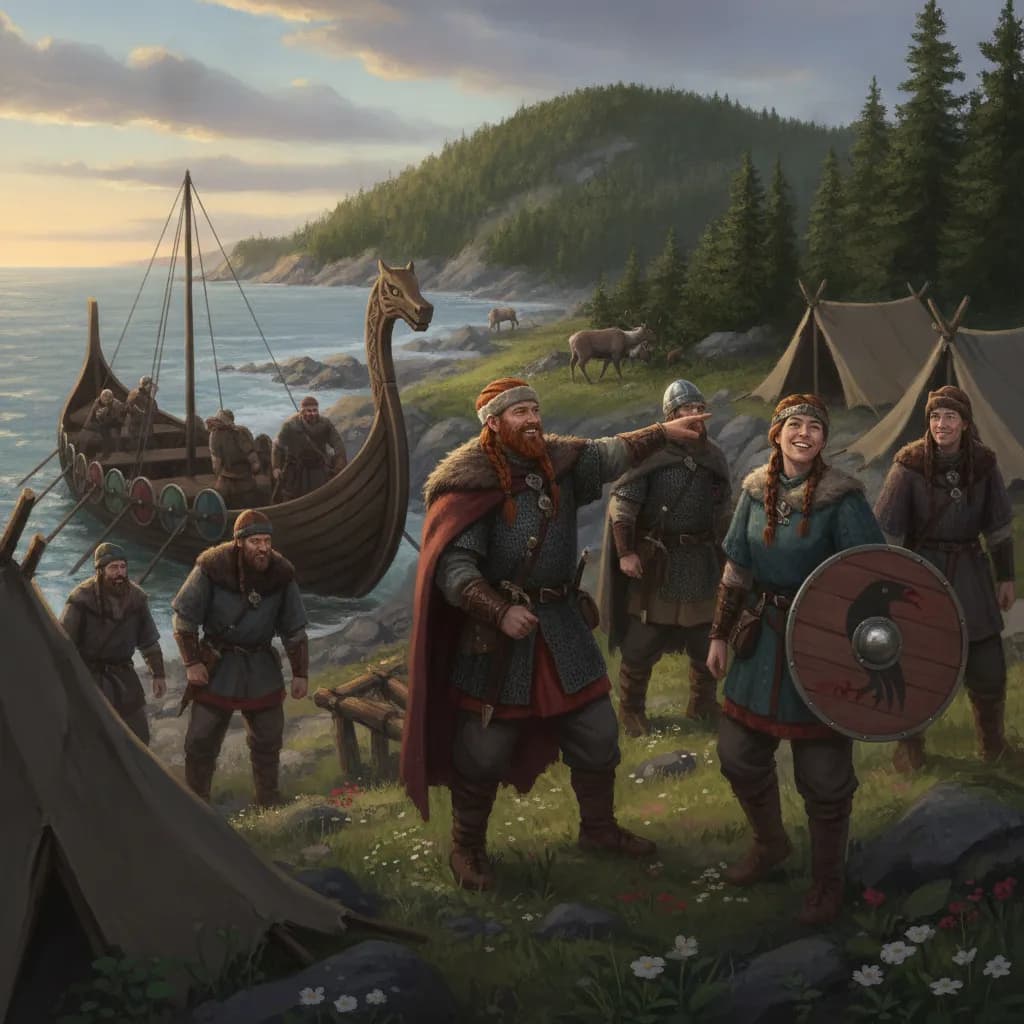
Raiding was only part of the story. According to Icelandic tradition, settlers began arriving in Iceland in the 870s (874 in some accounts), and around 930 the settlers created the Althing, a national assembly that met at Thingvellir, about 45 kilometers east of today's Reykjavik. Iceland describes it as the oldest surviving parliament in the world, though that claim depends on how you define parliament. In France, tradition holds that the Viking Rollo made a deal with the Frankish king Charles the Simple around 911, receiving land at the mouth of the Seine in return for defending it, though the exact terms were never recorded and the main near-contemporary source is disputed. Further west, the Icelandic sagas describe voyages to a land called Vinland. For centuries those sagas were the only evidence, written down some 200 years after the events. Then in 2021 researchers used a cosmic-ray radiocarbon spike in tree rings to date wood cut with metal tools at L'Anse aux Meadows, Newfoundland, to 1021, the oldest precise date for Europeans in the Americas. The site was probably a temporary base, since it has no burials or farming remains.
Warriors, Weapons, and the Horned Helmet Myth
The picture of a Viking in a horned helmet comes largely from 19th-century Scandinavian artists, not from archaeology. Only one complete helmet survives from the Viking Age. It was found in a warrior's grave at Gjermundbu, north of Oslo, alongside the only complete chain-mail suit from the period, and it has no horns. Helmets were rarely buried in graves, so it is possible that relatively few Vikings wore them at all. There are some horned images: a tapestry in the early Viking Oseberg burial shows horned figures, and Iron Age Golden Horns depict what may be berserkers. But the National Museum of Denmark notes that horns would have been a hindrance in battle and on crowded ships, and no contemporary source describes Vikings wearing them in combat.
The End of an Age
Historians usually place the end of the Viking Age at 1066. In September of that year, the Norwegian king Harald Hardrada and Tostig, the exiled brother of England's King Harold II, invaded northern England and were defeated at Stamford Bridge on September 25. Harold then marched south, and the Battle of Hastings was fought 19 days later, ending in his defeat by William of Normandy, whose duchy owed its origins to Norse settlers. The year is a convenient marker rather than a sharp break, since Scandinavia was by then becoming part of Christian Europe, with kingdoms, churches, and towns of its own.
Why People Care
Vikings shaped the political map of Europe, from Iceland's early democracy to the duchy of Normandy, and they remain a magnet in film, games, and TV. Sorting the evidence from the myths, from horned helmets to the first European voyages to America, is a good lesson in how history is actually pieced together.
Glossary
- Longship
- A narrow, shallow-draft Norse vessel driven by sail and oars, able to cross open sea and sail up rivers.
- Althing
- Iceland's national assembly, first held at Thingvellir and often called the world's oldest surviving parliament.
- Berserker
- A warrior in Icelandic sagas who fought in a trance-like fury and was among the most feared fighters.
- Saga
- An Icelandic prose narrative about kings, families, and voyages, mostly written down in the 13th century.
- Vinland
- The name the sagas give to the land in North America reached by Norse explorers.
Go Deeper
More to Explore
- The Black Death
The worst pandemic in European history arrived by ship, stayed for four years, and rearranged the continent's economy on its way out.
- The Middle Ages
A thousand years of European history that gets remembered as knights, castles, and plague, and was a lot more than that.
- The Sumerians
They invented a way to press ideas into clay, and in doing so gave history its first draft.
- The Great Depression
A stock market crash was only the opening act of a decade in which a quarter of American workers had no job to go to.
- Marie Curie
She won two Nobel Prizes in two different sciences, drove X-ray machines to the front lines, and did it all in an era that barely let women into the lab.