The Persian Empire
More than two thousand years before "human rights" was a modern political phrase, one ancient Persian king was already documenting a policy of letting conquered peoples keep their own customs and religions.
Cheat Sheet
- The Achaemenid Persian Empire, founded by Cyrus the Great around 550 BCE, became the largest empire the ancient world had yet seen, stretching from the Balkans to the Indus Valley.
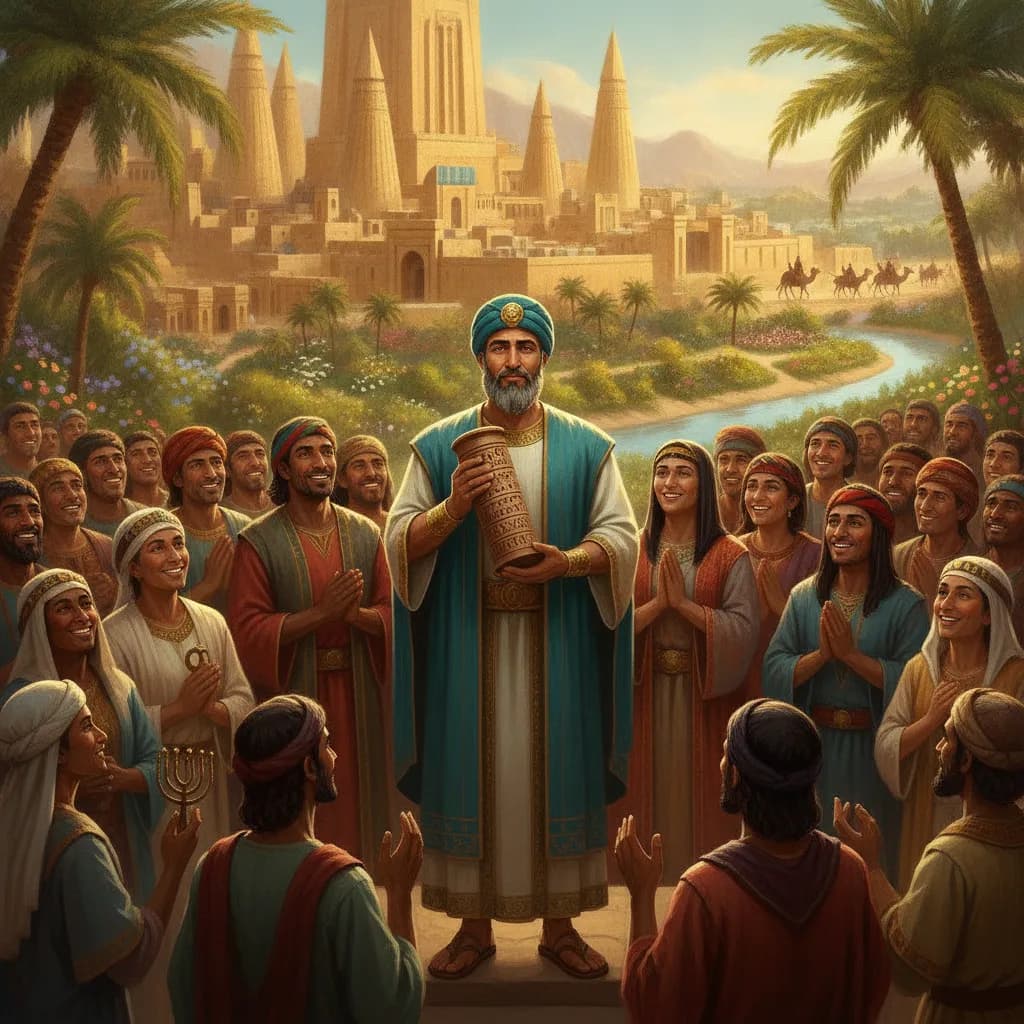
- Cyrus the Great's approach to conquered peoples, generally allowing local customs and religions to continue, was unusually tolerant for its era and is documented on the Cyrus Cylinder.
- The empire pioneered a sophisticated road network, including the Royal Road, and an early postal relay system enabling rapid long-distance communication.
- Persia's administrative system divided the empire into provinces called satrapies, each governed by an appointed official called a satrap.
- The Greco-Persian Wars (early 5th century BCE), including the famous Battle of Thermopylae, pitted the Persian Empire against Greek city-states.
- The Achaemenid Empire fell to Alexander the Great's conquests in the 330s BCE, though Persian imperial traditions later continued under subsequent dynasties.
The 60-Second Version
The Achaemenid Persian Empire, founded by Cyrus the Great around 550 BCE, rapidly grew into the largest empire the ancient world had yet seen, eventually stretching from the Balkans in the west all the way to the Indus Valley in the east. What set Cyrus apart from many other ancient conquerors was his relatively tolerant approach to governing newly conquered peoples, generally allowing local customs, laws, and religious practices to continue rather than forcibly imposing Persian culture, a policy documented on an artifact known as the Cyrus Cylinder that some scholars have described as remarkably progressive for its era. Managing an empire of that unprecedented scale required real administrative innovation, and Persia divided its territory into provinces called satrapies, each overseen by an appointed governor, while also building an extensive road network, including the famous Royal Road, paired with an early postal relay system that enabled surprisingly fast long-distance communication across the empire. That same imperial power eventually collided with the Greek city-states during the early 5th century BCE Greco-Persian Wars, a conflict that included the famous last stand at the Battle of Thermopylae and became a defining chapter in ancient Greek history and identity. The Achaemenid Empire's long run eventually ended in the 330s BCE, conquered by Alexander the Great, though later Persian dynasties continued carrying forward many of its imperial traditions for centuries afterward.
The Long Version
An Empire of Unprecedented Scale
The Achaemenid Persian Empire, founded by Cyrus the Great around 550 BCE, rapidly grew into the largest empire the ancient world had yet seen, eventually stretching from the Balkans in the west all the way to the Indus Valley in the east, an extraordinary geographic reach for its time.
An Unusually Tolerant Approach to Conquest
What set Cyrus apart from many other ancient conquerors was his relatively tolerant approach to governing newly conquered peoples, generally allowing local customs, laws, and religious practices to continue rather than forcibly imposing Persian culture across the empire, a policy documented on an ancient artifact known as the Cyrus Cylinder that some scholars have described as remarkably progressive for its era.
The Administrative Machinery Behind an Empire
Managing an empire of that unprecedented scale required real administrative innovation, and Persia divided its territory into provinces called satrapies, each overseen by an appointed governor known as a satrap, while also building an extensive road network, including the famous Royal Road, paired with an early postal relay system that enabled surprisingly fast long-distance communication across the empire's vast territory.
Clashing With Greece, and an Eventual Fall
That same imperial power eventually collided with the Greek city-states during the early 5th century BCE Greco-Persian Wars, a conflict that included the famous last stand at the Battle of Thermopylae and became a defining chapter in ancient Greek history and cultural identity. The Achaemenid Empire's long run eventually ended in the 330s BCE, conquered by Alexander the Great, though later Persian dynasties continued carrying forward many of its imperial administrative and cultural traditions for centuries afterward.
Ad slot (placeholder — set NEXT_PUBLIC_ADSENSE_SLOT_ID once an ad unit is created)
Why People Care
The Persian Empire's scale, administrative sophistication, and unusually tolerant governance of conquered peoples challenge simplistic narratives about ancient empires, and understanding its history provides essential context for the Greco-Persian conflicts that shaped much of ancient Greek identity and, later, Western historical memory.
Glossary
- Achaemenid Empire
- The first Persian Empire, founded by Cyrus the Great around 550 BCE, which became the largest empire the ancient world had yet seen.
- Cyrus Cylinder
- An ancient clay artifact documenting Cyrus the Great's relatively tolerant policies toward conquered peoples and their religions.
- Satrapy
- A province of the Persian Empire, governed by an official called a satrap, forming the empire's core administrative structure.
- Royal Road
- A major road network built by the Persian Empire that enabled rapid communication and troop movement across vast distances.
- Greco-Persian Wars
- A series of early 5th century BCE conflicts between the Persian Empire and Greek city-states, including the Battle of Thermopylae.
Go Deeper
- The British Museum — The Cyrus Cylinder
- The Persian Empire, by Lindsay Allen
More to Explore
- The Aztec Empire
When Spanish conquistadors first laid eyes on the Aztec capital in 1519, they were looking at a city larger than Paris or London at the time — built entirely on an island in the middle of a lake.
- The Byzantine Empire
The people history calls "Byzantines" never used that word for themselves — as far as they were concerned, they were simply Romans, for almost a thousand years after Rome itself had fallen.
- The Roman Empire
An empire whose roads and aqueducts were engineered so well that some of them were still functioning well over a thousand years after Rome itself had fallen.
- The Ottoman Empire
An empire that lasted over 600 years — long enough to span from the age of medieval knights all the way to the aftermath of World War I.
- The Mongol Empire
The largest contiguous land empire ever assembled in world history was built, remarkably, by unifying scattered nomadic tribes that had previously spent generations fighting each other.