Instruments & Music Theory
How instruments actually work, and the building blocks of music underneath every song.
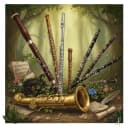
Woodwind Instruments
The flute counts as a woodwind even though modern ones are typically metal, a naming leftover from history.

Acoustic Guitar
A single acoustic guitar body shape, introduced over a century ago to be louder than anything else on the market, still dominates the instrument today.

Piano and Keyboard
The piano's original Italian name means roughly "soft-loud," a brag about dynamics the harpsichord couldn't deliver.

Music Theory Basics
Music theory is a vocabulary for describing how music works, not a universal rulebook: even the 12-note scale is a cultural choice.
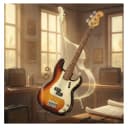
Bass Guitar
The bass guitar barely existed before 1951 — before Leo Fender's invention, anyone wanting a low end had to lug around a full-sized upright double bass.

Saxophone
A brass-colored instrument that is secretly a woodwind, invented by a man who spent a decade in court defending it.

Drums and Percussion
One drummer on a modern kit now does the job that once took several players, with four limbs moving independently.

Brass Instruments
Before valves, a trumpet could only play the notes in one fixed harmonic series, which made melody less a choice than a puzzle.

Chords and Harmony
An enormous share of the songs you already know, across completely different genres, are secretly built on the exact same three-chord sequence.

Electric Guitar
An electric guitar's body barely resonates; its sound is made by pickups, cables, effects, and an amp.

Guitar Brands and Builders
ESP built guitars for fast, high-gain metal playing, carving out its own niche beside giants Fender and Gibson.

Violin
Stradivarius violins from the early 1700s have sold for over $10 million, and their acoustic magic is still debated.

Synthesizers
A synthesizer records nothing and amplifies nothing: it builds every sound electronically from scratch.