Genetic Inheritance
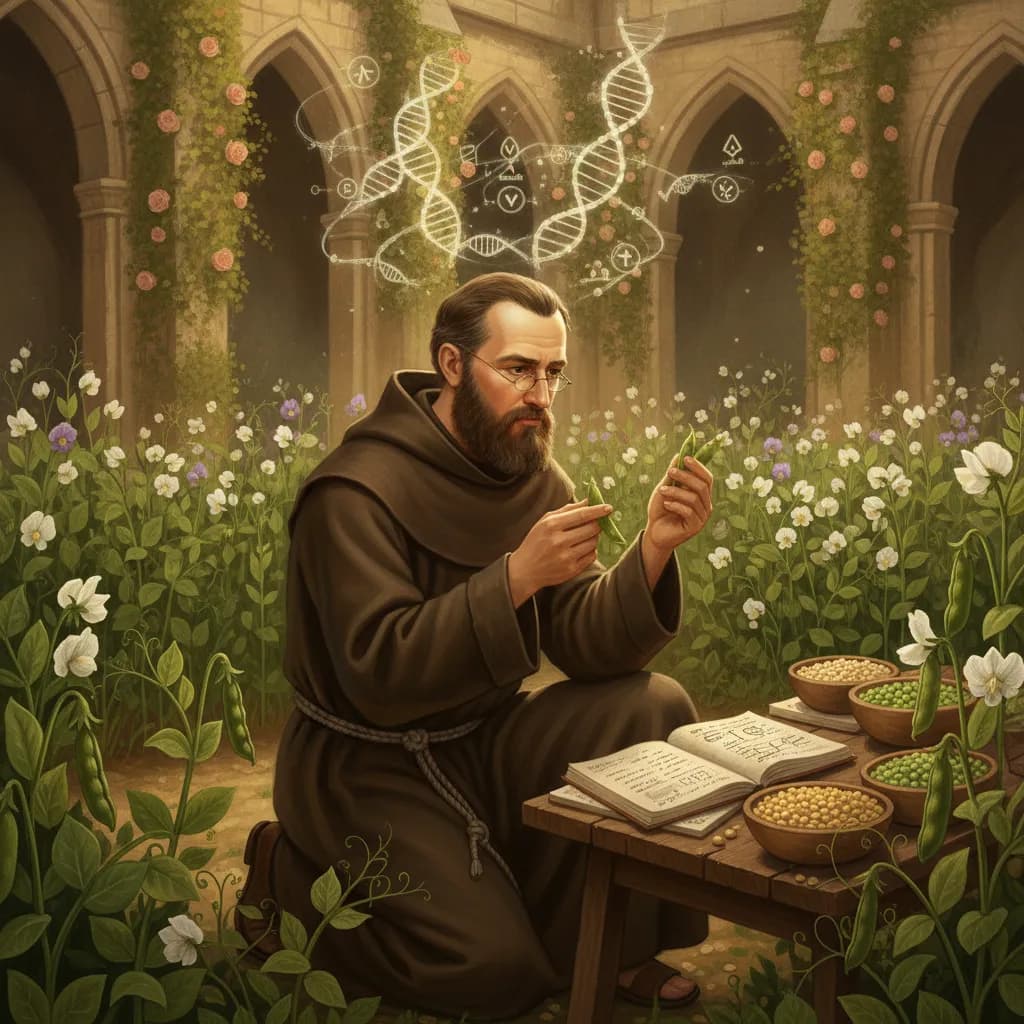
A 19th-century monk figured out the basic rules of genetic inheritance decades before anyone had even proven that DNA existed, using nothing more sophisticated than pea plants in a monastery garden.
Cheat Sheet
- Gregor Mendel's 1860s pea plant experiments established the foundational rules of inheritance, decades before genes or DNA were understood.
- Each parent typically contributes one copy of each gene, meaning offspring inherit two versions (alleles) of most genes — one from each parent.
- 'Dominant' alleles are expressed even with just one copy present; 'recessive' alleles are only expressed when both inherited copies match.
- Most human traits, including height and skin color, are polygenic — influenced by many genes simultaneously rather than a single gene pair.
- Epigenetics describes heritable changes in gene activity that don't alter the underlying DNA sequence itself, some influenced by environment or lifestyle.
- Genetic inheritance is distinct from genetic mutation — inheritance passes existing genetic variation to offspring, while mutation creates new variation.
The 60-Second Version
Genetic inheritance describes how traits pass from parents to offspring, a process whose foundational rules were actually worked out in the 1860s by Gregor Mendel through careful pea plant breeding experiments, remarkably decades before scientists had even identified DNA as the physical basis of heredity. Mendel's core insight was that each parent typically contributes one version of a given gene, meaning offspring generally end up with two versions of most genes, and that some versions dominate over others in determining which trait actually gets expressed. That dominant-versus-recessive framework explains plenty of straightforward inheritance patterns, but most human traits turn out to be considerably more complicated than a single gene pair, since traits like height and skin color are polygenic, shaped by the combined, layered influence of many different genes acting together rather than one clean dominant-recessive pair. Adding another layer of complexity, researchers have identified an entirely separate mechanism called epigenetics, involving heritable changes in how actively a gene gets used without altering the underlying DNA sequence itself, some of which can be influenced by environment or lifestyle factors. It's also worth distinguishing straightforward inheritance from genetic mutation, since inheritance simply passes along genetic variation that already exists, while mutation is what actually creates new variation in the first place.
The Long Version
A Monk's Garden Experiments Cracked the Code
The foundational rules of genetic inheritance were actually worked out in the 1860s by Gregor Mendel through careful, methodical pea plant breeding experiments, a remarkable achievement given that this happened decades before scientists had even identified DNA as the physical molecule responsible for carrying hereditary information.
One Copy From Each Parent
Mendel's core insight was that each parent typically contributes one version, or allele, of a given gene, meaning offspring generally end up carrying two versions of most genes, and that some allele versions dominate over others in determining which physical trait actually ends up expressed in the offspring.
Most Traits Are More Complicated Than One Gene
That dominant-versus-recessive framework cleanly explains plenty of straightforward inheritance patterns, but most human traits turn out to be considerably more complicated than a single gene pair, since characteristics like height and skin color are polygenic, shaped by the combined, layered influence of many different genes acting together simultaneously rather than one clean pair.
Beyond DNA Sequence Alone
Adding a further layer of complexity, researchers have identified an entirely separate mechanism called epigenetics, involving heritable changes in how actively a given gene actually gets used without altering the underlying DNA sequence itself, some of which can be influenced by environmental exposure or lifestyle factors and potentially passed to offspring. It's also worth clearly distinguishing ordinary inheritance from genetic mutation, since inheritance simply passes along genetic variation that already exists within a population, while mutation is the actual process that creates new genetic variation in the first place.
Ad slot (placeholder — set NEXT_PUBLIC_ADSENSE_SLOT_ID once an ad unit is created)
Why People Care
Understanding genetic inheritance explains everything from why certain conditions run in families to why siblings can look so different despite sharing the same parents, and it lays essential groundwork for making sense of modern genetic testing and personalized medicine.
Glossary
- Allele
- One of two or more versions of a gene that an organism can inherit, contributing to variation in inherited traits.
- Dominant allele
- A gene variant that produces its associated trait even when only one copy is inherited.
- Recessive allele
- A gene variant that only produces its associated trait when two matching copies are inherited, one from each parent.
- Polygenic trait
- A trait, such as height, influenced by the combined effect of many genes rather than a single gene pair.
- Epigenetics
- The study of heritable changes in gene activity that occur without altering the underlying DNA sequence.
Go Deeper
- National Human Genome Research Institute — Inheritance Basics
- Gregor Mendel's original pea plant experiments (1866)
More to Explore
- Cell Biology
The power plants running inside nearly every cell in the human body were, roughly two billion years ago, independent bacteria that got swallowed and never let go.
- Photosynthesis
Nearly every breath of oxygen ever taken traces back to a chemical reaction that microscopic bacteria figured out more than three billion years before humans existed.
- Viruses
A microscopic particle so stripped-down that scientists still debate whether it even counts as truly "alive" at all.
- The Human Genome
A complete genetic blueprint that took an international research effort over a decade and roughly $3 billion to first sequence — now doable for under $1,000.
- Evolution
A theory that doesn't claim organisms get objectively "better" over time — just that whatever happens to work in a given environment tends to stick around.