Sikhism
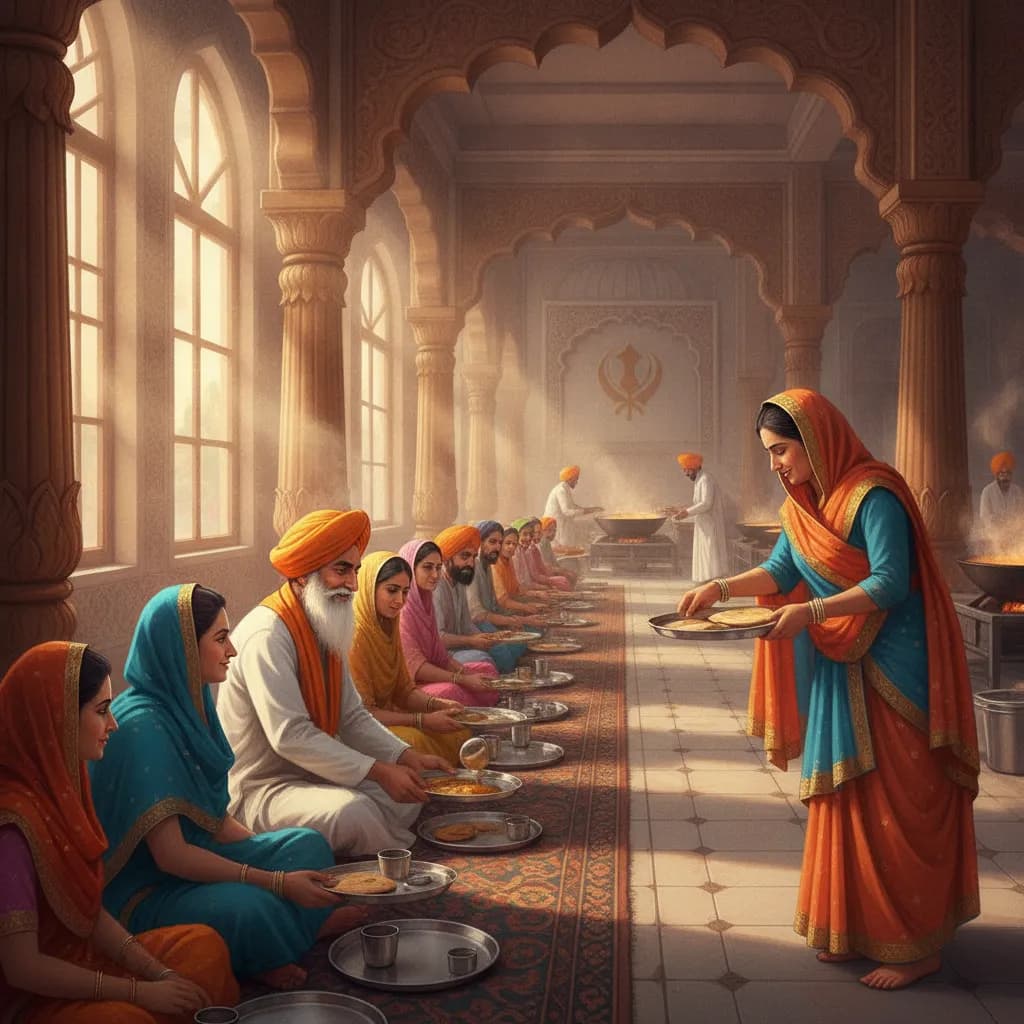
Walk into a Sikh gurdwara anywhere in the world and you can eat a free meal, whatever your religion or background.
By Greg Goodwin · Published October 3, 2026 · Updated October 24, 2026
Cheat Sheet
- Founded in the Punjab region of South Asia in the late 15th century by Guru Nanak, the first of Sikhism's ten human Gurus.
- Sikhism teaches belief in one formless God and emphasizes equality among all people regardless of caste, gender, or religion.
- The Guru Granth Sahib, Sikhism's central scripture, is itself treated as the eternal, living Guru following the death of the tenth human Guru in 1708.
- The Khalsa, a formal Sikh community established in 1699, introduced the 'Five Ks' — five articles of faith worn by initiated Sikhs, including uncut hair (kesh) and a ceremonial dagger (kirpan).
- Langar, a free communal meal open to anyone regardless of religion or background, is served at Sikh gurdwaras (houses of worship) worldwide as a practical expression of equality.
- Sikhism is the world's fifth-largest organized religion, with major populations in India's Punjab region and significant diaspora communities globally.
The 60-Second Version
Sikhism was founded in the Punjab region of South Asia in the late 15th century by Guru Nanak, the first of ten human Gurus who would shape the faith's teachings and community over the following two centuries. At its core, Sikhism teaches belief in one formless God and places strong emphasis on equality among all people regardless of caste, gender, or religion, principles that directly shaped the faith's social practices from its earliest days. Following the death of the tenth and final human Guru in 1708, Sikh tradition holds that the role of Guru passed not to another person but to scripture itself, with the Guru Granth Sahib treated as the eternal, living Guru ever since. In 1699, the formal Sikh community known as the Khalsa was established, introducing the "Five Ks," five articles of faith worn by initiated Sikhs, including uncut hair and a ceremonial dagger, as visible markers of a committed Sikh identity. One of Sikhism's most distinctive and widely recognized practices is langar, a free communal meal served at Sikh gurdwaras worldwide and open to absolutely anyone regardless of religion or background, functioning as a direct, practical expression of the faith's core value of equality rather than just a symbolic gesture. Today, Sikhism stands as the world's fifth-largest organized religion, with major populations concentrated in India's Punjab region alongside significant diaspora communities established across the globe.
The Long Version
A Faith Founded by the First of Ten Gurus
Sikhism was founded in the Punjab region of South Asia in the late 15th century by Guru Nanak, the first of ten human Gurus who would shape the faith's teachings and community over the following two centuries, each building on the foundation laid by his predecessors.
One God, and Equality as a Core Principle
At its core, Sikhism teaches belief in one formless God and places strong emphasis on equality among all people regardless of caste, gender, or religion, principles that directly shaped the faith's social practices and distinguished it from some surrounding religious and social structures of its era.
Scripture as the Living Guru
Following the death of the tenth and final human Guru in 1708, Sikh tradition holds that the role of Guru passed not to another person but to scripture itself, with the Guru Granth Sahib treated as the eternal, living Guru ever since, a genuinely distinctive theological choice compared to religions that continued with human spiritual leadership.
A Formal Community and Its Visible Markers
In 1699, the formal Sikh community known as the Khalsa was established, introducing the "Five Ks," five articles of faith worn by initiated Sikhs, including uncut hair (kesh) and a ceremonial dagger (kirpan), as visible, outward markers of a committed Sikh identity recognizable at a glance.
A Free Meal as Living Practice
One of Sikhism's most distinctive and widely recognized practices is langar, a free communal meal served at Sikh gurdwaras worldwide and open to absolutely anyone regardless of religion or background, functioning as a direct, practical expression of the faith's core value of equality rather than just a symbolic gesture. Today, Sikhism stands as the world's fifth-largest organized religion, with major populations concentrated in India's Punjab region alongside significant diaspora communities established across the globe.
Why People Care
Sikhism's distinctive practices, from its living scripture to its universally open communal meals, offer a genuinely unique theological and social model among major world religions, and understanding its history helps correct common public misconceptions that often conflate Sikh identity with entirely unrelated faiths or cultures.
Glossary
- Guru Nanak
- The founder of Sikhism and the first of its ten human Gurus, active in the Punjab region in the late 15th century.
- Guru Granth Sahib
- Sikhism's central scripture, treated as the eternal, living Guru following the death of the tenth human Guru in 1708.
- Khalsa
- The formal Sikh community established in 1699, associated with the Five Ks and a distinct initiated Sikh identity.
- Five Ks
- Five articles of faith worn by initiated Sikhs belonging to the Khalsa, including uncut hair (kesh) and a ceremonial dagger (kirpan).
- Langar
- A free communal meal served at Sikh gurdwaras, open to anyone regardless of religion or background, expressing the value of equality.
Go Deeper
More to Explore
- Zoroastrianism
One of the world's oldest living faiths turns daily life into a choice between truth and the lie, with a sacred fire watching.
- Taoism
One of Taoism's central ideas sounds almost like a contradiction: that the most effective way to act is often to not force anything at all.
- Judaism
Older than both Christianity and Islam, Judaism is among the oldest continuously practiced monotheistic religions on Earth.
- Islam
The country with the largest Muslim population in the world isn't in the Middle East at all — it's Indonesia, in Southeast Asia.
- Hinduism
A major world religion with well over a billion followers today, and no single founder, no single holy book, and no single fixed moment of origin.