The LGBTQ+ Rights Movement
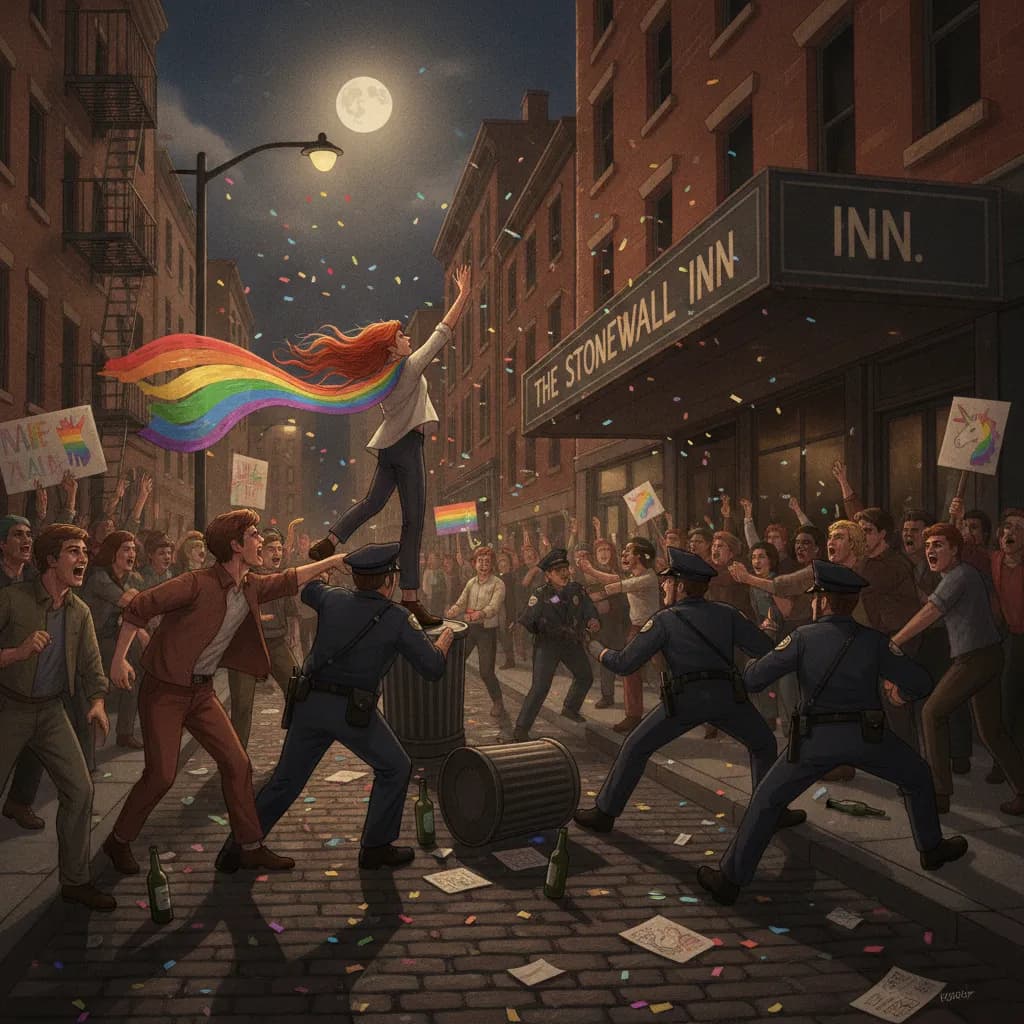
A single night of spontaneous resistance to a police raid in 1969 became the widely recognized starting point for a movement that would take decades to reach a Supreme Court decision on marriage equality.
Cheat Sheet
- The modern LGBTQ+ rights movement in the United States is widely traced back to the 1969 Stonewall uprising, a series of spontaneous protests following a police raid on a gay bar in New York City.
- The movement has pursued progress across multiple, distinct fronts over the decades, including decriminalization, anti-discrimination protections, marriage equality, and broader social acceptance.
- The HIV/AIDS crisis of the 1980s and 1990s galvanized significant LGBTQ+ activism, both around demanding a more urgent medical research and government response and around basic dignity and care for those affected.
- The 2015 U.S. Supreme Court decision in Obergefell v. Hodges legalized same-sex marriage nationwide, representing one of the movement's most significant and widely recognized legal victories.
- Transgender rights have become an increasingly central and, in recent years, especially contested focus within the broader movement, encompassing issues like legal recognition, healthcare access, and anti-discrimination protections.
- The movement has always encompassed a genuinely wide range of strategies and perspectives, from direct confrontational protest to incremental legal advocacy, reflecting real internal diversity rather than a single unified approach.
The 60-Second Version
The modern LGBTQ+ rights movement in the United States is widely traced back to the 1969 Stonewall uprising, a series of spontaneous protests following a police raid on a gay bar in New York City. The movement has pursued progress across multiple, distinct fronts over the decades, including decriminalization, anti-discrimination protections, marriage equality, and broader social acceptance. The HIV/AIDS crisis of the 1980s and 1990s galvanized significant LGBTQ+ activism, both around demanding a more urgent medical research and government response and around basic dignity and care for those affected. The 2015 U.S. Supreme Court decision in Obergefell v. Hodges legalized same-sex marriage nationwide, representing one of the movement's most significant and widely recognized legal victories. Transgender rights have become an increasingly central and, in recent years, especially contested focus within the broader movement, encompassing issues like legal recognition, healthcare access, and anti-discrimination protections. The movement has always encompassed a genuinely wide range of strategies and perspectives, from direct confrontational protest to incremental legal advocacy, reflecting real internal diversity rather than a single unified approach.
The Long Version
A Starting Point at Stonewall
The modern LGBTQ+ rights movement in the United States is widely traced back to the 1969 Stonewall uprising, a series of spontaneous protests that erupted following a police raid on the Stonewall Inn, a gay bar in New York City, an event that galvanized organized activism in a way earlier, more isolated efforts had not.
Progress Across Multiple Fronts
In the decades since, the movement has pursued progress across multiple, genuinely distinct fronts, including the decriminalization of same-sex relationships, anti-discrimination protections in employment and housing, marriage equality, and a broader, harder-to-legislate shift toward general social acceptance.
The Crisis That Reshaped Activism
The HIV/AIDS crisis of the 1980s and 1990s significantly galvanized LGBTQ+ activism during a period of devastating loss, mobilizing organized demands for a more urgent medical research effort and government response, alongside a parallel and equally urgent fight for basic dignity, visibility, and care for those directly affected by the epidemic.
A Landmark Legal Victory
The 2015 U.S. Supreme Court decision in Obergefell v. Hodges legalized same-sex marriage nationwide, representing one of the movement's most significant and widely recognized legal victories, the culmination of decades of incremental legal and cultural groundwork built by activists and advocacy organizations across the country.
An Evolving, Internally Diverse Movement
In more recent years, transgender rights have become an increasingly central and, in some contexts, especially contested focus within the broader movement, encompassing issues like legal gender recognition, healthcare access, and anti-discrimination protections specifically for transgender individuals. Throughout its history, the movement has always encompassed a genuinely wide range of strategies and perspectives, from direct, confrontational protest to slower, incremental legal advocacy, reflecting real and ongoing internal diversity rather than a single, unified approach.
Ad slot (placeholder — set NEXT_PUBLIC_ADSENSE_SLOT_ID once an ad unit is created)
Why People Care
The LGBTQ+ rights movement has fundamentally reshaped American law and social attitudes over the past half-century, and understanding its history provides essential context for the legal and cultural debates that remain active today.
Glossary
- Stonewall uprising
- A series of 1969 protests in New York City following a police raid on a gay bar, widely considered a foundational event of the modern LGBTQ+ rights movement.
- Marriage equality
- The legal recognition of same-sex couples' right to marry, achieved nationwide in the U.S. through the 2015 Obergefell v. Hodges Supreme Court decision.
- Obergefell v. Hodges
- The 2015 U.S. Supreme Court decision that legalized same-sex marriage nationwide.
- Anti-discrimination protections
- Laws or policies prohibiting discrimination based on sexual orientation or gender identity, a longstanding focus of LGBTQ+ advocacy.
- Transgender rights
- A movement focus encompassing legal recognition, healthcare access, and anti-discrimination protections specifically for transgender individuals.
Go Deeper
More to Explore
- The Environmental Movement
A single book about pesticides published in 1962 is widely credited with sparking a movement that would go on to create an entire federal agency less than a decade later.
- Women's Suffrage
A basic democratic right that one country granted women in 1893 — while others didn't extend it until more than half a century later.
- The Civil Rights Movement
A movement built substantially around a single powerful strategic bet: that disciplined nonviolent resistance could overcome a deeply entrenched, often violently defended system of legal segregation.
- Labor Unions
The weekend, the 8-hour workday, and basic workplace safety rules that most workers today simply take for granted were all significantly won through organized labor union advocacy.
- The European Union
The organization that became the European Union started with a strikingly narrow goal: making France and Germany so economically dependent on each other that another war between them would become practically unthinkable.