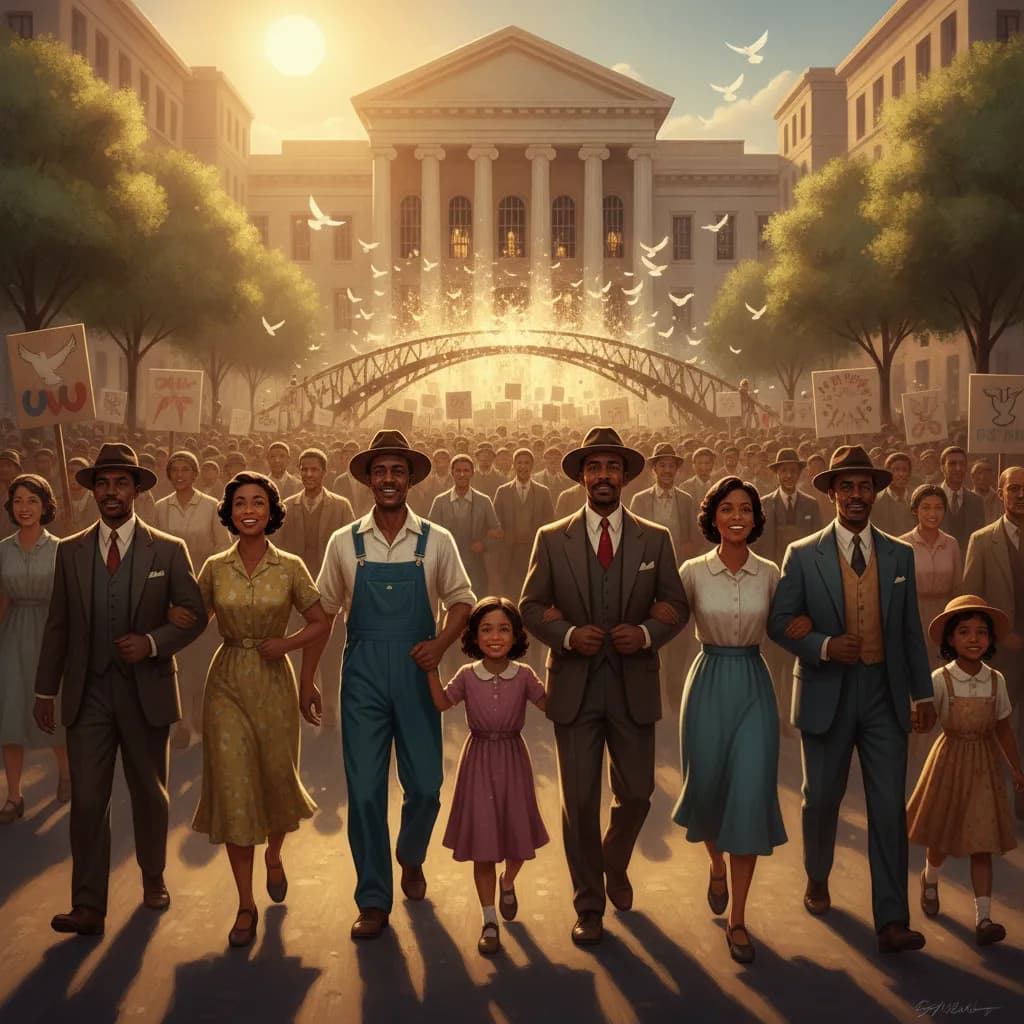
The Civil Rights Movement
A movement built substantially around a single powerful strategic bet: that disciplined nonviolent resistance could overcome a deeply entrenched, often violently defended system of legal segregation.
Cheat Sheet
- The American Civil Rights Movement, primarily active from the mid-1950s through the late 1960s, sought to end legal racial segregation and secure equal rights for Black Americans.
- The 1955-56 Montgomery Bus Boycott, sparked by Rosa Parks's arrest for refusing to give up her bus seat, became one of the movement's earliest major organized actions and helped establish nonviolent resistance as a central strategy.
- Martin Luther King Jr. emerged as the movement's most prominent leader, advocating nonviolent civil disobedience and delivering his widely known "I Have a Dream" speech during the 1963 March on Washington.
- The Civil Rights Act of 1964 and the Voting Rights Act of 1965 represented landmark federal legislation that legally banned segregation and discriminatory voting practices, respectively.
- The movement faced significant, often violent resistance, including from local law enforcement and white supremacist groups, particularly in parts of the American South.
- The Civil Rights Movement directly influenced and inspired numerous later social and civil rights movements both within the United States and internationally.
The 60-Second Version
The American Civil Rights Movement, primarily active from the mid-1950s through the late 1960s, sought to end legal racial segregation and secure equal rights for Black Americans. The 1955-56 Montgomery Bus Boycott, sparked by Rosa Parks's arrest for refusing to give up her bus seat, became one of the movement's earliest major organized actions and helped establish nonviolent resistance as a central strategy. Martin Luther King Jr. emerged as the movement's most prominent leader, advocating nonviolent civil disobedience and delivering his widely known "I Have a Dream" speech during the 1963 March on Washington. The Civil Rights Act of 1964 and the Voting Rights Act of 1965 represented landmark federal legislation that legally banned segregation and discriminatory voting practices, respectively. The movement faced significant, often violent resistance, including from local law enforcement and white supremacist groups, particularly in parts of the American South. The Civil Rights Movement directly influenced and inspired numerous later social and civil rights movements both within the United States and internationally.
The Long Version
The Boycott That Sparked a Movement
The 1955-56 Montgomery Bus Boycott, triggered directly by Rosa Parks's arrest for refusing to give up her seat to a white passenger on a segregated bus, became one of the Civil Rights Movement's earliest major organized actions, demonstrating that sustained, coordinated nonviolent protest could produce meaningful practical results and helping establish nonviolent resistance as the movement's defining strategic approach.
King's Leadership and the March on Washington
Martin Luther King Jr. became the movement's most prominent and widely recognized leader, consistently advocating disciplined nonviolent civil disobedience as the most effective and morally grounded path toward securing equal rights. His widely known "I Have a Dream" speech, delivered during the 1963 March on Washington, became one of the defining moments of the entire movement, articulating its core aspirations to a massive national audience.
Landmark Legislation That Changed the Law
The movement's sustained pressure directly contributed to two landmark pieces of federal legislation: the Civil Rights Act of 1964, which legally banned segregation and discrimination based on race, and the Voting Rights Act of 1965, which banned discriminatory voting practices that had long disenfranchised Black Americans, particularly across the American South.
Facing Violent Resistance
The movement's progress came at significant cost, facing often violent resistance from local law enforcement and organized white supremacist groups, particularly concentrated in parts of the American South, where peaceful protesters, activists, and bystanders faced serious, sometimes fatal violence in response to their efforts.
Ad slot (placeholder — set NEXT_PUBLIC_ADSENSE_SLOT_ID once an ad unit is created)
Glossary
- Montgomery Bus Boycott
- A 1955-56 protest against segregated public buses in Montgomery, Alabama, sparked by Rosa Parks's arrest.
- Martin Luther King Jr.
- The Civil Rights Movement's most prominent leader, known for advocating nonviolent civil disobedience.
- Civil Rights Act of 1964
- Landmark federal legislation that legally banned segregation and discrimination based on race in the United States.
- Voting Rights Act of 1965
- Landmark federal legislation banning discriminatory voting practices that had disenfranchised Black Americans.
- Nonviolent civil disobedience
- A protest strategy involving peaceful, deliberate resistance to unjust laws, central to the Civil Rights Movement's approach.