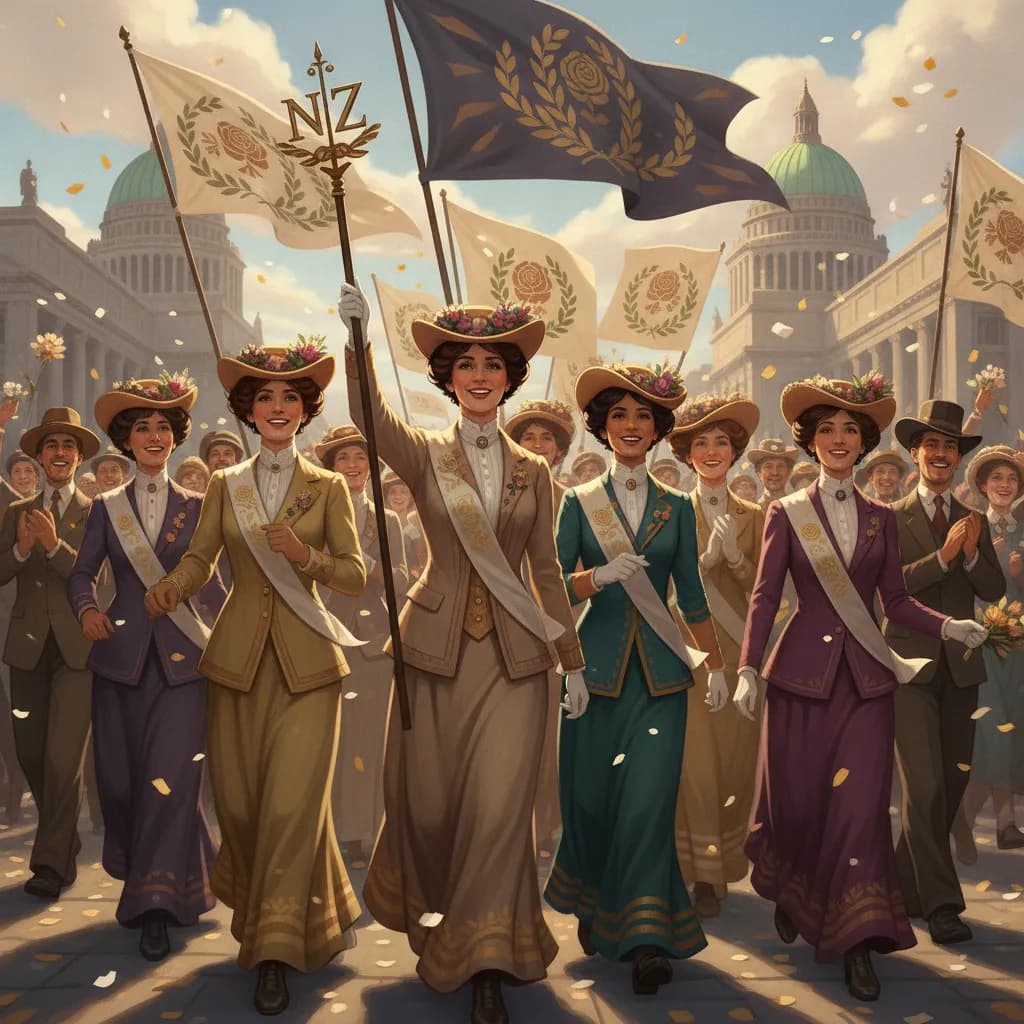
Women's Suffrage
A basic democratic right that one country granted women in 1893 — while others didn't extend it until more than half a century later.
Cheat Sheet
- Women's suffrage refers to the movement to secure women's legal right to vote, achieved at significantly different times in different countries throughout the late 19th and 20th centuries.
- New Zealand became the first self-governing country to grant women the right to vote nationally, in 1893, well ahead of most other nations.
- In the United States, the 19th Amendment, ratified in 1920, granted women the right to vote nationally, following decades of organized activism and protest.
- Suffrage movements employed a range of tactics, including organized protest marches, hunger strikes, civil disobedience, and sustained political lobbying, often facing significant public ridicule and, in some cases, imprisonment.
- Women's suffrage was achieved unevenly around the world — some countries granted the right decades before others, and in certain countries full suffrage wasn't achieved until well into the second half of the 20th century.
- The suffrage movement's success laid important groundwork for later waves of feminist activism addressing broader social, economic, and legal equality issues beyond voting rights alone.
The 60-Second Version
Women's suffrage refers to the movement to secure women's legal right to vote, achieved at significantly different times in different countries throughout the late 19th and 20th centuries. New Zealand became the first self-governing country to grant women the right to vote nationally, in 1893, well ahead of most other nations. In the United States, the 19th Amendment, ratified in 1920, granted women the right to vote nationally, following decades of organized activism and protest. Suffrage movements employed a range of tactics, including organized protest marches, hunger strikes, civil disobedience, and sustained political lobbying, often facing significant public ridicule and, in some cases, imprisonment. Women's suffrage was achieved unevenly around the world, some countries granted the right decades before others, and in certain countries full suffrage wasn't achieved until well into the second half of the 20th century. The suffrage movement's success laid important groundwork for later waves of feminist activism addressing broader social, economic, and legal equality issues beyond voting rights alone.
The Long Version
A Right Achieved at Wildly Different Times
Women's suffrage wasn't achieved on any single unified global timeline, New Zealand became the first self-governing country to grant women the national right to vote in 1893, while many other nations followed only decades later, and in some cases, full women's suffrage wasn't achieved until well into the second half of the 20th century, illustrating just how unevenly this fundamental democratic right actually spread around the world.
Decades of American Activism Leading to the 19th Amendment
In the United States, organized activism for women's suffrage built over several decades, often traced back to events like the 1848 Seneca Falls Convention, before culminating in the ratification of the 19th Amendment in 1920, which finally granted women the legal right to vote nationally after sustained, multi-generational organizing effort.
Tactics Ranging From Lobbying to Hunger Strikes
Suffrage activists employed a wide range of tactics to advance their cause, including organized protest marches, sustained political lobbying of lawmakers, civil disobedience, and, particularly among more militant British activists, hunger strikes conducted during imprisonment, facing significant public ridicule and sometimes serious legal consequences for their activism along the way.
Groundwork for Later Feminist Movements
The eventual success of women's suffrage movements around the world established crucial organizational precedent and momentum for later waves of feminist activism, which went on to address a considerably broader range of social, economic, and legal equality issues extending well beyond voting rights alone.
Ad slot (placeholder — set NEXT_PUBLIC_ADSENSE_SLOT_ID once an ad unit is created)
Glossary
- Suffrage
- The legal right to vote in political elections.
- 19th Amendment
- The 1920 amendment to the US Constitution granting women the right to vote nationally.
- Suffragist / suffragette
- An activist advocating for women's voting rights, with "suffragette" historically associated particularly with more militant British activists.
- Civil disobedience
- Deliberate, peaceful violation of certain laws as a form of protest, used by some suffrage activists.
- Seneca Falls Convention
- An 1848 gathering in New York widely considered a founding event of the organized American women's rights movement.