The Abolitionist Movement
Ending slavery took petitions, pamphlets, boycotts, daring escapes, and in the United States, a civil war.
By Greg Goodwin · Published October 16, 2026 · Updated October 24, 2026
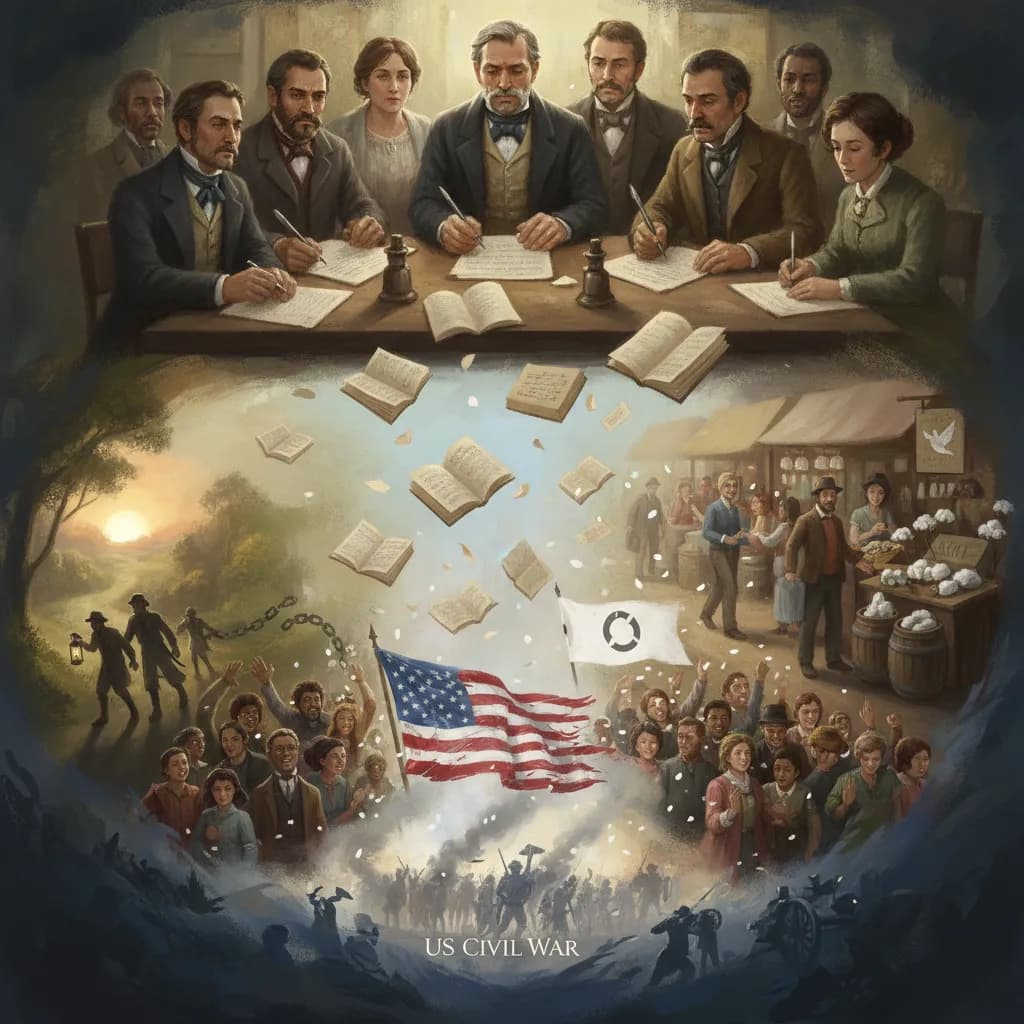
Cheat Sheet
- Britain: the Slave Trade Act (1807) ended the trade; the Slavery Abolition Act (1833) ended slavery across most of the empire.
- United States: importing enslaved people was banned from 1808; the 13th Amendment ended slavery in December 1865.
- Key voices: Frederick Douglass, Harriet Tubman, Sojourner Truth, William Lloyd Garrison, Olaudah Equiano, and Thomas Clarkson.
- Publications: Garrison's The Liberator (1831), Douglass's Narrative (1845), and Harriet Beecher Stowe's Uncle Tom's Cabin (1852).
- Underground Railroad: informal networks of safe houses and guides that helped thousands escape north.
- Emancipation Proclamation: issued January 1, 1863, freeing enslaved people in Confederate-held territory.
The 60-Second Version
For most of history, slavery was widely accepted. In the late 18th century, that began to change as Quakers, Enlightenment thinkers, evangelical Christians, and formerly enslaved writers argued that it was a moral wrong. In Britain, a mass movement of petitions, sugar boycotts, and parliamentary campaigning led to the end of the slave trade in 1807 and slavery in the empire in 1833. In the United States, abolitionists were a minority until the 1850s, but they published newspapers, organized escape routes, and forced the issue into politics. Black abolitionists, including Frederick Douglass and Harriet Tubman, were essential. The Civil War turned a fight over union into a fight over slavery, and the 13th Amendment abolished it in 1865.
The Long Version
Early Voices
The first organized opposition came from religious groups. Quakers in Pennsylvania condemned slavery in the 1688 Germantown protest and later barred members from slaveholding. Enlightenment ideas about natural rights gave secular arguments. Enslaved people themselves had always resisted, through escape, revolt, and the Haitian Revolution (1791-1804), which created the first Black-led republic and terrified slaveholders. In Britain, Olaudah Equiano's 1789 autobiography brought a firsthand account of the Middle Passage to a wide readership.
The British Campaign
In 1787, a committee including Thomas Clarkson and Granville Sharp formed to end the slave trade. Clarkson gathered evidence, including diagrams of the slave ship *Brookes* that showed the packing of human beings below deck, and William Wilberforce led the cause in Parliament. Hundreds of thousands signed petitions, and many people stopped buying slave-grown sugar. The slave trade was banned in 1807, and the Royal Navy later patrolled the Atlantic to suppress it. In 1833, Parliament abolished slavery in most colonies, paying £20 million in compensation to slaveholders, not to the enslaved.
The American Movement
In the United States, abolitionism had many strands. William Lloyd Garrison began *The Liberator* in 1831, demanding immediate emancipation and declaring "I will be heard." Others, like the Tappan brothers, funded organizations, and political abolitionists formed parties. Women such as Lucretia Mott and Sarah and Angelina Grimké played prominent roles, and their exclusion from some meetings helped launch the women's rights movement. Abolitionists faced mobs, censorship, and violence; Elijah Lovejoy was killed defending his press in 1837.
Black Leadership and Resistance
Frederick Douglass, who escaped slavery in 1838, became the most famous orator, editor, and author of his era. His 1845 *Narrative* was a bestseller. Harriet Tubman escaped in 1849 and returned repeatedly to guide others, later serving as a Union scout. Sojourner Truth lectured on abolition and women's rights. Black churches, vigilance committees, and communities were the backbone of the Underground Railroad. Stowe's *Uncle Tom's Cabin* (1852) reached millions, and the Fugitive Slave Act of 1850 pushed many Northerners toward the cause.
Road to Emancipation
Debates over slavery in new territories, the Dred Scott decision (1857), and John Brown's raid on Harpers Ferry (1859) polarized the country. After Abraham Lincoln's election in 1860, Southern states seceded. Lincoln initially framed the war as preserving the Union, but emancipation became a war aim. The Proclamation took effect in 1863, Black men enlisted by the tens of thousands, and the 13th Amendment was ratified in December 1865. Emancipation did not end discrimination, as the struggles of Reconstruction and the civil rights era show.
Why People Care
The abolitionist movement is a model of how moral campaigns can reshape law, and it shows the roles of ordinary people, religion, journalism, and the voices of those directly affected. Its unfinished business continues to shape debates about equality.
Glossary
- Abolition
- The legal ending of slavery, as opposed to the earlier goal of abolishing only the slave trade.
- Gradualism
- The view that slavery should be ended slowly, as opposed to the immediacy demanded by radical abolitionists.
- Fugitive Slave Act of 1850
- A US law requiring citizens to help return escaped enslaved people, which intensified Northern opposition.
- Manumission
- The act of an owner freeing an enslaved person.
- Free Soil
- A political position opposing the expansion of slavery into new territories.
Go Deeper
More to Explore
- The Anti-Apartheid Movement
A worldwide campaign of boycotts, sanctions, and solidarity helped bring down a government's racial system.
- The LGBTQ+ Rights Movement
It sparked with protests after a 1969 police raid on a New York bar and took decades to reach a Supreme Court marriage ruling.
- The Environmental Movement
One 1962 book about pesticides is widely credited with sparking a movement, and by 1970 the US had an EPA.
- Women's Suffrage
A basic democratic right that one country granted women in 1893 — while others didn't extend it until more than half a century later.
- The Civil Rights Movement
The Civil Rights Movement bet on disciplined nonviolence to take down legal segregation, and the landmark laws that followed proved it right.