Container Gardening
A garden doesn't need a yard at all — a sunny balcony, the right pots, and proper drainage are genuinely enough to grow real food.
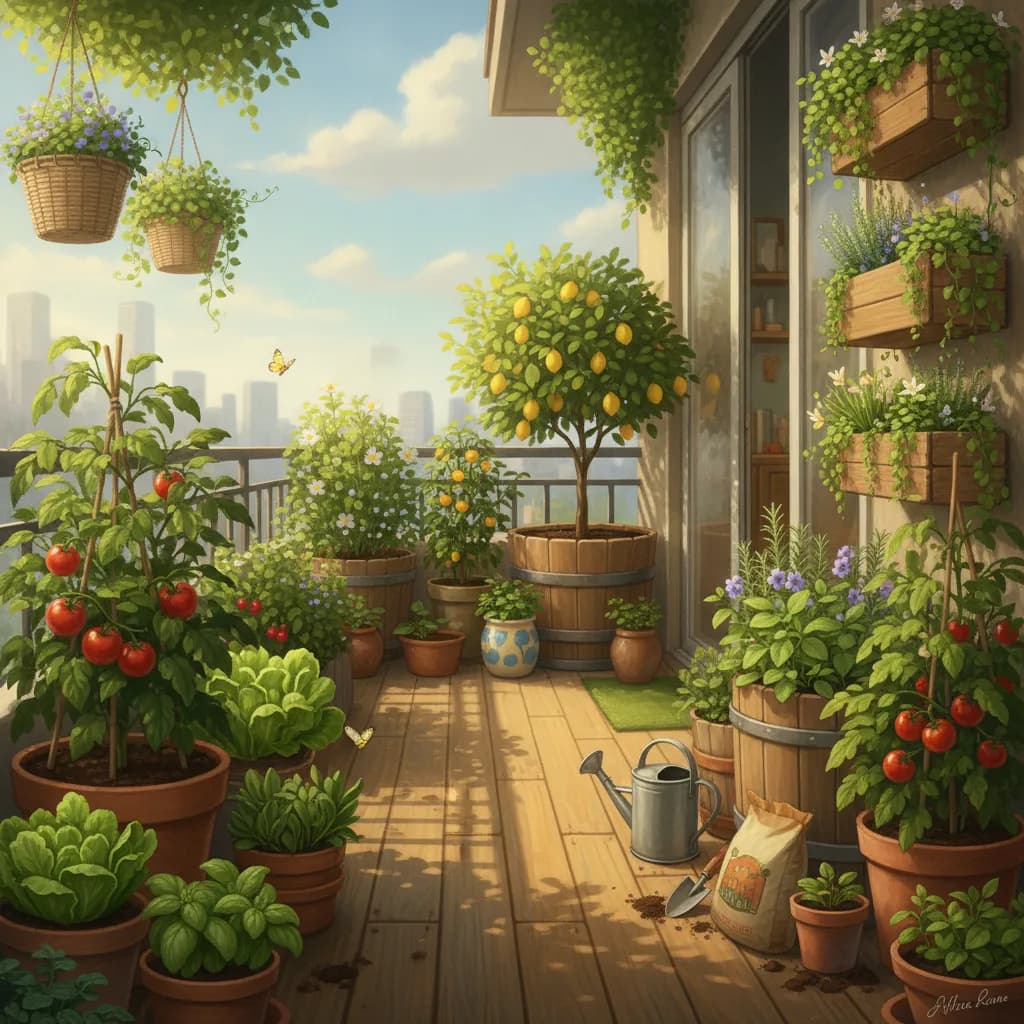
Cheat Sheet
- Container gardening involves growing plants in pots or other portable containers rather than directly in the ground, making it especially useful for small spaces like balconies, patios, and apartments.
- Proper drainage is essential in container gardening, since containers without adequate drainage holes trap excess water and can quickly cause root rot.
- Container size directly affects how much a plant can grow and how often it needs watering, since smaller containers hold less soil and dry out considerably faster than larger ones or in-ground beds.
- Potting mix, not regular garden soil, is generally recommended for containers, since it's specifically formulated to drain well and resist compacting inside an enclosed space.
- Container-grown plants generally need more frequent watering and fertilizing than in-ground plants, since their limited soil volume holds less moisture and nutrients overall.
- Container gardening allows for precise control over sunlight exposure and soil conditions, since containers can simply be moved to chase optimal light or shelter from harsh weather.
The 60-Second Version
Container gardening involves growing plants in pots or other portable containers rather than directly in the ground, making it especially useful for small spaces like balconies, patios, and apartments. Proper drainage is essential in container gardening, since containers without adequate drainage holes trap excess water and can quickly cause root rot. Container size directly affects how much a plant can grow and how often it needs watering, since smaller containers hold less soil and dry out considerably faster than larger ones or in-ground beds. Potting mix, not regular garden soil, is generally recommended for containers, since it's specifically formulated to drain well and resist compacting inside an enclosed space. Container-grown plants generally need more frequent watering and fertilizing than in-ground plants, since their limited soil volume holds less moisture and nutrients overall. Container gardening allows for precise control over sunlight exposure and soil conditions, since containers can simply be moved to chase optimal light or shelter from harsh weather.
The Long Version
Gardening Without a Yard
Container gardening involves growing plants in pots or other portable containers rather than directly in the ground, making it especially useful and increasingly popular for small spaces like balconies, patios, and apartment windowsills where an in-ground garden simply isn't an option.
Drainage Is Non-Negotiable
Proper drainage is essential in container gardening, since containers without adequate drainage holes trap excess water around a plant's roots and can quickly lead to root rot, one of the most common ways container plants actually die, regardless of how well they're otherwise cared for.
Why Container Size Matters So Much
Container size directly affects both how much a plant can ultimately grow and how often it needs watering, since smaller containers hold considerably less soil volume and therefore dry out much faster than larger containers or an in-ground garden bed would under the same conditions, making container size one of the first things to get right.
The Right Growing Medium
Potting mix, rather than regular garden soil, is generally recommended for containers, since it's specifically formulated to drain well and resist compacting inside an enclosed space, whereas regular garden soil tends to compact heavily in a container, restricting root growth and airflow in ways it wouldn't in open ground.
More Frequent Care, More Flexibility
Container-grown plants generally need more frequent watering and fertilizing than their in-ground counterparts, since their limited soil volume simply holds less available moisture and nutrients overall, requiring more consistent attention to avoid stress. In exchange for this added maintenance, container gardening offers a genuine advantage: precise control over sunlight exposure and soil conditions, since containers can simply be moved to chase optimal light throughout the season or brought to shelter during harsh weather in a way an in-ground garden never could.
Ad slot (placeholder — set NEXT_PUBLIC_ADSENSE_SLOT_ID once an ad unit is created)
Why People Care
Container gardening makes growing real plants, herbs, and even vegetables accessible to anyone without a yard, and understanding its specific care requirements is the difference between a thriving container garden and one that struggles despite genuine effort.
Glossary
- Potting mix
- A soilless or soil-based growing medium specifically formulated for container gardening, designed to drain well and resist compacting.
- Drainage hole
- An opening at the bottom of a container that allows excess water to escape, preventing root rot.
- Root rot
- A plant disease caused by excess moisture around the roots, a common risk in containers with poor drainage.
- Root-bound
- A condition where a plant's roots have filled the entire container and begun circling, typically signaling it needs a larger pot.
- Self-watering container
- A container with a built-in water reservoir that helps regulate consistent soil moisture with less frequent manual watering.
Go Deeper
More to Explore
- Companion Planting
Corn, beans, and squash planted together aren't just sharing soil — each one is quietly doing a job that helps the other two survive.
- Vegetable Gardening
The single most common mistake first-time vegetable gardeners make isn't a watering or soil problem — it's simply starting with a garden way too ambitious for a first year.
- Houseplants
The popular claim that a few houseplants can meaningfully purify your home's air traces back to a sealed lab experiment that doesn't actually match how air moves through a normal room.
- Composting
A properly running compost pile isn't just decomposing quietly — it's actually generating real, measurable internal heat from all the microbial activity happening inside it.
- The KonMari Method
Marie Kondo's method doesn't start by asking what to throw away — it asks the opposite question entirely, and that single reframe is why it caught on worldwide.