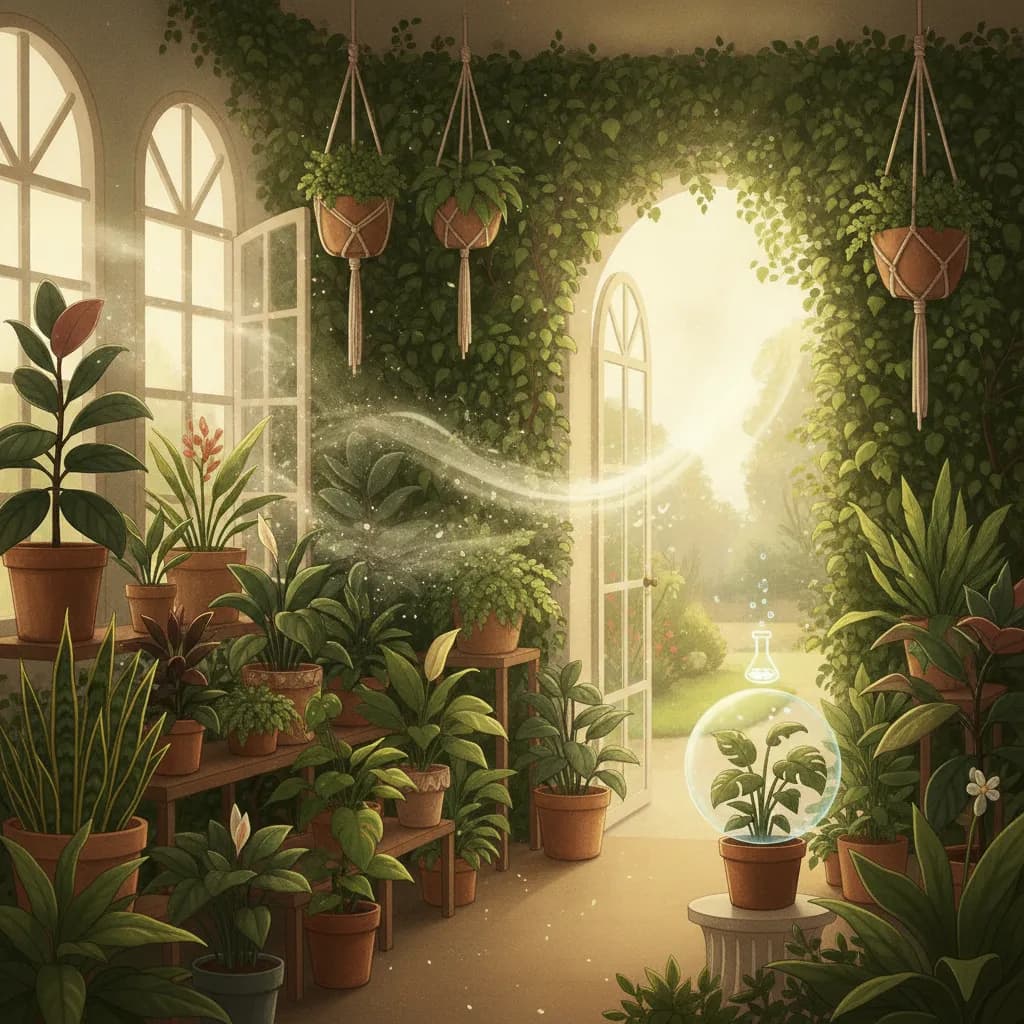
Houseplants
The popular claim that a few houseplants can meaningfully purify your home's air traces back to a sealed lab experiment that doesn't actually match how air moves through a normal room.
Cheat Sheet
- Houseplants are plants grown indoors for decorative, air-purifying, or general wellbeing purposes, ranging from low-maintenance succulents to more demanding tropical species.
- Light requirements vary enormously between houseplant species, and matching a plant to the actual light conditions available in a specific location is generally considered more important than watering frequency for long-term plant survival.
- Overwatering is widely cited by horticulturists as the most common cause of houseplant death, since excess water can cause root rot, a condition that's often more damaging than underwatering.
- Popular claims that houseplants significantly purify indoor air originate largely from a specific NASA study conducted in a sealed laboratory setting, and the actual air-purifying effect in a typical home, with normal airflow, is considerably more modest than popular claims often suggest.
- Different houseplant species have adapted to dramatically different native environments, meaning care requirements like humidity, temperature, and watering frequency can vary enormously even between visually similar-looking plants.
- Houseplant popularity has grown significantly in recent years, partly driven by increased interest in home decor, indoor greenery, and the accessibility of care information and plant communities online.
The 60-Second Version
Houseplants are plants grown indoors for decorative, air-purifying, or general wellbeing purposes, ranging from low-maintenance succulents to more demanding tropical species. Light requirements vary enormously between houseplant species, and matching a plant to the actual light conditions available in a specific location is generally considered more important than watering frequency for long-term plant survival. Overwatering is widely cited by horticulturists as the most common cause of houseplant death, since excess water can cause root rot, a condition that's often more damaging than underwatering. Popular claims that houseplants significantly purify indoor air originate largely from a specific NASA study conducted in a sealed laboratory setting, and the actual air-purifying effect in a typical home, with normal airflow, is considerably more modest than popular claims often suggest. Different houseplant species have adapted to dramatically different native environments, meaning care requirements like humidity, temperature, and watering frequency can vary enormously even between visually similar-looking plants. Houseplant popularity has grown significantly in recent years, partly driven by increased interest in home decor, indoor greenery, and the accessibility of care information and plant communities online.
The Long Version
Light Matters More Than Watering Schedule
Light requirements vary enormously between houseplant species, and matching a specific plant to the actual light conditions genuinely available in its intended location, whether that's bright direct sun, indirect light, or low light, is generally considered more important for long-term plant survival than following a rigid watering schedule, since even perfect watering can't compensate for a plant placed in fundamentally unsuitable light conditions.
The Most Common Way Houseplants Actually Die
Overwatering is widely cited by horticulturists as the single most common cause of houseplant death, since excess water saturating the soil can lead to root rot, a condition where a plant's root system is damaged or killed by prolonged oxygen deprivation and fungal or bacterial growth, often proving more immediately harmful to a plant than simply underwatering it.
The Air-Purifying Claim, and What the Original Study Actually Showed
Popular claims that a few houseplants can meaningfully purify a home's indoor air trace back significantly to a specific NASA study conducted in a small, sealed laboratory chamber, conditions quite different from a typical home with normal airflow, doors, and windows, meaning the actual air-purifying effect of houseplants in a real living space is considerably more modest than popular claims citing that original study often suggest.
Why Care Requirements Vary So Much Between Species
Different houseplant species have adapted over time to dramatically different native environments, from arid deserts to humid tropical rainforests, meaning their specific care requirements around humidity, temperature, and watering frequency can vary enormously even between plants that look visually similar, making it important to research a specific plant's native environment rather than applying a single generic care routine to every houseplant.
Ad slot (placeholder — set NEXT_PUBLIC_ADSENSE_SLOT_ID once an ad unit is created)
Glossary
- Root rot
- A common houseplant health issue caused by overwatering, where excess moisture damages or kills a plant's root system.
- Succulent
- A category of houseplant adapted to store water in thick leaves or stems, generally requiring less frequent watering.
- Light requirement
- The specific amount and intensity of light a houseplant species needs to thrive, varying significantly between species.
- NASA Clean Air Study
- A sealed-laboratory study often cited as the basis for popular claims about houseplants purifying indoor air.
- Native environment
- The natural habitat a houseplant species originally evolved in, significantly shaping its specific care requirements indoors.
Go Deeper
- Royal Horticultural Society — Houseplants
- NASA Clean Air Study