CPR
Two hands, a steady rhythm, and a phone call can buy a stranger crucial time, and it is a skill you hope never to use.
By Greg Goodwin · Published October 17, 2026 · Updated October 24, 2026
Cheat Sheet
- Rate and depth: 100 to 120 compressions per minute, at least 2 inches (5 cm) deep, but not beyond 2.4 inches (6 cm).
- Ratio with breaths: 30 compressions to 2 breaths, each breath given over about 1 second, for trained rescuers who choose to give breaths.
- Teamwork: with two or more rescuers, switch the person doing compressions about every 2 minutes.
- Survival: about 10.5% of out-of-hospital cardiac arrest patients survived to hospital discharge in 2024 US registry data.
- Bystander reach: bystanders gave CPR in 47.7% of adult out-of-hospital arrests and used an AED in 7.9% (2024 registry data).
- Scale: an estimated 356,000 US adults are treated by emergency medical services for out-of-hospital cardiac arrest each year.
The 60-Second Version
Cardiopulmonary resuscitation, or CPR, is the emergency technique used when someone's heart stops pumping blood effectively, a condition called cardiac arrest. Without circulation, the brain and other organs quickly run out of oxygen. Pushing hard and fast on the chest works as a manual pump, keeping some blood moving until an AED or emergency medical professionals can take over. Under the American Heart Association's 2025 guidelines, a lone rescuer who finds an adult in cardiac arrest should activate the emergency response system first and then immediately start CPR, beginning with chest compressions. All lay rescuers, trained or not, should give compressions. People who have been trained can add rescue breaths. CPR continues until an AED is ready to use or help takes over. This page is general education, not medical advice and not training; the way to learn the actual skill is a certified, hands-on course.
The Long Version
The Problem CPR Solves
An estimated 356,000 adults in the United States are treated by emergency medical services for out-of-hospital cardiac arrest each year, according to the American Heart Association's 2025 adult basic life support chapter. Most of these events happen at home; about 18% occur in public places. Survival is low, with only about 10.5% of out-of-hospital patients surviving to hospital discharge in 2024 registry data. The guidelines state that early, high-quality CPR and prompt defibrillation are the interventions most strongly associated with better outcomes, which is why what happens in the first minutes, often before any professional arrives, matters so much.
What the 2025 Guidelines Say to Do
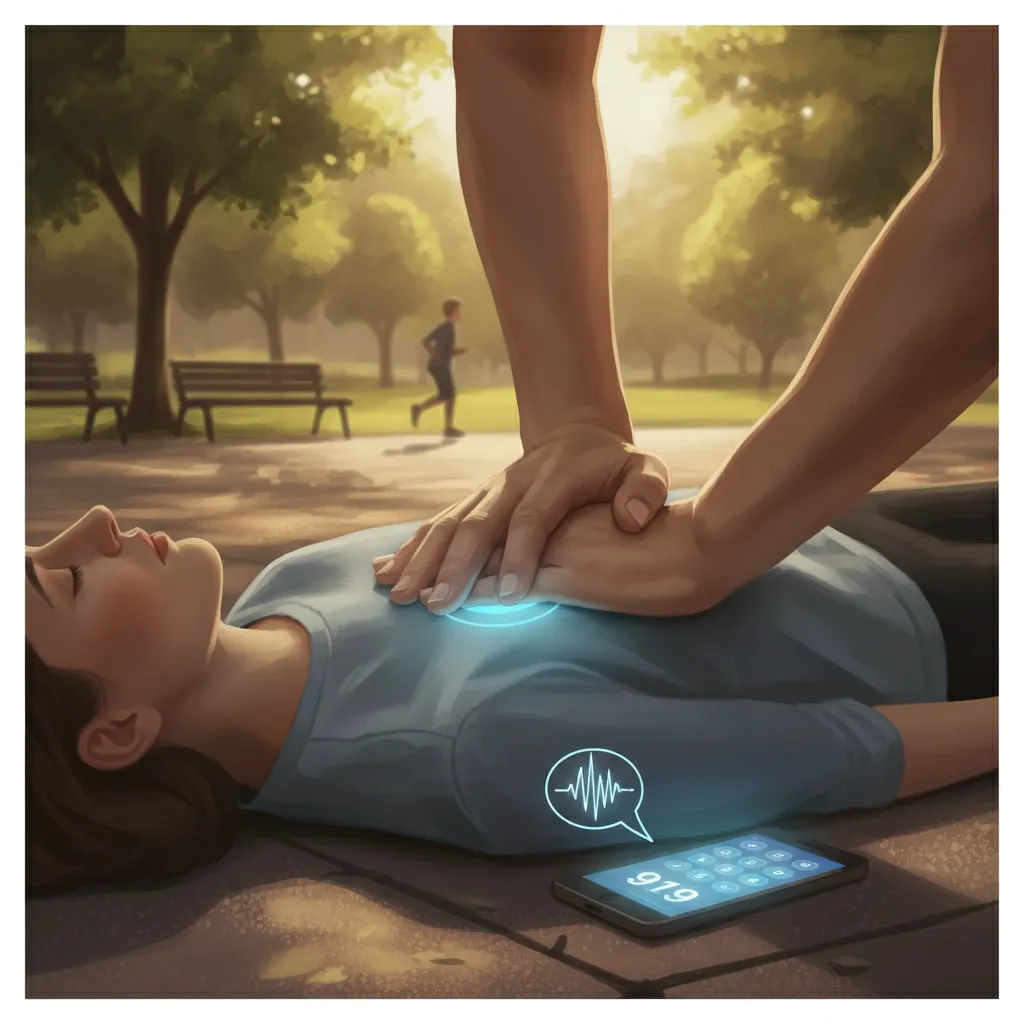
The 2025 guidelines were published by the American Heart Association in October 2025 and update the 2020 edition. For an adult in cardiac arrest, a lone rescuer with a mobile phone should activate emergency response and begin compressions right away; using the phone's speaker lets a dispatcher coach you while you work. Compressions should be at least 2 inches (5 cm) deep for an average adult, avoiding depths beyond 2.4 inches (6 cm), at a rate of 100 to 120 per minute, with the chest allowed to fully recoil between pushes. Pauses should be as short as possible, and when two or more rescuers are present, switching the compressor about every 2 minutes is reasonable. CPR is best done on a firm surface, and the guidelines say people with obesity should receive the same technique as anyone else.
Hands-Only Versus Breaths
The guidelines say that all lay rescuers should provide chest compressions for an adult with presumed cardiac arrest. For lay rescuers who are trained, adding breaths is considered reasonable. When breaths are given without an advanced airway, rescuers pause compressions for 2 breaths, each over about 1 second, at the familiar ratio of 30 compressions to 2 breaths, giving enough volume to produce visible chest rise. Dispatchers are encouraged to coach callers through compression-only CPR. For someone who has a pulse but is not breathing normally, a different instruction applies: 1 breath every 6 seconds.
AEDs and Special Situations
An AED analyzes the heart rhythm and tells the rescuer whether a shock is needed. The guidelines recommend CPR until a defibrillator or AED is applied, and say it is reasonable to resume compressions immediately after a shock rather than stopping for a rhythm check. Yet in 2024 registry data a bystander used an AED in only 7.9% of adult out-of-hospital arrests. The 2025 update also folds naloxone use by lay rescuers into the basic life support algorithms for respiratory or cardiac arrest, and it recommends a new sequence for severe choking in adults: cycles of 5 back blows followed by 5 abdominal thrusts.
Why Training Still Matters
The guidelines set 2030 goals of raising bystander CPR above 50% and AED use before emergency crews arrive above 20%. The chapter also cites a 2015 US survey in which only 18% of people reported current CPR training. Reading about CPR is not the same as practicing it: a certified course lets you feel correct depth and rate on a manikin, practice with an AED trainer, and get corrected by an instructor. Courses are offered by organizations such as the American Heart Association, which also lists a Hands-Only CPR option.
Why People Care
Cardiac arrest can happen to anyone, anywhere, and the first minutes often fall to whoever is standing nearby. Knowing the basics, and then taking a certified in-person course, can turn a frozen bystander into someone who helps. This is general information, not medical advice.
Glossary
- Cardiac arrest
- The heart stops pumping blood effectively, so the person collapses and is unresponsive and not breathing normally.
- AED
- Automated external defibrillator, a portable device that checks heart rhythm and can deliver a shock.
- Chest recoil
- Letting the chest fully rise between compressions, which means not leaning on it.
- Chain of Survival
- The American Heart Association's linked steps from recognizing an arrest through advanced care and recovery.
- Bystander CPR
- CPR started by a layperson before emergency medical professionals arrive.
Go Deeper
More to Explore
- Concussions
Your skull is a great helmet, right up until the brain inside takes a ride of its own.
- Vitamins
Tiny molecules with enormous résumés: you need them in minuscule amounts, and you cannot do without them.
- Stroke
A brain attack: no warning bell, no waiting room, and a clock that starts the moment symptoms do.
- REM Sleep and Dreams
Your brain runs a nightly film festival while your body politely stays in its seat.
- Menopause
A natural biological milestone that arrives with a long runway and surprisingly little advance briefing.