Concussions
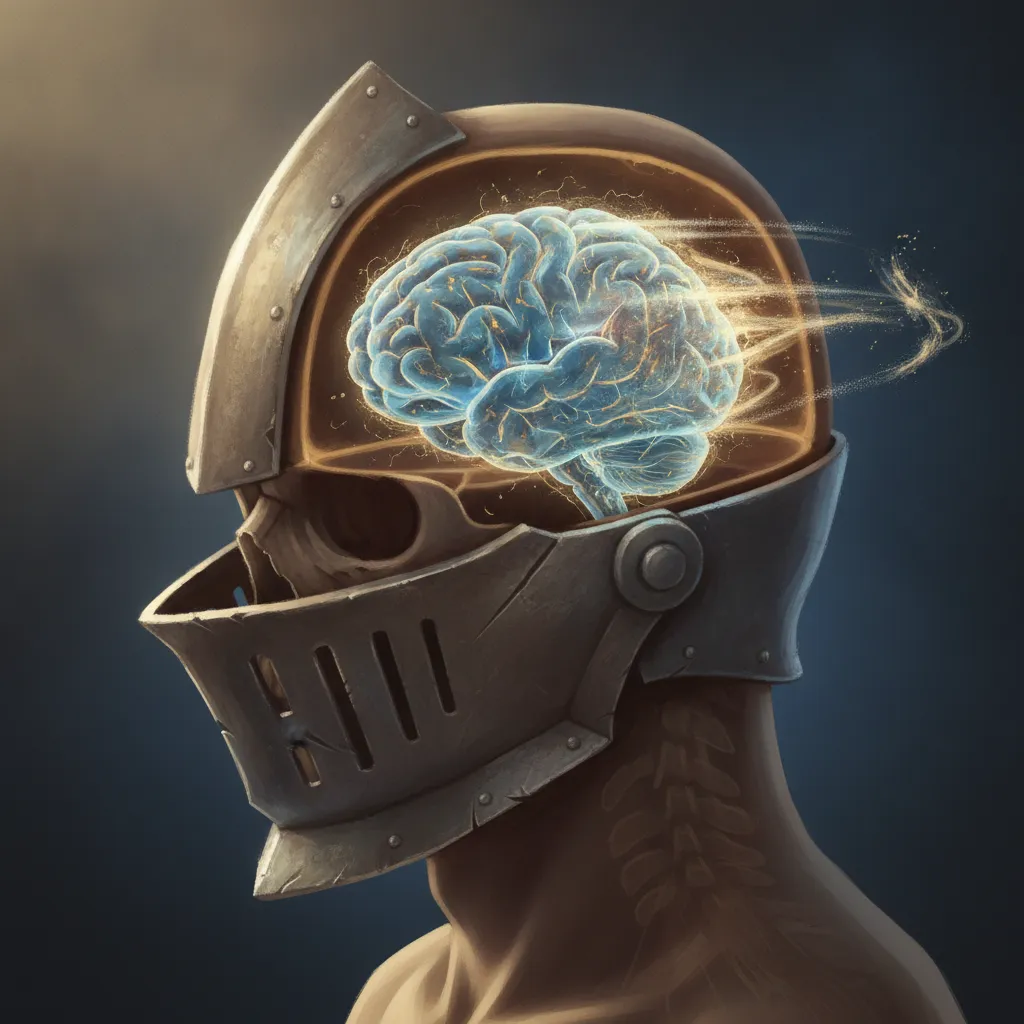
Your skull is a great helmet, right up until the brain inside takes a ride of its own.
By Greg Goodwin · Published October 24, 2026
Cheat Sheet
- Classification: a concussion is a type of traumatic brain injury (TBI), usually described as mild.
- Hospitalizations: about 214,110 TBI-related hospitalizations in 2020, more than 586 per day (CDC; these are all TBIs, not only concussions).
- Deaths: 68,663 TBI-related deaths in 2023, about 190 per day.
- Age: people 75 and older account for about 32% of TBI hospitalizations and 28% of TBI deaths.
- Sex gap: males were nearly twice as likely to be hospitalized for TBI (79.9 vs 43.7 per 100,000) and three times as likely to die (28.3 vs 8.4).
- Undercount: CDC's totals leave out TBIs treated only in emergency, primary, or urgent care, or never treated.
The 60-Second Version
A concussion is a type of traumatic brain injury caused by a bump, blow, or jolt to the head, or by a hit to the body that makes the head and brain move quickly back and forth. That motion can briefly disrupt how brain cells work. The result may be headache, dizziness, confusion, nausea, blurry vision, sensitivity to light or noise, or just feeling off. Because it usually does not show up on a standard scan, a concussion is diagnosed by symptoms and clinical evaluation, and a seemingly minor hit can still be serious. Symptoms often appear soon after but can take hours or days to emerge. The key safety idea is not to guess: anyone with a suspected concussion should be evaluated by a clinician, and worsening symptoms call for emergency care. This page is general information, not medical advice.
The Long Version
What a Concussion Is
The CDC places concussion within the category of mild traumatic brain injury, or mild TBI, where a traumatic brain injury is an injury that affects how the brain works. The word mild describes the classification, not how a person feels; concussion symptoms can be disruptive. The injury typically comes from a blow or jolt to the head or body that makes the brain move rapidly inside the skull. Falls, vehicle crashes, sports, and being struck are common settings, and falls are generally reported as the leading cause of TBI overall, especially among the very young and adults 75 and older.
Signs and Symptoms
CDC materials describe two kinds of clues. An observer may notice someone who looks dazed, answers questions slowly, moves clumsily, or loses consciousness, even briefly, or who shows changes in mood or personality. The injured person may report headache, nausea or vomiting, dizziness or blurred vision, sensitivity to light or noise, grogginess, trouble concentrating or remembering, or simply not feeling right. Some signs may be missed at first, since symptoms usually appear soon after the injury but can take hours or days to show up. That delay is one reason a person who seems fine right after a hit should still be watched and evaluated.
Why Evaluation Matters
Whether an injury is a concussion, or something more serious, cannot be settled by a bystander. CDC guidance for the public says symptoms should be checked soon after the injury and again a few days later, and that anyone whose symptoms get worse should go to an emergency department right away. Health care professionals use history, symptoms, and an exam to decide whether imaging or other steps are needed. Recovery is individual, and decisions about when to return to school, work, driving, or sports are made with a clinician rather than on a fixed timetable found online.
The Bigger Picture in Numbers
CDC does not have a full count of concussions. Its latest data cover all traumatic brain injuries: approximately 214,110 hospitalizations in 2020 and 68,663 deaths in 2023, which works out to more than 586 hospitalizations and 190 deaths per day. Those figures leave out the many TBIs treated only in an emergency department, primary care, or urgent care, or never treated. People 75 and older have the highest numbers and rates. Males were nearly two times as likely to be hospitalized and three times as likely to die from a TBI as females. CDC is building a National Concussion Surveillance System to estimate how many Americans get a concussion each year.
Prevention and Awareness
Concussion awareness has grown, particularly around youth and school sports, and CDC's HEADS UP materials aim to help coaches, parents, and schools recognize and respond. Older CDC analyses found emergency department visits for TBI rose 47% from 2007 to 2013, a rise that may partly reflect greater awareness rather than only more injuries, and that about 75% of TBIs in a year are concussions or other mild forms, though estimates vary by source and year. The broader lesson is cultural: treating a head injury as a real injury, not something to tough out, is the core of modern concussion safety.
Why People Care
Head injuries happen at playgrounds, ball fields, stairs, and intersections, and the right response can protect long-term health. Knowing that a concussion is a real brain injury, and that it deserves evaluation, helps families and teams act sooner. This is general information, not medical advice; see a clinician for suspected concussion, and call emergency services if symptoms worsen.
Glossary
- Traumatic brain injury (TBI)
- An injury that affects how the brain works, ranging from mild to severe.
- Mild TBI
- The category that includes concussion; "mild" describes the injury classification, not how it feels.
- Second impact
- A further head injury before the first has healed, a reason clinicians urge caution about returning too soon.
- Return to play
- The clinician-guided process of resuming sports after a concussion.
- Symptom checklist
- A structured list of signs and complaints used to track recovery after a head injury.
Go Deeper
More to Explore
- CPR
Two hands, a steady rhythm, and a phone call can buy a stranger crucial time, and it is a skill you hope never to use.
- Vitamins
Tiny molecules with enormous résumés: you need them in minuscule amounts, and you cannot do without them.
- Stroke
A brain attack: no warning bell, no waiting room, and a clock that starts the moment symptoms do.
- REM Sleep and Dreams
Your brain runs a nightly film festival while your body politely stays in its seat.
- Menopause
A natural biological milestone that arrives with a long runway and surprisingly little advance briefing.