Mexican Cuisine
Tacos are just the doorway: behind them stands a food system thousands of years in the making that UNESCO treats as living heritage.
By Greg Goodwin · Published October 17, 2026 · Updated October 24, 2026
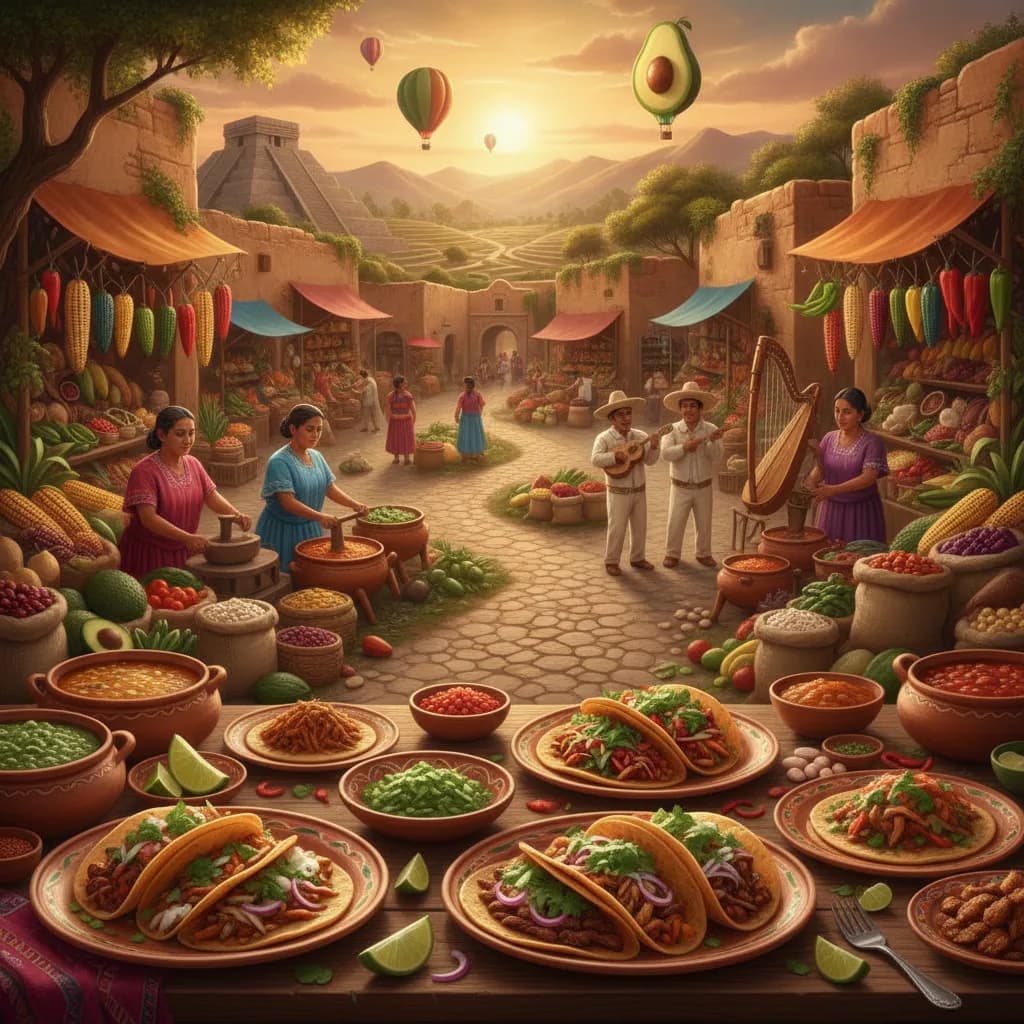
Cheat Sheet
- Farming systems: milpas are rotating swidden fields of corn and other crops; chinampas are man-made farming islets in lake areas.
- Tools: grinding stones and stone mortars are among the singular utensils UNESCO names.
- Native pantry: varieties of tomatoes, squashes, avocados, cocoa, and vanilla.
- Mole: Oaxaca is branded the 'land of seven moles,' but scholars call that count an invented tradition; Puebla is famed for mole poblano.
- Deep roots: archaeology traces human foodways in Oaxaca back about 10,000 years.
- Oaxacan specialties: clayudas (sturdy toasted tortillas) and tejate (a foamy cacao drink made with heirloom maize).
The 60-Second Version
Mexican cuisine rests on three staples, corn, beans, and chili, produced through farming and cooking methods that Indigenous communities developed over many centuries. Corn is treated with lime in a process called nixtamalization, then ground into dough for tortillas and tamales. Native ingredients such as tomatoes, squashes, avocados, cacao, and vanilla round out the pantry, and the colonial era added further influences. The result is richly regional: Oaxaca and Puebla are celebrated for their moles, complex chile-based sauces, while each area keeps its own dishes and techniques. Food is also bound up with ritual, so tortillas and tamales appear among the offerings for Day of the Dead. In 2010, UNESCO inscribed traditional Mexican cuisine on its Representative List of the Intangible Cultural Heritage of Humanity, recognizing not just recipes but a whole cultural model covering farming, skills, ceremony, and community.
The Long Version
A Cuisine Built on Three Crops
According to UNESCO, the basis of traditional Mexican cuisine is corn, beans, and chili. These crops are grown using distinctive methods. The milpa is a rotating swidden field in which corn grows with other crops, and chinampas are man-made farming islets built in lake areas. UNESCO stresses that the cuisine is a complete chain, made possible by collective participation from planting and harvesting to cooking and eating, rather than only a list of dishes.
The Corn Transformation
The most important kitchen process is nixtamalization, lime-hulling maize, which increases its nutritional value. The treated corn is ground, traditionally on stone grinding tools, into dough for everyday tortillas and tamales. Both are made of corn, and both form part of Day of the Dead offerings, showing how ordinary food and ritual overlap. Atoles, corn-based drinks, belong to the same family of traditions. Collectives of women cooks, especially in Michoacán, are described by UNESCO as key keepers of this knowledge.
A Deep and Varied Pantry
Native ingredients such as tomatoes, squashes, avocados, cocoa, and vanilla enrich the staples. Archaeology shows how old and varied the foundations are. A 2024 volume on Oaxaca traces human foodways back some 10,000 years. One Archaic Period site near Mitla (roughly 8000 to 1600 BCE) yielded amaranth, epazote, beans, squash, cactus fruit, and maguey, and its people ate foxtail millet instead of maize. By the Classic Era (300 to 900 CE), regional cuisines were already diverging, and cacao was traded as a luxury alongside staples like maize.
Regional Voices and the Mole Debate
Oaxaca is often called the land of seven moles, and Puebla is known for mole poblano, a blend of chile and chocolate. Historian Jeffrey Pilcher notes that the count of seven is an invented tradition, though Oaxaca's culinary roots are deep. Regional specialties include clayudas, tortillas toasted to be strong and flexible, and tejate, a foamy cacao beverage made with heirloom maize. Many popular stories about where each dish comes from are more legend than record, so treat tidy origin tales with some skepticism.
Colonial Change and Recognition
The Spanish conquest and colonial rule brought upheaval, but many Indigenous food practices persisted. Day of the Dead rituals, for instance, preserved long-standing traditions of feeding the ancestors. One study notes Mixtec elites in one community kept their maize-based diet, though it is unclear whether that was resistance or simply because wheat was unaffordable. UNESCO's 2010 inscription recognized traditional cuisine as a source of community identity, social bonds, and sustainable development, showing why food counts as culture and not only as fuel.
Why People Care
Mexican food is among the most widely eaten and loved in the world, but the real thing is deeper than any single taco. Knowing its roots in corn, regional diversity, and ritual helps you order more adventurously, cook with respect, and appreciate why the cuisine earned UNESCO recognition.
Glossary
- Nixtamalization
- Treating maize with lime, which increases its nutritional value and prepares it for dough.
- Masa
- Dough made from nixtamalized corn, the base for tortillas and tamales.
- Milpa
- A rotating field in which corn is grown together with other crops.
- Chinampa
- A man-made farming islet built in a lake area.
- Mole
- A family of chile-based sauces and stews, closely tied to Oaxaca and Puebla.
Go Deeper
More to Explore
- Italian Regional Cuisine
Fettuccine Alfredo and giant-meatball spaghetti are "Italian" menu staples that are largely unknown or quite different in Italy itself.
- Ethiopian Cuisine
In traditional Ethiopian dining, the bread isn't a side dish at all — it's the plate, the utensil, and eventually part of the meal itself, all at once.
- Thai Cuisine
Thai cooking aims to hit sweet, sour, salty, and spicy all at once, often within a single dish.
- Tapas
An entire national dining culture built around never committing to just one dish.
- Sushi
The dish is technically named after the rice, not the fish — a fact that surprises most people who eat it regularly.