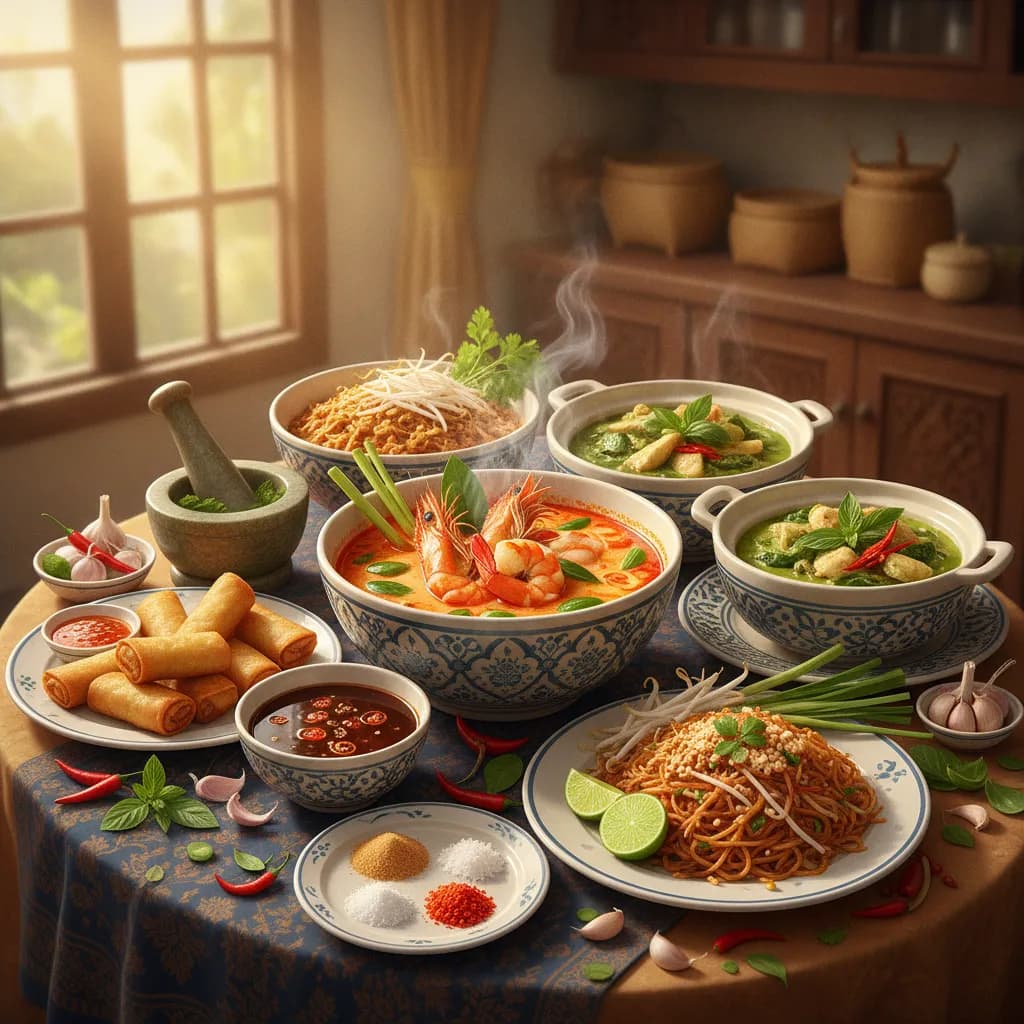
Thai Cuisine
A cuisine built on the deliberate, simultaneous balancing of four entirely different flavors within a single bite — sweet, sour, salty, and spicy, all at once.
Cheat Sheet
- Thai cuisine is built around balancing four core flavors simultaneously — sweet, sour, salty, and spicy — often within a single dish rather than favoring just one dominant taste.
- Rice serves as the foundational staple of most Thai meals, typically accompanied by multiple shared dishes eaten together rather than a single individual plated entrée.
- Thai cuisine varies significantly by region, with notably different characteristic flavors and ingredients across northern, northeastern (Isan), central, and southern Thailand.
- Fresh herbs and aromatics, including lemongrass, galangal, and Thai basil, play a central role in giving Thai dishes their distinctive, layered fragrance and flavor.
- Fish sauce and shrimp paste, both fermented ingredients, provide much of Thai cuisine's characteristic savory depth, a flavor foundation sometimes called "umami" in broader culinary terminology.
- Street food culture is deeply embedded in Thai culinary life, with informal street vendors and market stalls widely considered a legitimate and often highly respected part of the country's food scene, not just a casual afterthought.
The 60-Second Version
Thai cuisine is built around balancing four core flavors simultaneously, sweet, sour, salty, and spicy, often within a single dish rather than favoring just one dominant taste. Rice serves as the foundational staple of most Thai meals, typically accompanied by multiple shared dishes eaten together rather than a single individual plated entrée. Thai cuisine varies significantly by region, with notably different characteristic flavors and ingredients across northern, northeastern (Isan), central, and southern Thailand. Fresh herbs and aromatics, including lemongrass, galangal, and Thai basil, play a central role in giving Thai dishes their distinctive, layered fragrance and flavor. Fish sauce and shrimp paste, both fermented ingredients, provide much of Thai cuisine's characteristic savory depth, a flavor foundation sometimes called "umami" in broader culinary terminology. Street food culture is deeply embedded in Thai culinary life, with informal street vendors and market stalls widely considered a legitimate and often highly respected part of the country's food scene, not just a casual afterthought.
The Long Version
The Art of Balancing Four Flavors at Once
Unlike cuisines that typically emphasize one dominant flavor profile per dish, Thai cooking is distinctively organized around the deliberate simultaneous balance of sweet, sour, salty, and spicy flavors, often within a single dish, requiring careful calibration of ingredients like palm sugar, lime, fish sauce, and chili to achieve the specific balance a given recipe calls for.
Rice and Shared Communal Eating
Rice serves as the essential staple underlying most Thai meals, typically served alongside multiple shared dishes eaten communally rather than as individually plated single entrées, a structure that encourages sampling a range of complementary flavors and textures across an entire meal rather than experiencing just one dish in isolation.
Distinct Regional Traditions Within One Country
Thai cuisine varies considerably by region, with northern Thai food drawing on milder, more herb-forward flavors influenced by neighboring Myanmar and Laos, northeastern Isan cuisine known for bold, often intensely spicy and sour dishes, and central and southern Thai cuisine each carrying their own distinct characteristic ingredients and flavor profiles, meaning "Thai food" abroad often represents just one specific regional tradition rather than the country's full culinary range.
Fermented Depth and a Thriving Street Food Culture
Fermented ingredients including fish sauce and shrimp paste provide much of Thai cuisine's characteristic savory depth, or umami, a flavor foundation working alongside fresh aromatics like lemongrass, galangal, and Thai basil to create the cuisine's distinctive layered fragrance. This full range of flavor and technique is deeply embedded in Thailand's vibrant street food culture, where informal vendors and market stalls are widely regarded as a legitimate, often highly respected part of the national food scene rather than merely a casual, lesser alternative to restaurant dining.
Ad slot (placeholder — set NEXT_PUBLIC_ADSENSE_SLOT_ID once an ad unit is created)
Glossary
- Isan cuisine
- The distinctive cuisine of northeastern Thailand, known for bold, often spicy and sour flavors.
- Galangal
- A rhizome related to ginger, commonly used as an aromatic ingredient in Thai cooking.
- Fish sauce
- A fermented condiment providing much of Thai cuisine's characteristic savory depth.
- Som tam
- A popular spicy green papaya salad, especially associated with Isan cuisine.
- Umami
- A savory taste category, distinct from sweet, sour, salty, and bitter, contributed significantly by fermented ingredients like fish sauce.
Go Deeper
- Tourism Authority of Thailand
- SEAsite — Thai Culture and Cuisine