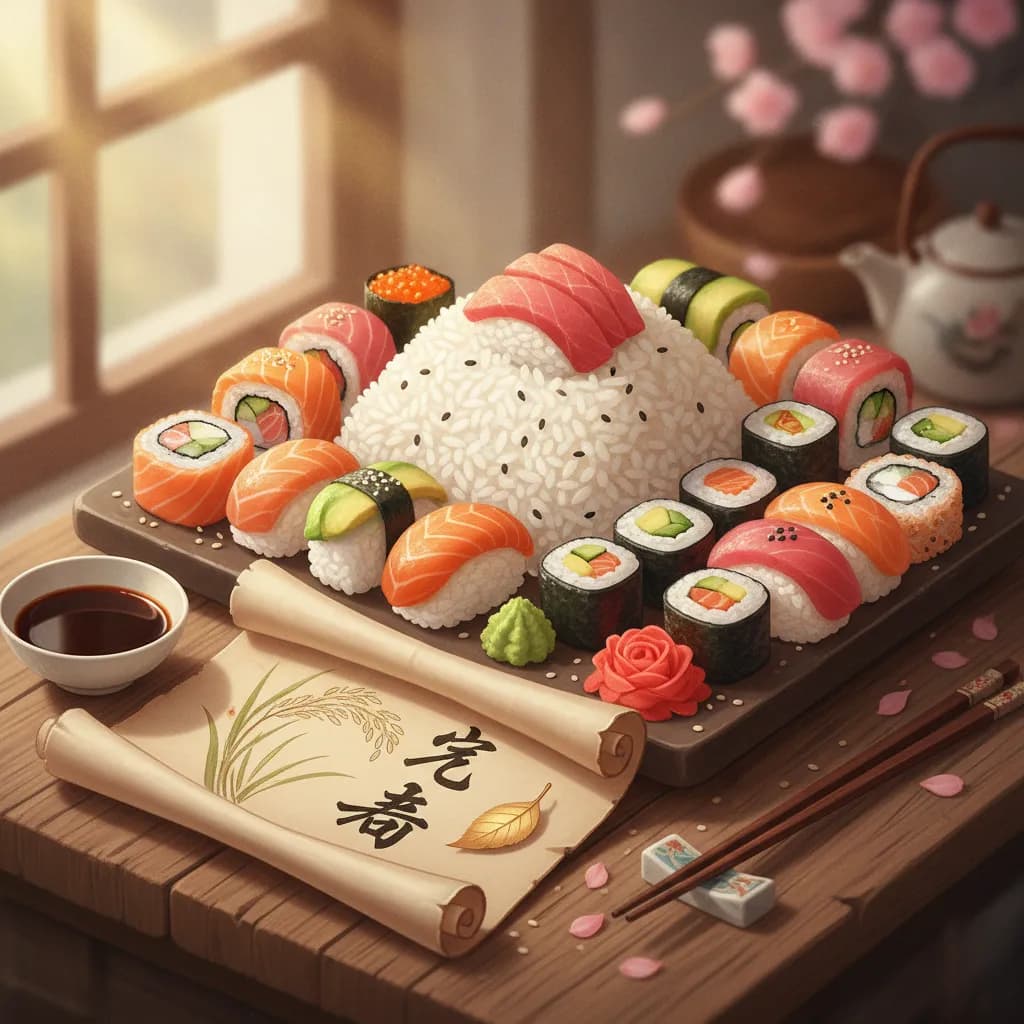
Sushi
The dish is technically named after the rice, not the fish — a fact that surprises most people who eat it regularly.
Cheat Sheet
- Sushi refers to the vinegared rice, not the raw fish — a dish can be sushi without any fish at all (like a cucumber roll).
- Sashimi is raw fish served alone, without rice — a common point of confusion, since it's often mistaken for a type of sushi.
- Nigiri (a hand-formed rice mound topped with fish) and maki (rolled in seaweed) are the two most familiar styles outside Japan.
- Wasabi's traditional role is more about food safety and flavor balance than pure heat — real wasabi (rare and expensive) is milder than the horseradish-based substitute most restaurants use.
- Soy sauce is meant for dipping the fish side, not drowning the rice — over-soaking breaks the rice apart and overwhelms the fish's flavor.
- Omakase means "I'll leave it up to you" — letting the chef choose and serve a curated sequence of dishes rather than ordering à la carte.
The 60-Second Version
Sushi refers specifically to vinegared rice, not raw fish — a roll made entirely of cucumber and rice is still genuinely sushi, while a plate of raw fish served without rice is sashimi, a related but distinct dish. Nigiri (a hand-pressed mound of rice topped with a slice of fish) and maki (rice and filling rolled in a sheet of seaweed) are the two styles most familiar outside Japan. A few points of etiquette matter more than people expect: wasabi is meant to season and balance the fish, not overwhelm it with pure heat, and soy sauce is for lightly dipping the fish side of a piece rather than soaking the rice, which breaks it apart and overwhelms the fish's flavor. Omakase — literally "I'll leave it up to you" — means letting the chef select and serve a curated sequence of dishes rather than ordering individually off a menu.
The Long Version
It's About the Rice, Not the Fish
Sushi rice is short-grain rice seasoned with a mix of rice vinegar, sugar, and salt after cooking, and that seasoned rice — not the presence of raw fish — is what technically defines a dish as sushi. This is why vegetable rolls, cooked-shrimp rolls, and even egg-topped nigiri are all genuinely sushi, while a plate of pristine raw fish served without any rice at all is sashimi: a related dish, frequently served alongside sushi, but categorically different by definition.
The Main Styles
Nigiri — a hand-pressed oblong mound of rice topped with a slice of fish, seafood, or occasionally egg — is often considered the purest expression of a sushi chef's skill, since there's nowhere for imperfect rice or a poorly cut piece of fish to hide. Maki wraps rice and fillings inside a sheet of nori (dried seaweed), then slices the roll into bite-sized pieces; temaki is a similar concept hand-rolled into a cone shape instead of sliced; and chirashi scatters an assortment of sashimi-style toppings directly over a bowl of sushi rice rather than shaping individual pieces.
Sushi Etiquette
Wasabi's traditional culinary role is about balancing and slightly cutting through the richness of raw fish as much as adding heat, and it's traditionally applied by the chef in a precise, restrained amount directly between the rice and fish in nigiri rather than mixed liberally into soy sauce at the table. Most wasabi served outside high-end restaurants is actually a horseradish-and-mustard-based substitute rather than real wasabi root, which is notably milder, rarer, and considerably more expensive. Dipping nigiri fish-side-down into soy sauce, rather than soaking the rice, keeps the piece from falling apart and avoids overpowering the fish's own flavor — a small technique that meaningfully changes the eating experience.
From Preservation Method to Global Cuisine
Sushi's origins trace back to narezushi, an ancient method of preserving fish by fermenting it in salted rice for months, where the rice itself was originally discarded rather than eaten. The dish evolved dramatically during Japan's Edo period (1603-1868), when Edomae-style sushi emerged in Tokyo as a fast, fresh street food using vinegared rice instead of slow fermentation, laying the groundwork for the nigiri style eaten worldwide today. Sushi's global spread accelerated significantly in the latter half of the 20th century, adapting along the way into region-specific creations like the California roll, which was itself invented partly to make raw fish more approachable to unfamiliar Western diners.
Ad slot (placeholder — set NEXT_PUBLIC_ADSENSE_SLOT_ID once an ad unit is created)
Glossary
- Nigiri
- A hand-pressed mound of vinegared rice topped with a slice of fish or other topping.
- Maki
- Sushi rolled in a sheet of seaweed (nori), typically sliced into pieces.
- Sashimi
- Raw fish sliced and served without rice.
- Omakase
- A chef-curated tasting sequence, where the diner leaves the menu selection to the chef.
- Itamae
- A trained sushi chef, a title earned only after years of formal apprenticeship.