Italian Regional Cuisine
Fettuccine Alfredo and giant-meatball spaghetti are "Italian" menu staples that are largely unknown or quite different in Italy itself.
By Greg Goodwin · Published October 3, 2026 · Updated October 24, 2026
Cheat Sheet
- Italy's cuisine is sharply regional rather than unified — a dish considered authentic in one region (like Bolognese sauce in Bologna) may be virtually unknown elsewhere in the country.
- Northern Italian cooking leans toward butter, rice (risotto), and cream-based dishes, while Southern Italian cooking relies more heavily on olive oil, tomatoes, and dried pasta.
- Italy's modern national identity as a unified country only dates to 1861, meaning most 'Italian' dishes actually developed as distinctly regional or even city-specific traditions.
- Many dishes marketed internationally as 'Italian,' such as fettuccine Alfredo and spaghetti with meatballs in large portions, are largely unknown or significantly different within Italy itself.
- Italy holds the most UNESCO-recognized traditional food and wine products of any country, reflecting fierce regional and even hyper-local culinary specificity.
- Pizza, strongly associated with Naples specifically, only became a broadly 'Italian' national dish relatively recently, rather than representing the whole country from the start.
The 60-Second Version
Italy's cuisine is sharply regional rather than unified, meaning a dish considered authentic and deeply traditional in one region, like Bolognese sauce specifically in Bologna, may be virtually unknown or prepared completely differently elsewhere in the same country. Broadly speaking, Northern Italian cooking leans toward butter, rice-based dishes like risotto, and cream-based sauces, while Southern Italian cooking relies far more heavily on olive oil, tomatoes, and dried pasta, reflecting genuinely different climates, histories, and agricultural traditions across the peninsula. This regional fragmentation makes more sense once you know that Italy's modern national identity as a single unified country only dates to 1861, meaning most dishes now casually labeled "Italian" actually developed independently as distinctly regional, or even city-specific, culinary traditions long before any national identity existed to unify them. As a direct result, many dishes marketed internationally as "Italian," including fettuccine Alfredo and spaghetti served with oversized meatballs, are largely unknown or prepared in significantly different forms within Italy itself, having actually developed primarily among Italian immigrant communities abroad rather than within Italy's own regional traditions. Reflecting just how fiercely specific this regional culinary identity remains today, Italy holds more UNESCO-recognized traditional food and wine products than any other country in the world. Even pizza, now treated internationally as a default symbol of the entire country, was strongly associated specifically with Naples and only became broadly adopted as a genuinely national dish relatively recently in the country's long culinary history.
The Long Version
A Country of Regions, Not One Single Cuisine
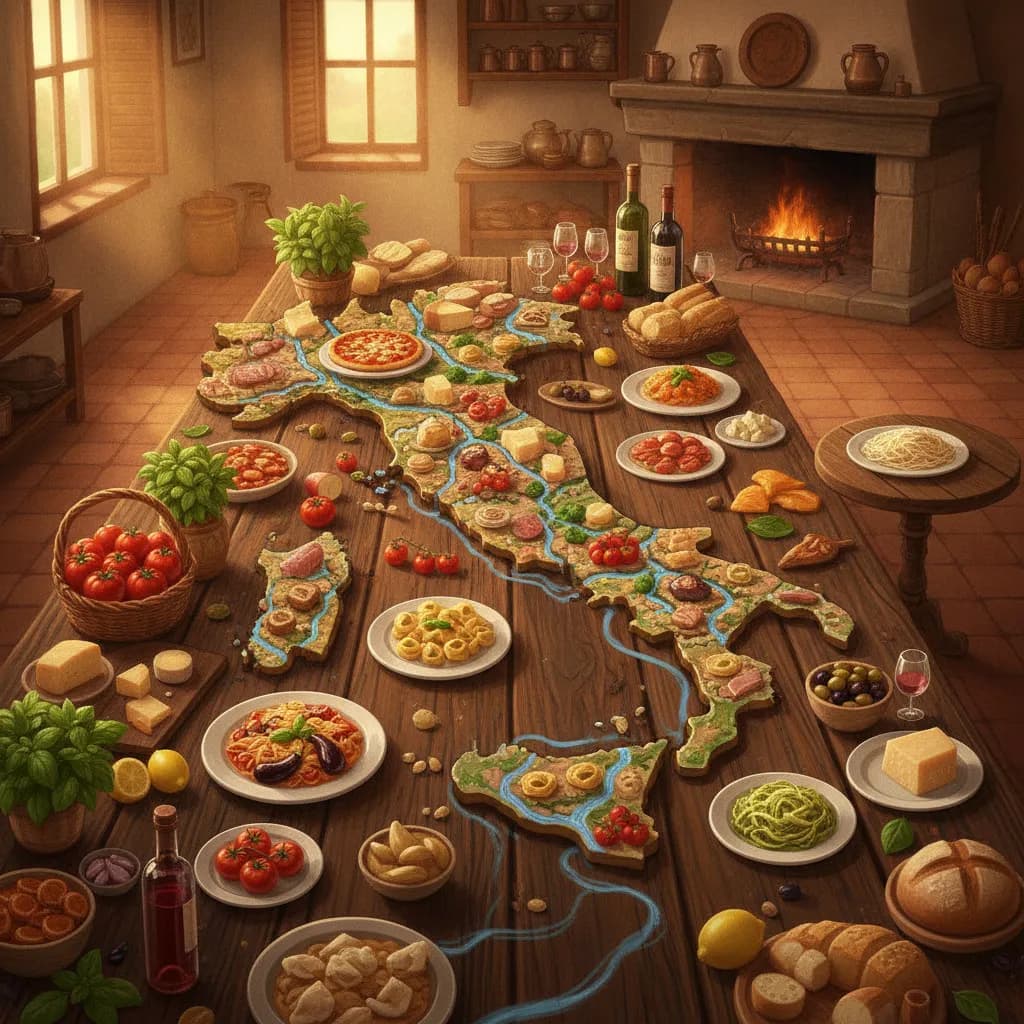
Italy's cuisine is sharply regional rather than unified, meaning a dish considered authentic and deeply traditional in one region, like Bolognese sauce specifically in Bologna, may be virtually unknown or prepared completely differently elsewhere in the same country, a pattern that repeats across nearly every well-known Italian dish.
Butter and Rice in the North, Oil and Tomatoes in the South
Broadly speaking, Northern Italian cooking leans toward butter, rice-based dishes like risotto, and cream-based sauces, while Southern Italian cooking relies far more heavily on olive oil, tomatoes, and dried pasta, reflecting genuinely different climates, agricultural histories, and even distinct cultural influences across the Italian peninsula.
A Young National Identity Over Much Older Regional Traditions
This regional fragmentation makes more sense once you know that Italy's modern national identity as a single unified country only dates to 1861, meaning most dishes now casually labeled "Italian" actually developed independently as distinctly regional, or even city-specific, culinary traditions long before any national identity existed to loosely unify them under one label.
"Italian" Food Abroad Versus Food in Italy
As a direct result of that immigrant history, many dishes marketed internationally as "Italian," including fettuccine Alfredo and spaghetti served with oversized meatballs, are largely unknown or prepared in significantly different forms within Italy itself, having actually developed primarily among Italian immigrant communities abroad rather than within Italy's own regional culinary traditions.
Fierce Specificity, and Pizza's Surprisingly Recent National Rise
Reflecting just how fiercely specific this regional culinary identity remains today, Italy holds more UNESCO-recognized traditional food and wine products than any other country in the world. Even pizza, now treated internationally as a default symbol of the entire country, was strongly associated specifically with Naples and only became broadly adopted as a genuinely national dish relatively recently in the country's long culinary history.
Why People Care
Understanding that "Italian food" is really a collection of distinct regional traditions, not one single cuisine, explains why a trip across different Italian regions can feel like exploring entirely separate culinary cultures, and why dishes marketed as "Italian" abroad often bear little resemblance to what's actually eaten in Italy.
Glossary
- Regional cuisine
- A style of cooking specific to one geographic area, a defining characteristic of Italian food rather than one unified 'Italian cuisine.'
- Risotto
- A creamy rice dish characteristic of Northern Italian cooking, distinct from the pasta-centric tradition more associated with the south.
- Italian unification
- The 1861 political unification of Italy's separate regional states, after which many distinctly regional dishes came to be loosely grouped as 'Italian.'
- Italian-American cuisine
- A distinct culinary tradition developed by Italian immigrants abroad, producing dishes like large-portion spaghetti and meatballs rarely found in Italy itself.
- UNESCO-recognized food traditions
- Traditional food and wine products granted international cultural heritage recognition, reflecting a country's regional culinary specificity.
Go Deeper
- Gambero Rosso — Italian Regional Food Guide
- The Food of Italy, by Waverley Root
More to Explore
- Mexican Cuisine
Tacos are just the doorway: behind them stands a food system thousands of years in the making that UNESCO treats as living heritage.
- Ethiopian Cuisine
In traditional Ethiopian dining, the bread isn't a side dish at all — it's the plate, the utensil, and eventually part of the meal itself, all at once.
- Thai Cuisine
Thai cooking aims to hit sweet, sour, salty, and spicy all at once, often within a single dish.
- Tapas
An entire national dining culture built around never committing to just one dish.
- Sushi
The dish is technically named after the rice, not the fish — a fact that surprises most people who eat it regularly.