Korean Cuisine
Fermented, fiery, and always arriving with a parade of small side dishes you never ordered but will finish.
By Greg Goodwin · Published November 4, 2026
Cheat Sheet
- UNESCO: kimjang, making and sharing kimchi, was inscribed on the Representative List of the Intangible Cultural Heritage of Humanity in December 2013.
- Word clues: jang roughly means sauce or paste, guk means soup, and jjigae is a stew.
- Meju timeline: soybean bricks hang for 2 to 3 months, then ferment about another month in brine inside onggi earthenware pots.
- Kimjang season: late autumn, when communities make kimchi in bulk to supply households through winter.
- Deep roots: fermented beans found at Bronze Age sites suggest fermentation on the peninsula around 1500 BC.
- Kimchi base: cabbage is the most common, but radish versions exist, along with versions made with fish or even meat.
The 60-Second Version
Korean cuisine, called hansik, is built around rice, soup, and a spread of shared side dishes known as banchan, with kimchi almost always on the table. Its backbone is fermentation. Three fermented soybean seasonings, ganjang (soy sauce), doenjang (bean paste), and gochujang (chili paste), flavor everything from stews to marinades, while kimchi turns vegetables, most often cabbage, into a tangy, spicy staple. Dishes you may meet include bulgogi, marinated beef, bibimbap, a mixed rice bowl, and doenjang-jjigae, a bean paste stew. Korean households traditionally make kimchi together in late autumn in a practice called kimjang, and in 2013 UNESCO added kimjang to its Representative List of the Intangible Cultural Heritage of Humanity. Spice levels vary by dish, so not everything is a fire alarm. The easiest way in is to order a few dishes to share and let the side dishes keep coming.
The Long Version
A Cuisine Built on Fermentation
Great British Chefs describes the foundations of Korean cooking as almost always beginning with something fermented. Traditional food, or hansik, would not be the same without an array of fermented products that add depth and complexity. Fermented beans have been found at Bronze Age sites on the Korean peninsula, which suggests people were using fermentation in cooking around 1500 BC, about 4,000 years ago. Many of the key seasonings carry the suffix jang, which roughly translates to sauce or paste, and the three most important are ganjang, doenjang, and gochujang. Kimchi sits alongside them as both an ingredient and a dish in its own right.
The Jang Trio
All three main jangs start from meju, a block of fermented soybeans. Traditionally made toward the end of autumn, meju begins with soybeans soaked and boiled for five to six hours, then dried, crushed, and molded into large bricks. The bricks are tied, covered in rice straw, and hung for two to three months to ferment. They are then washed and brined, and left in earthenware onggi pots for a further month, during which the mixture separates into soy sauce (ganjang) and bean paste (doenjang). Gochujang takes a small amount of dried, ground meju and combines it with glutinous rice and gochugaru, Korean chili flakes. Doenjang and gochujang together make ssamjang, a dipping sauce often served with barbecued meat.
Kimchi and Kimjang
UNESCO's decision describes kimchi as the Korean name for preserved vegetables seasoned with spices and fermented seafood, and says it forms an essential part of Korean meals, transcending class and regional differences. Preparation follows a yearly cycle: households procure shrimp and anchovy for salting in spring, buy sea salt in summer, dry and grind red chili in late summer, and then make kimchi collectively in late autumn so every household has enough for winter. The methods are considered family heritage, typically passed from mother-in-law to daughter-in-law. Kimjang was added to Korea's national inventory in 2011, and the Intergovernmental Committee inscribed it in December 2013 at its meeting in Baku, Azerbaijan. Cabbage is the most common base, though radishes and even versions with fish or meat exist.
The Shape of a Meal
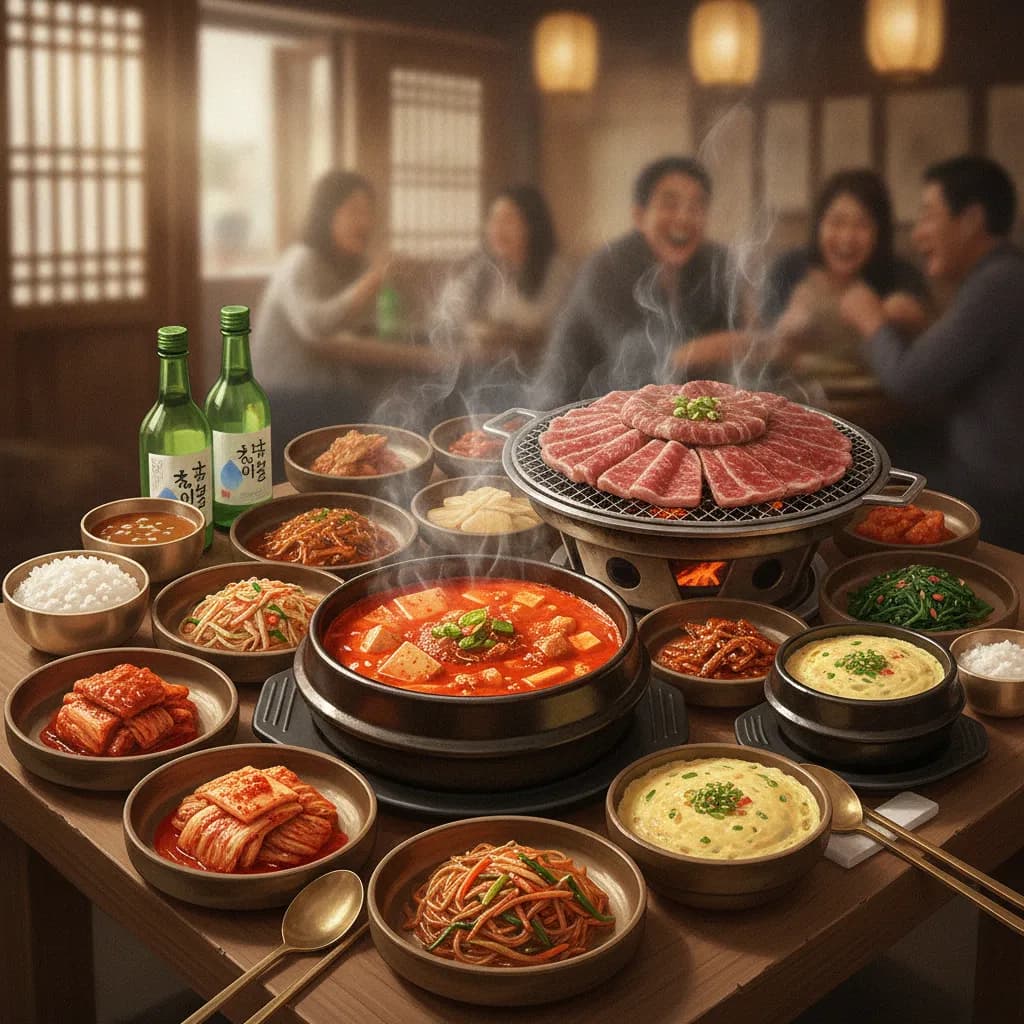
A traditional Korean meal is organized around rice, a soup, kimchi, and an array of side dishes. Hansik is often described as drawing a clear line between the main dish, such as rice or noodles, and the accompanying side dishes. Those banchan are mainly seasoned with fermented soy products, herbs, and sesame or perilla oil,. Jeotgal, salted fermented seafood, typically appears among them as well. The result is a meal in which the plain, filling center of rice and soup is surrounded by small, strongly seasoned accompaniments, so a table can fill up with plates before the main dish even arrives.
Dishes You'll Meet
Kimchi shows up as a side dish but also as an ingredient, mellowing once heated in kimchi fried rice, stews, and pancakes. Doenjang-jjigae is a traditional stew built on doenjang, and gochujang appears in marinades, dressings, and dipping sauces. Bulgogi is a marinated beef dish, and bibimbap is a mixed rice bowl. Soy sauce comes in several styles: the traditional guk-ganjang is salty and light, usually used in moderation to season soups and stews, while the cheaper blended jin-ganjang suits dishes cooked over a fierce heat, such as Korean barbecue. If a menu looks long, ask the server about a set meal and start with a stew, a grilled dish, and rice.
Why People Care
Korean food has become a regular at restaurants and grocery stores worldwide, and knowing the jangs, banchan, and kimchi basics makes ordering far easier. It is also a window into a culture where fermentation, seasons, and sharing a table shape everyday cooking.
Glossary
- Hansik
- The Korean word for traditional Korean food and its way of eating.
- Banchan
- Small side dishes served alongside rice and soup, often seasoned with fermented soy products and sesame or perilla oil.
- Gochujang
- A fermented chili paste made with a little ground meju, glutinous rice, and Korean chili flakes (gochugaru).
- Doenjang
- A brown fermented soybean paste, savory with a slight bitterness, used in stews and in the dipping sauce ssamjang.
- Kimjang
- The late-autumn practice of making and sharing large quantities of kimchi, listed by UNESCO in 2013.
Go Deeper
More to Explore
- Mexican Cuisine
Tacos are just the doorway: behind them stands a food system thousands of years in the making that UNESCO treats as living heritage.
- Italian Regional Cuisine
Fettuccine Alfredo and giant-meatball spaghetti are "Italian" menu staples that are largely unknown or quite different in Italy itself.
- Ethiopian Cuisine
In traditional Ethiopian dining, the bread isn't a side dish at all — it's the plate, the utensil, and eventually part of the meal itself, all at once.
- Thai Cuisine
Thai cooking aims to hit sweet, sour, salty, and spicy all at once, often within a single dish.
- Tapas
An entire national dining culture built around never committing to just one dish.