Grilling and Smoking
That pink ring inside a perfectly smoked brisket has nothing to do with whether the meat is undercooked — it's actually a chemical signature left behind by the smoke itself.
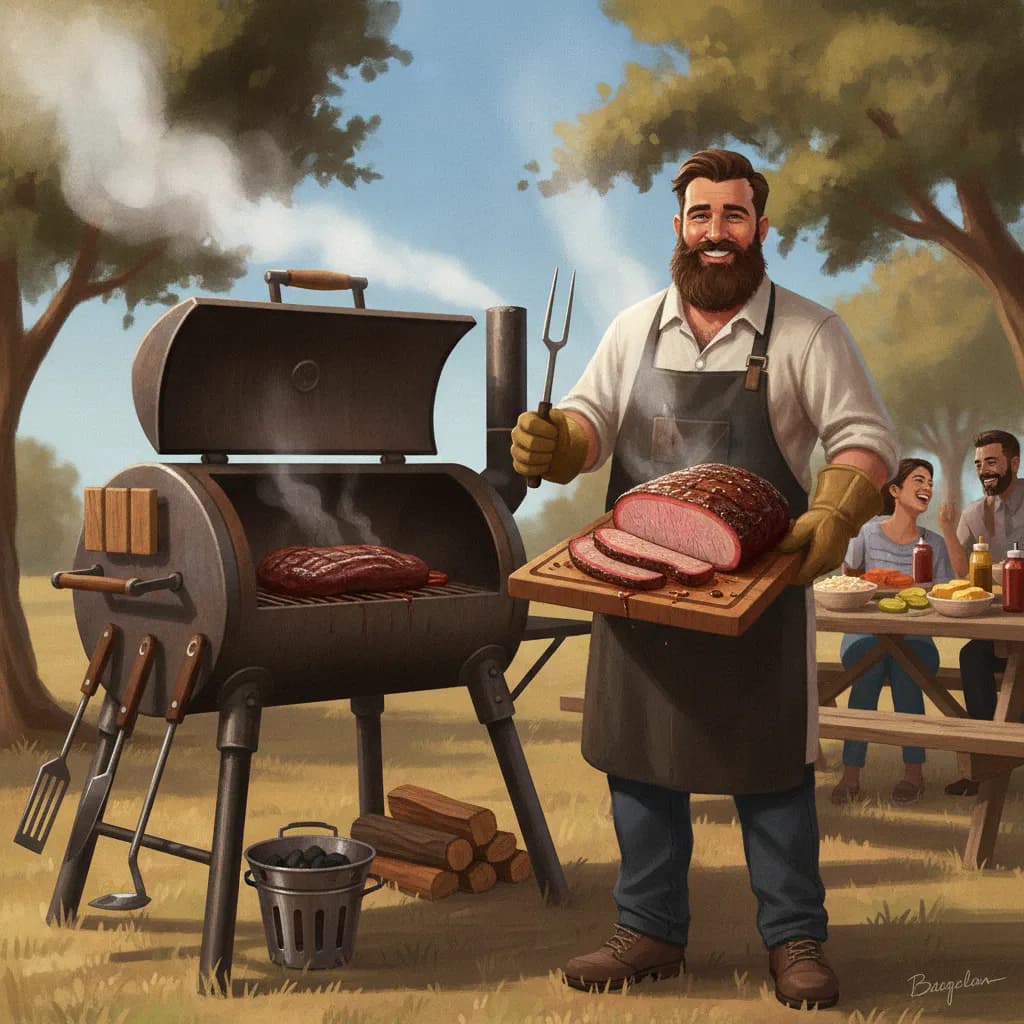
Cheat Sheet
- Grilling uses direct, high heat (typically 400-550°F) for quick cooking; smoking uses indirect, low heat (typically 200-275°F) over many hours.
- The Maillard reaction, the browning process responsible for grilled flavor and crust, requires temperatures above roughly 300°F — smoking alone often can't trigger it without a separate sear.
- A 'smoke ring,' the pink layer just under smoked meat's surface, is a chemical reaction (not a doneness indicator) caused by nitrogen dioxide from the smoke.
- Low-and-slow smoking breaks down tough collagen in cuts like brisket and pork shoulder into gelatin, which is why cheaper, tougher cuts are often preferred for smoking.
- Common smoking wood choices (hickory, mesquite, applewood, oak) each impart distinctly different flavor intensities.
- The 'stall,' a notorious temperature plateau during long smokes, is caused by evaporative cooling from moisture on the meat's surface.
The 60-Second Version
Grilling and smoking are often lumped together as backyard cooking, but they rely on genuinely different heat mechanics to get very different results. Grilling works fast, exposing food directly to intense heat to build a browned, flavorful crust in minutes, while smoking works slow, using low indirect heat over many hours to gradually transform tougher cuts of meat into something tender. That transformation happens because sustained low heat gives tough connective tissue enough time to break down into gelatin, which is exactly why smoking tends to favor cheaper, tougher cuts that would turn out chewy and unpleasant on a hot grill. Long smoking sessions come with their own well-known quirks, including a notorious temperature plateau caused by moisture evaporating off the meat's surface, and a pink ring just beneath the surface that many home cooks mistake for undercooked meat but that's actually just a harmless chemical reaction with compounds in the smoke. The specific wood used for smoking, whether a mild fruit wood or something far more intense, also meaningfully shapes the final flavor in a way grilling's fast direct heat generally doesn't allow for.
The Long Version
Fast Heat vs. Slow Heat
Grilling exposes food directly to intense heat, generally in the 400 to 550 degree Fahrenheit range, for a relatively short cook time, while smoking relies on indirect heat kept much lower, typically between 200 and 275 degrees, sustained over many hours — two fundamentally different heat strategies aimed at very different textures and outcomes.
Why Tough Cuts Get Smoked
The extended low heat used in smoking gives tough, collagen-rich cuts like brisket and pork shoulder enough time to slowly break that connective tissue down into gelatin, which is precisely why smoking tends to transform inexpensive, otherwise chewy cuts into some of barbecue's most prized dishes, a trick that fast, high-heat grilling simply doesn't have time to pull off.
The Stall and the Smoke Ring, Explained
Anyone who's smoked meat for hours has likely hit "the stall," a frustrating temperature plateau caused by moisture evaporating off the meat's surface and cooling it, similar to sweat cooling skin, and many also notice a pink "smoke ring" just under the surface that looks alarmingly undercooked but is actually a harmless chemical reaction between the meat and nitrogen dioxide compounds present in wood smoke.
Wood Choice Actually Matters
Because smoking relies on extended exposure to combustion byproducts rather than a quick sear, the specific wood used, whether a milder fruit wood like apple or a much more assertive one like mesquite or hickory, meaningfully shapes the final flavor in a way that grilling's fast, direct heat generally doesn't allow enough time to develop.
Ad slot (placeholder — set NEXT_PUBLIC_ADSENSE_SLOT_ID once an ad unit is created)
Why People Care
Understanding the real mechanical differences between grilling and smoking explains why certain cuts and techniques pair together, and takes some of the mystery out of common backyard cooking quirks like the stall and the smoke ring that can otherwise seem alarming to a first-time pitmaster.
Glossary
- Maillard reaction
- A chemical reaction between amino acids and sugars at high heat that produces browning and complex flavor.
- Smoke ring
- A pink band just beneath the surface of smoked meat, caused by a chemical reaction with nitrogen dioxide rather than by doneness.
- Low and slow
- A smoking technique using low temperatures over an extended time to break down tough connective tissue.
- The stall
- A temperature plateau during long smoking sessions caused by evaporative cooling on the meat's surface.
- Direct vs. indirect heat
- Direct heat cooks food right above the flame or coals; indirect heat cooks food beside or away from the heat source, as in most smoking setups.
Go Deeper
- Meathead: The Science of Great Barbecue and Grilling, by Meathead Goldwyn
- Serious Eats — The Food Lab: BBQ and Grilling
More to Explore
- Sous Vide
A cooking method precise enough that it's essentially mathematically impossible to overcook your food.
- Knife Skills
A dull knife is more dangerous than a sharp one — it takes more force to cut with, and more force means more slips.
- Fermentation
A preservation technique invented long before refrigeration that turns out to make food taste better, not just last longer.
- Baking Science
A form of cooking so chemically precise that professional bakers routinely weigh their ingredients in grams rather than trust the far less precise scoop of a measuring cup.
- Wine Pairing
The old "white wine with fish, red wine with meat" rule turns out to be less about color at all and more about a wine trait most people never think to ask about: acidity.