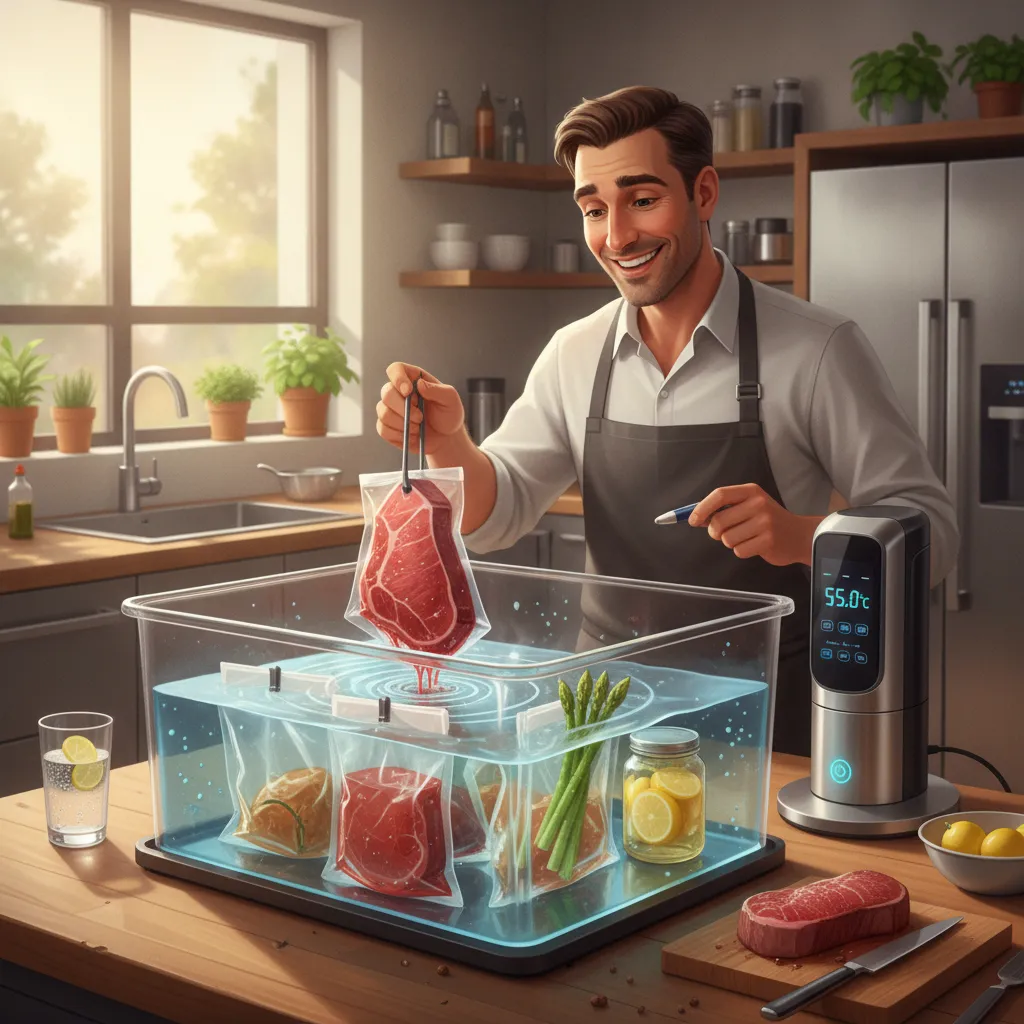
Sous Vide
A cooking method precise enough that it's essentially mathematically impossible to overcook your food.
Cheat Sheet
- Sous vide (French for "under vacuum") is a cooking technique where food is sealed in an airtight bag and cooked in a precisely temperature-controlled water bath.
- The technique allows food, especially meat, to be cooked to an exact target internal temperature evenly throughout, largely eliminating the risk of overcooking.
- Because the water bath temperature is set to the desired final doneness itself, it's essentially impossible to overcook food using sous vide, unlike traditional high-heat cooking methods.
- Sous vide was originally developed in professional kitchens in the 1970s before affordable home immersion circulators brought the technique into ordinary home kitchens.
- A quick sear in a hot pan is typically still needed after sous vide cooking, since the water bath alone doesn't produce browning or the flavorful crust associated with high-heat cooking.
- Food safety guidelines for sous vide require holding food at safe temperatures for specific minimum times, since the lower cooking temperatures involved need longer exposure to eliminate harmful bacteria.
The 60-Second Version
Sous vide, French for "under vacuum," is a cooking technique where food is sealed in an airtight bag and cooked in a precisely temperature-controlled water bath. The technique allows food, especially meat, to be cooked to an exact target internal temperature evenly throughout, largely eliminating the risk of overcooking. Because the water bath temperature is set to the desired final doneness itself, it's essentially impossible to overcook food using sous vide, unlike traditional high-heat cooking methods that rely on timing and guesswork. Sous vide was originally developed in professional kitchens in the 1970s before affordable home immersion circulators brought the technique into ordinary home kitchens over the past decade or so. A quick sear in a hot pan is typically still needed after sous vide cooking, since the water bath alone doesn't produce browning or the flavorful crust associated with high-heat cooking. Food safety guidelines for sous vide require holding food at safe temperatures for specific minimum times, since the lower cooking temperatures involved need longer exposure to eliminate harmful bacteria.
The Long Version
What "Sous Vide" Actually Means
Sous vide, literally "under vacuum" in French, describes cooking food that's been sealed in an airtight, typically vacuum-sealed bag, submerged in a water bath held at a precise, constant temperature by a device called an immersion circulator. Because the food can never get hotter than the surrounding water, and the water temperature is held exactly at the target doneness, the technique offers a level of doneness precision that's very difficult to achieve with traditional stovetop or oven cooking.
Why It's (Almost) Impossible to Overcook
In conventional cooking, food continues cooking as long as it's exposed to heat well above its target internal temperature, meaning even a short delay in pulling it off the heat can push it past the desired doneness. With sous vide, since the water bath itself is set to the exact final temperature desired, say 131°F for a specific steak doneness, the food will approach that same temperature and then simply hold there, unable to exceed it no matter how much longer it stays in the bath.
From Professional Kitchens to Home Counters
Sous vide originated in professional kitchens in the 1970s, where it was initially valued for consistency and efficient batch cooking, using specialized and often expensive equipment. Over the past decade, the arrival of relatively inexpensive, compact immersion circulators designed for home kitchens brought the technique to a much broader audience of enthusiastic home cooks.
Why You Still Need to Sear Afterward
While the water bath achieves precise, even doneness throughout the food, it doesn't produce the browned, flavorful crust created by the Maillard reaction, the chemical browning process that occurs only at much higher temperatures than water can reach. Because of this, most sous vide recipes for meat call for a quick, very hot sear in a pan or with a torch immediately after the water bath, adding that crust and flavor on the outside while preserving the precisely cooked interior.
Ad slot (placeholder — set NEXT_PUBLIC_ADSENSE_SLOT_ID once an ad unit is created)
Glossary
- Immersion circulator
- The device that heats and circulates water to a precise, held temperature for sous vide cooking.
- Sear
- A quick, high-heat cooking step, typically done after sous vide, to brown a food's exterior.
- Maillard reaction
- The chemical browning reaction responsible for the flavorful crust produced by high-heat searing.
- Vacuum sealing
- Removing air from a bag before sealing it, commonly used to prepare food for sous vide cooking.
- Pasteurization
- The process of heating food to a specific temperature for enough time to eliminate harmful bacteria.