Game Streaming Culture
Twitch spun off from a general video site, got so big at watching strangers play games live that Amazon paid about $970 million.
By Greg Goodwin · Published October 3, 2026 · Updated October 24, 2026
Cheat Sheet
- Twitch, launched in 2011 as a spinoff of general-purpose streaming site Justin.tv, became the dominant platform specifically for live video game streaming.
- A 'streamer' broadcasts gameplay live with real-time commentary, distinct from pre-recorded, edited video content typical of traditional YouTube creators.
- Streamers commonly earn revenue through multiple channels simultaneously: platform subscriptions, viewer donations, advertising, and sponsorships.
- 'Chat' functions as a defining feature of live streaming, letting viewers interact directly with a streamer and each other in real time, unlike passive on-demand video.
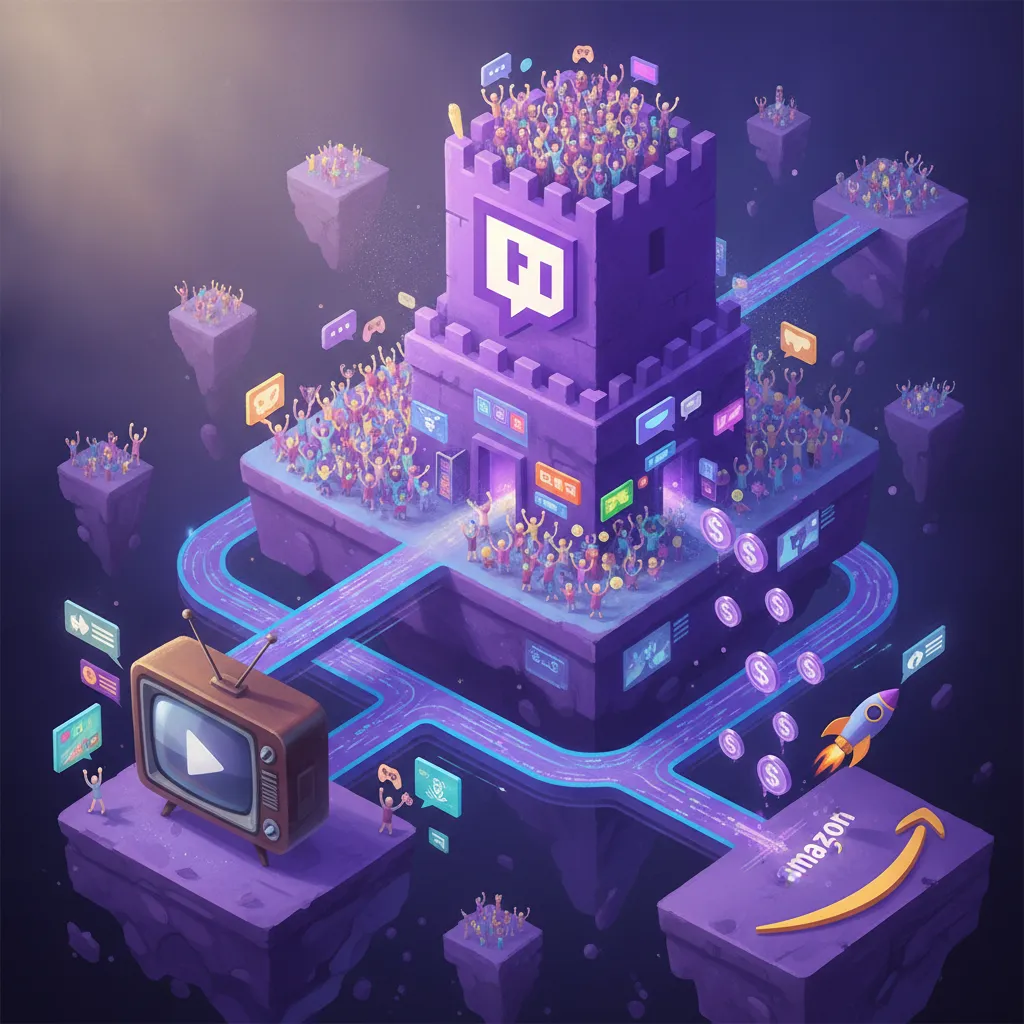
- Amazon acquired Twitch in 2014 for roughly $970 million, signaling major commercial validation of live streaming as a media category.
- Major esports tournaments are now broadcast primarily through streaming platforms rather than traditional television, reflecting a broader generational shift in viewing habits.
The 60-Second Version
Twitch launched in 2011 as a spinoff of the general-purpose streaming site Justin.tv, carving out video game streaming specifically as its own dedicated category rather than remaining one genre among many. The platform's core format centers on streamers, creators who broadcast gameplay live with real-time commentary, a meaningfully different experience from the pre-recorded, edited video content typical of traditional YouTube creators. That live format also unlocked a defining feature unavailable to on-demand video: chat, which lets viewers interact directly with a streamer and each other in real time, turning a broadcast into something closer to a shared, ongoing social space than a passive video. The resulting creator economy built around that format now supports streamers through multiple simultaneous revenue channels, including platform subscriptions, direct viewer donations, advertising, and brand sponsorships, often all running at once for a single popular streamer. Amazon's 2014 acquisition of Twitch for roughly $970 million served as major commercial validation that live streaming had become a genuine, durable media category rather than a passing internet trend. That shift has rippled well beyond individual streamers, too, since major esports tournaments are now broadcast primarily through streaming platforms rather than traditional television, reflecting a broader generational change in how competitive gaming audiences actually choose to watch.
The Long Version
A Spinoff That Became the Main Platform
Twitch launched in 2011 as a spinoff of the general-purpose streaming site Justin.tv, carving out video game streaming specifically as its own dedicated category rather than remaining one genre among many on a broader platform, a focused bet that paid off dramatically as gaming content outgrew its parent site entirely.
Live Commentary, Not Edited Video
The platform's core format centers on streamers, creators who broadcast gameplay live with real-time commentary, a meaningfully different experience from the pre-recorded, carefully edited video content typical of traditional YouTube creators, trading production polish for genuine spontaneity and real-time audience connection.
A Social Space, Not Just a Broadcast
That live format also unlocked a defining feature unavailable to on-demand video: chat, which lets viewers interact directly with a streamer and each other in real time, turning a broadcast into something closer to a shared, ongoing social space than a passive video a viewer simply watches alone.
Multiple Income Streams at Once
The resulting creator economy built around that format now supports streamers through multiple simultaneous revenue channels, including platform subscriptions, direct viewer donations, advertising, and brand sponsorships, often all running concurrently for a single popular streamer rather than relying on just one source of income.
A Billion-Dollar Validation, and a Shift in Esports Viewing
Amazon's 2014 acquisition of Twitch for roughly $970 million served as major commercial validation that live streaming had become a genuine, durable media category rather than a passing internet trend. That shift has rippled well beyond individual streamers, too, since major esports tournaments are now broadcast primarily through streaming platforms rather than traditional television, reflecting a broader generational change in how competitive gaming audiences actually choose to watch.
Why People Care
Game streaming culture has fundamentally reshaped both how people watch gaming content and how creators actually earn a living from it, and understanding its live, interactive format explains why it's drawn such a different and often more engaged audience than traditional pre-recorded video.
Glossary
- Twitch
- The dominant live video game streaming platform, launched in 2011 and acquired by Amazon in 2014.
- Streamer
- A content creator who broadcasts gameplay live with real-time commentary, distinct from pre-recorded, edited video creators.
- Chat
- The real-time text interface allowing viewers to interact with a streamer and each other during a live broadcast.
- Subscription (streaming)
- A paid, typically monthly, viewer payment that supports a streamer and often unlocks platform perks like custom emotes.
- Esports broadcast
- Live-streamed or televised coverage of competitive video gaming events, increasingly distributed primarily through streaming platforms.
Go Deeper
More to Explore
- Game Modding
Counter-Strike and DOTA, two giants of gaming, both began as community mods built on top of someone else's game.
- Speedrunning
A competitive scene built almost entirely around finding and exploiting the bugs a game's own developers never meant to be there.
- Retro Gaming
Retro gaming is a race to save decades-old games from aging cartridges before they're lost for good.
- Fantasy Sports
A hobby that's turned watching any random Sunday football game into something tens of millions of people have a genuine emotional stake in.
- Esports
A competitive scene where prize pools can top $40 million for a single tournament, funded largely by the players' own community purchases.