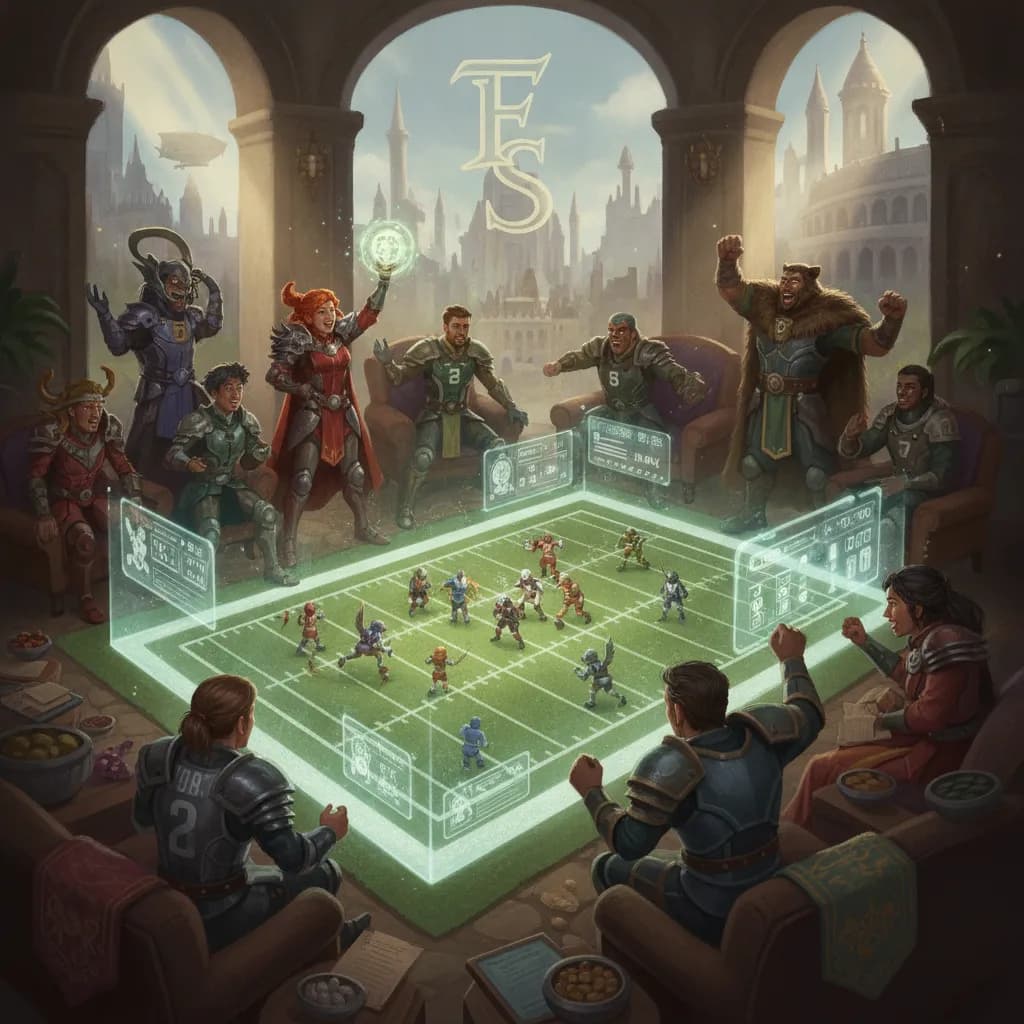
Fantasy Sports
A hobby that's turned watching any random Sunday football game into something tens of millions of people have a genuine emotional stake in.
Cheat Sheet
- Fantasy sports let participants draft a roster of real athletes and compete based on those athletes' actual statistical performance in real games.
- Season-long fantasy leagues typically involve a draft at the start of the season, followed by weekly matchups against other league members based on cumulative player stats.
- Daily Fantasy Sports (DFS), popularized by platforms like DraftKings and FanDuel, compress the format into single-day or single-week contests with real money entry fees and prizes.
- Fantasy football is by far the most popular fantasy sport in the US, with tens of millions of participants, largely credited with deepening broader fan engagement with the NFL.
- Scoring systems vary by league (standard, PPR — points per reception — and others), meaningfully changing which real players are considered most valuable.
- The legal status of paid daily fantasy sports has been debated in the US, with some states classifying it as a game of skill (legal) versus gambling (restricted), leading to a patchwork of state-by-state rules.
The 60-Second Version
Fantasy sports let participants draft a roster of real athletes and compete based on those athletes' actual statistical performance in real games. Season-long fantasy leagues typically involve a draft at the start of the season, followed by weekly matchups against other league members based on cumulative player stats each week. Daily Fantasy Sports (DFS), popularized by platforms like DraftKings and FanDuel, compress the format into single-day or single-week contests with real money entry fees and prizes. Fantasy football is by far the most popular fantasy sport in the US, with tens of millions of participants, largely credited with deepening broader fan engagement with the NFL well beyond fans of any single team. Scoring systems vary by league, with standard and PPR (points per reception) formats among the most common, meaningfully changing which real players are considered most valuable. The legal status of paid daily fantasy sports has been debated in the US, with some states classifying it as a game of skill (legal) versus gambling (restricted), leading to a patchwork of state-by-state rules.
The Long Version
How a Season-Long League Works
A typical season-long fantasy league begins with a draft, where participants take turns selecting real athletes to build their own roster, often trying to balance star talent against depth across different positions. Each week, participants face off against another league member in a head-to-head matchup, with their rostered players' real statistical performance from that week's actual games translated into fantasy points, and the manager with the higher total winning that week's matchup.
Daily Fantasy: The Condensed Version
Daily Fantasy Sports compress the traditional season-long format into single-day or single-week contests, letting participants pay an entry fee, draft a fresh lineup constrained by a salary cap, and compete for real money prizes based on that single day's or week's real-game performance, without any season-long commitment. This format, popularized heavily by DraftKings and FanDuel in the 2010s, dramatically lowered the barrier to entry compared to committing to a full traditional season-long league.
Why Fantasy Football Took Over
Fantasy football has become by far the most popular fantasy sport in the US, played by tens of millions of participants, largely because football's once-weekly schedule maps cleanly onto a once-weekly fantasy matchup format, and its relatively small number of key skill-position players makes roster construction more approachable for casual fans than sports with larger, more complex rosters.
The Ongoing Gambling-vs-Skill Debate
The legal classification of paid Daily Fantasy Sports contests has been genuinely contested in the US: some states and courts have treated it as a legitimate game of skill, similar to traditional season-long fantasy leagues, given the strategic decision-making involved, while others have treated it closer to sports betting, subject to gambling regulation, resulting in an ongoing, inconsistent patchwork of state-by-state legality.
Ad slot (placeholder — set NEXT_PUBLIC_ADSENSE_SLOT_ID once an ad unit is created)
Glossary
- Draft
- The process of participants selecting real athletes to build their fantasy roster, typically at the start of a season or contest.
- PPR (Points Per Reception)
- A scoring format in fantasy football awarding points for each catch a player makes, not just yardage or touchdowns.
- Daily Fantasy Sports (DFS)
- A condensed fantasy format run over a single day or week rather than a full season.
- Waiver wire
- The pool of unclaimed players a fantasy team can add during the season to replace underperforming roster spots.
- Matchup
- A weekly head-to-head contest between two fantasy teams based on their rostered players' real statistical performance.