How Plants Grow
Plants never stop growing, which is why a seed the size of a lentil can eventually become a redwood.
By Greg Goodwin · Published October 17, 2026 · Updated October 24, 2026
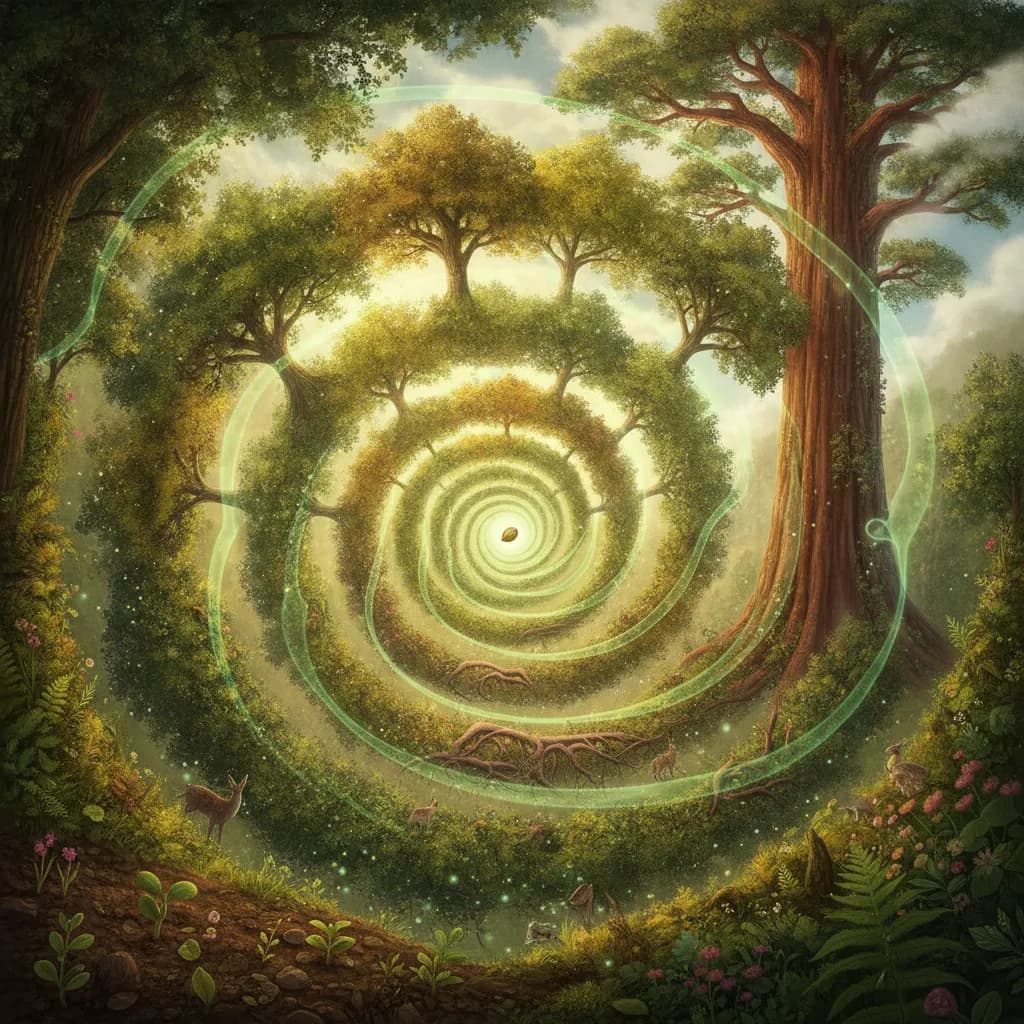
Cheat Sheet
- Three processes: cell division, cell enlargement, and cell differentiation.
- Photosynthesis in shorthand: 6CO2 + 6H2O + light energy yields C6H12O6 (glucose) + 6O2.
- Essential elements: 17 in total; 3 (carbon, hydrogen, oxygen) come from air and water, and 14 are mineral nutrients.
- Fertilizer label: the three numbers are the percentages, by weight, of nitrogen, phosphate (P2O5), and potash (K2O).
- Soil pH: most garden and landscape plants grow best between 6.0 and 7.0.
- Germination order: the primary root (radicle) emerges first, then the shoot.
The 60-Second Version
A seed is a plant embryo on pause. Add water and suitable temperatures and it swells and sprouts, sending a root down and a shoot toward the light. From there, growth comes from tiny cells doing three jobs: dividing to make more cells, enlarging to take up space, and differentiating into specialized types such as fibers and tracheids. Division is concentrated in meristems, zones of dividing cells at the tips of roots and shoots that lengthen the plant, plus lateral meristems that thicken stems. Leaves capture sunlight and use photosynthesis to turn water and carbon dioxide into sugars and oxygen, fueling everything else. Hormones such as auxin coordinate the whole show, while the roots draw up water and minerals. Unlike most animals, plants keep growing throughout their lives.
The Long Version
Waking Up: Germination
Plant growth begins with germination, the process by which a seed sprouts. Environmental triggers such as water absorption, temperature changes, and light exposure set it off. Once a seed absorbs water, it swells and the embryo inside begins to grow. The primary root, called the radicle, emerges first, followed by the shoot, which grows upward toward the light. Early growth depends mainly on cells expanding in size, but within a short time cell division starts in the radicle and the young shoot. From then on, further growth and organ formation come from a combination of more cells and larger cells.
Where the Growing Happens: Meristems
The region of cells capable of division in plants is called the meristem. Apical meristems sit at the tips of roots and shoots, and their division extends the roots and shoots and builds the primary plant body. Lateral meristems, found in tissues such as the cambium and cork cambium, drive secondary growth, the increase in stem girth and thickness. Intercalary meristems, located at stem regions between leaf attachment points, extend some stems, as in grasses, and marginal meristems add surface area to leaves. Because plants keep these growth zones active, they continue to add new tissue throughout their life spans, unlike most animals.
Fuel: Photosynthesis
Growth requires energy and building materials, and photosynthesis supplies both. In green plants, light energy is captured and used to convert water, carbon dioxide, and minerals into oxygen and energy-rich organic compounds that power the cells. Plants also need water for nutrient absorption and for many cellular processes, and temperature affects the rate of growth and can influence the timing of germination and flowering. The result is a huge range of growth rates, from the slow saguaro cactus to speedy bamboo, all running on the same basic machinery of division, enlargement, and specialization.
Chemical Messengers
Hormones coordinate all of this. Auxin, the principal plant hormone, plays significant roles in cell enlargement, division, and differentiation. Cytokinins and gibberellins influence the rate of cell division in meristems. Britannica notes that some dwarf plants can be stimulated to grow to normal size simply by applying gibberellin, and that the hormone has been used to produce larger produce, including larger and seedless grapes. Internal genetics and external conditions together determine how much a given plant grows and what shape it takes.
Feeding the Roots
Besides carbon, hydrogen, and oxygen from air and water, plants need other elements from the soil. Extension specialists count 17 essential elements in all, with 14 of them mineral nutrients. Nitrogen is needed in the largest quantity after carbon, oxygen, and hydrogen; it is essential for protein synthesis and gives plants their green color. Phosphorus matters for cell division and for root, flower, and fruit growth, while potassium helps regulate water status and carbohydrate transport. Most garden plants do best in soil with a pH between 6.0 and 7.0, since nutrients can become unavailable outside that range. More fertilizer is not always better: overuse can cause weak, succulent growth and contribute to water pollution.
Why People Care
Understanding plant growth explains how food, timber, and gardens work, and why light, water, soil, and temperature matter so much. It also helps gardeners fix problems at the source instead of guessing, and it underpins agriculture and efforts to feed a growing population.
Glossary
- Meristem
- A region of cells capable of dividing, where new growth is generated.
- Auxin
- The principal plant hormone, involved in cell enlargement, division, and differentiation.
- Germination
- The process by which a seed sprouts and begins developing into a new plant.
- Lateral meristem
- Growth tissue (such as cambium) that increases the girth and thickness of stems.
- Gibberellin
- A plant hormone that influences the rate of cell division in meristems.
Go Deeper
More to Explore
- The Extinction of the Dinosaurs
One bad rock, one very bad day, and the Age of Dinosaurs got an abrupt ending, with a few feathery survivors.
- Probability
Probability is the math of things you cannot be sure about, which is nearly everything, including whether you will need an umbrella.
- Octopuses and Cephalopods
Eight arms, three hearts, blue blood, and a skin that doubles as a mood ring and a disguise kit.
- Neanderthals
Our stocky, toolmaking cousins who ran the cold half of the Ice Age and still show up in your DNA.
- Mitochondria
Tiny former bacteria living inside nearly every cell you own, quietly paying the electric bill.