Political Parties
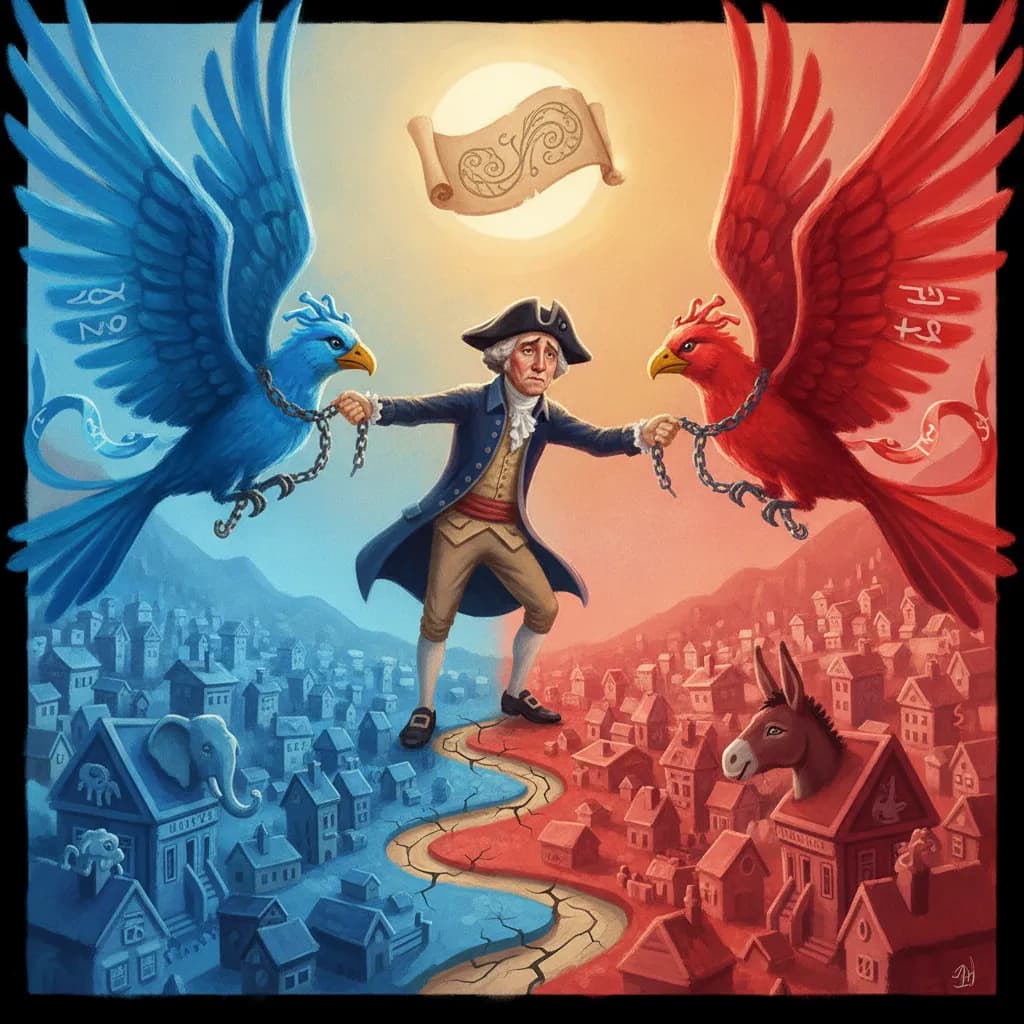
George Washington explicitly warned against political parties in his farewell address — and disputes within his own cabinet had already helped create them before he even finished his term.
Cheat Sheet
- A political party is an organized group that recruits candidates, coordinates campaigns, and advances a shared set of policy positions.
- Duverger's Law, a widely cited political science theory, holds that 'first-past-the-post' electoral systems tend to produce two dominant parties over time.
- Proportional representation systems, common in much of Europe, tend by contrast to sustain a larger number of viable political parties.
- The U.S. two-party system's roots trace back to disputes within George Washington's own cabinet in the 1790s, despite Washington's own warnings against political factions.
- 'Party platform' refers to a formal document outlining a party's official policy positions, typically finalized ahead of major elections.
- Minor or 'third parties' can still meaningfully influence elections in two-party systems by shifting votes even without winning major offices themselves.
The 60-Second Version
A political party functions as an organized coalition that recruits candidates, runs coordinated campaigns, and rallies voters around a shared platform of policy positions, giving individual politicians a broader structure and brand to run under rather than campaigning entirely on their own. Political scientists have long observed a strong pattern linking electoral system design to how many parties a country tends to sustain, formalized in a widely cited theory holding that "first-past-the-post" voting systems, where the top vote-getter wins outright, tend to naturally consolidate political competition down to two dominant parties over time. Countries using proportional representation instead, common across much of Europe, tend to sustain a meaningfully larger number of viable parties, since even a modest vote share can still translate into real legislative seats. The American two-party system, often assumed to be an intentional design feature, actually emerged somewhat despite the founders' own preferences, tracing back to disputes within George Washington's cabinet in the 1790s even as Washington himself publicly warned against the dangers of political factions. Even within a strongly entrenched two-party system, smaller "third parties" can still meaningfully shift election outcomes by pulling votes away from major-party candidates, without necessarily winning any significant office themselves.
The Long Version
What a Political Party Actually Does
A political party functions as an organized coalition built to recruit candidates, coordinate campaign strategy and fundraising, and unify supporters around a shared set of policy positions, giving individual politicians a broader structural and financial backing rather than requiring each to build support entirely from scratch.
How Electoral Systems Shape Party Count
Political scientists have documented a strong, widely cited relationship between electoral system design and the number of parties a country tends to sustain, formalized in Duverger's Law, which holds that "first-past-the-post" systems, where a district's top vote-getter wins outright, tend to naturally consolidate competition down toward two dominant parties over successive elections.
Why Some Countries Have Many Viable Parties
Countries that instead use proportional representation, allocating legislative seats roughly in line with a party's overall vote share, tend to sustain a considerably larger number of genuinely viable political parties, since even a relatively modest share of the national vote can still translate into meaningful legislative representation.
An Accidental American Two-Party System
The entrenched American two-party system is often assumed to be a deliberate constitutional design, but it actually emerged somewhat despite the founders' own stated preferences, tracing back to policy disputes within George Washington's own cabinet during the 1790s even as Washington himself explicitly warned against the dangers of political factions in his farewell address. Even within such an entrenched two-party structure, smaller third parties can still meaningfully influence election outcomes by pulling votes away from major-party candidates, without necessarily winning significant office themselves.
Ad slot (placeholder — set NEXT_PUBLIC_ADSENSE_SLOT_ID once an ad unit is created)
Why People Care
Understanding how political parties form and why certain electoral systems sustain two parties while others sustain many helps explain a country's entire political landscape, from which candidates even appear on a ballot to how coalition governments get formed elsewhere in the world.
Glossary
- Duverger's Law
- A political science theory holding that first-past-the-post electoral systems tend to produce and sustain two dominant political parties.
- First-past-the-post
- An electoral system where the candidate with the most votes in a district wins outright, without requiring a majority.
- Proportional representation
- An electoral system that allocates legislative seats to parties roughly in proportion to their share of the total vote.
- Party platform
- A formal document outlining a political party's official policy positions, typically adopted ahead of a major election.
- Third party
- A political party outside the two dominant parties in a two-party system, which can still influence elections despite rarely winning major office.
Go Deeper
- Library of Congress — U.S. Political Party History
- Duverger's Law, Maurice Duverger (Political Parties, 1954)
More to Explore
- Federalism vs. Unitary Systems
A basic structural choice that determines whether a country's regional governments hold real, protected power of their own — or simply borrow whatever authority the central government chooses to lend them.
- How Laws Get Made
A process with so many checkpoints that most bills introduced in Congress never make it anywhere close to a president's desk.
- Branches of Government
A system deliberately designed so that no single branch of government can get everything it wants.
- Elections
The mechanism behind "the people decide" is a lot more varied, worldwide, than most people who only know their own country's system realize.
- The European Union
The organization that became the European Union started with a strikingly narrow goal: making France and Germany so economically dependent on each other that another war between them would become practically unthinkable.